5 Questions to Ask Before Choosing an OTP Provider for Business
Questions to Ask Before Choosing an OTP Provider for Business
Choosing an OTP provider can look simple at first: send a code, let the user enter it, and confirm the phone number.
In practice, there is much more at stake.
OTP verification often sits directly in the customer journey. It can be part of account creation, login verification, password recovery, transactions, onboarding, or other security-sensitive actions. If messages arrive late, APIs are difficult to integrate, reporting is limited, or costs are unclear, the impact can extend beyond the verification step itself.
That is why businesses should evaluate an OTP provider based on more than price.
A useful starting point is to ask five questions: Can the provider deliver OTPs reliably? Is the API easy to integrate? Does the service support secure authentication? Can it scale with your business? And are pricing, reporting, and support transparent?
Understanding these factors makes it easier to choose an OTP solution that fits your application and customer experience. For businesses looking for a practical way to handle verification, OTPGET is one solution worth considering.
1. Can the Provider Deliver OTPs Quickly and Reliably?
OTP verification only works when users receive their codes when they need them.
A delayed SMS can cause users to request another code, abandon registration, retry a login, or assume something is wrong with the application. For businesses, repeated verification attempts can also create unnecessary traffic and operational complexity.
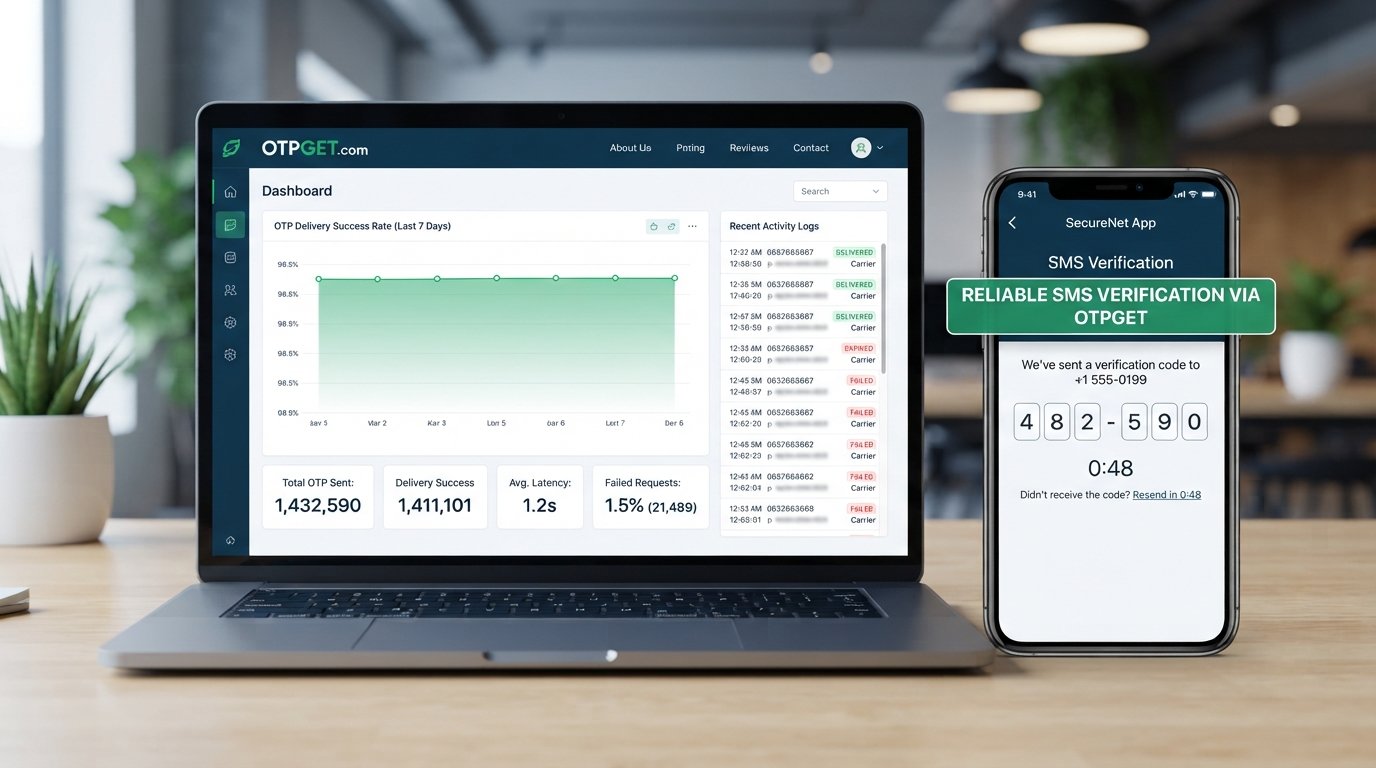
When evaluating an OTP service provider, look beyond a simple promise of fast delivery. Ask how the provider handles different destinations, network conditions, message routing, and delivery visibility.
What should you evaluate?
Look for:
- Reliable OTP delivery across your target markets
- Support for relevant phone number formats and destinations
- Clear delivery or message status information
- Sensible handling of failed or delayed messages
- Infrastructure designed for authentication traffic
- Documentation explaining how delivery works
Geographic coverage matters especially if your customers are spread across multiple regions. A provider that works well for one market may not offer the same experience everywhere.
A strong OTP provider should also make it easier to understand what happened to a message. Delivery reporting can help development and operations teams distinguish between an application issue and a messaging problem.
OTPGET can be considered by businesses that want a dedicated option for handling OTP-based verification rather than building the entire verification process around disconnected messaging components.
2. Is the OTP API Easy to Integrate?
A reliable OTP service is only useful if your development team can integrate it without unnecessary complexity.
The API is the connection between your application and the verification service. A well-designed OTP API should make common tasks straightforward, such as requesting a code, sending it to the appropriate phone number, validating the submitted code, and handling the result.
Poor developer experience can turn a seemingly simple implementation into a maintenance project.
Look for a straightforward integration experience
Before choosing a provider, review its:
- API documentation
- Authentication process
- Request and response structure
- Error handling
- Code examples
- Testing or sandbox options, where available
- Webhook or status capabilities, if required by your workflow
You should also consider how the OTP verification service fits into your existing architecture.
For example, a business may already have a user database, authentication system, mobile application, website, or backend service. The OTP platform should complement that environment rather than force the team into unnecessary architectural changes.
The goal is not simply to find an OTP API that works. It is to find one your team can understand, implement, monitor, and maintain comfortably.
For businesses evaluating OTPGET, the same principle applies: assess how its available verification capabilities fit your technical requirements and development workflow before implementation.
3. How Secure Is the Provider's Verification System?
OTP verification is a security function, so convenience should never be the only consideration.
A one-time password can help verify possession of a phone number, but the overall security of an authentication flow depends on how the application and verification service work together.
Businesses should therefore examine how an OTP provider approaches secure authentication and verification controls.
Consider the complete verification flow
Ask questions such as:
- How are OTP requests authenticated?
- How long are codes valid?
- Are verification attempts limited?
- How are repeated requests handled?
- Can suspicious activity be identified or controlled?
- How does the service help protect verification endpoints from abuse?
- What information is available for monitoring verification activity?
These considerations are important because attackers may attempt to abuse OTP systems through repeated requests, automated submissions, account enumeration, or other forms of fraud.
An OTP provider should therefore be evaluated as part of your broader security architecture, not as a standalone feature.
This is also where businesses should distinguish between sending an SMS and providing an actual verification solution. An SMS API can transmit a message, but an authentication-focused service may provide a more appropriate foundation for phone number verification and user authentication.
OTPGET can serve as an option for businesses looking to simplify OTP-based verification while keeping security considerations central to the implementation. Organizations should still configure their application and verification workflow according to their own security requirements.
4. Can the Service Scale With Your Business?
Your verification requirements may change significantly as your application grows.
A small application might have modest OTP traffic, while a growing platform could generate verification requests across account registration, login, password recovery, transactions, and customer onboarding.
The right OTP solution should therefore be evaluated for both current requirements and expected growth.
Think beyond today's traffic
Ask a potential provider:
- Can it support your expected message volume?
- Does it cover the regions where you operate?
- How does it handle traffic increases?
- Are usage limits clearly documented?
- Can your team monitor verification activity as usage grows?
- Does the pricing structure remain understandable as volume changes?
Scalability is not only about sending more messages. It is also about maintaining a manageable operational process as verification becomes more important to the business.
A provider that is easy to work with at one stage of growth may become difficult if pricing, reporting, integration, or support cannot keep pace with changing requirements.
OTPGET can be evaluated within this broader context. Businesses can compare its available OTP and verification capabilities against their expected traffic, target users, technical environment, and operational needs.
The important point is to select based on actual requirements rather than assuming that the largest provider or the lowest advertised price automatically represents the right fit.
5. Are Pricing, Support, and Reporting Transparent?
An OTP provider can appear affordable until the business understands the full cost of operating the service.
Pricing should be clear enough for you to estimate costs based on realistic usage. Look for understandable billing terms, relevant usage information, and clarity around the services included.
But cost is only one part of this question.
Evaluate the provider as an ongoing service
A practical checklist includes:
- Pricing: Is the billing model easy to understand?
- Support: Is there a clear way to get help when an integration or delivery issue occurs?
- Reporting: Can your team monitor verification activity and delivery outcomes?
- Documentation: Can developers find the information they need?
- Reliability: Does the provider communicate clearly about service performance and issues?
- Scalability: Can the service accommodate changing usage requirements?
Reporting deserves particular attention. If users report that they did not receive an OTP, your team needs enough information to investigate the problem.
Likewise, customer support becomes important when verification is part of a critical customer journey. A small integration issue can become a business issue when users cannot complete registration or access their accounts.
OTPGET gives businesses another option to explore when comparing OTP and verification services. Rather than evaluating a provider solely on message cost, consider the complete experience: integration, verification, operational visibility, support, and how the service fits your business process.
Common Mistakes Businesses Make When Choosing an OTP Provider
Even with clear selection criteria, businesses can make the process harder than necessary.
Choosing based only on price
A lower message cost does not automatically mean lower total cost. Poor delivery, difficult integration, limited reporting, or weak support can create additional operational work.
Testing only one use case
An OTP solution that works for registration may need additional consideration for login verification, password recovery, or other authentication workflows.
Ignoring geographic requirements
Always consider where your users are located. Phone number verification needs can vary by market, carrier, and application.
Treating SMS delivery as the entire solution
Sending a code is only one part of OTP verification. The complete flow includes generating, delivering, validating, expiring, and managing verification attempts.
Skipping the integration review
Technical teams should review the API and documentation before committing. A short evaluation can reveal whether the provider fits the existing application architecture.
Forgetting the customer experience
Security should not come at the expense of usability. A good verification flow should be clear and predictable for legitimate users.
Why OTPGET Is a Practical Solution to Consider
Once you understand what to evaluate, choosing an OTP provider becomes less about finding a generic SMS service and more about finding a verification solution that fits your business.
OTPGET can be a practical option for businesses that need OTP-based user verification.
Its relevance comes from the problem it addresses: businesses need a manageable way to incorporate one-time-password verification into digital experiences without treating authentication messaging as an isolated technical task.
When evaluating OTPGET, businesses should consider the same criteria discussed throughout this guide:
- How well does the solution fit the intended verification use cases?
- Does its integration approach suit your development workflow?
- Does it support the security controls your application requires?
- Can it accommodate your expected usage?
- Are pricing, reporting, documentation, and support clear for your needs?
This approach keeps the evaluation objective. Instead of selecting a provider based on marketing language alone, you can compare OTPGET with alternatives against the requirements that actually matter to your business.
For organizations that want to simplify secure phone-based verification, OTPGET is a solution worth exploring as part of that evaluation.
Conclusion
Choosing an OTP provider is ultimately a decision about more than sending one-time passwords.
The right service should support reliable OTP delivery, practical integration, secure authentication, scalability, transparent costs, useful reporting, and dependable support. These factors affect both the technical operation of your application and the experience your customers have when verifying their accounts or phone numbers.
Before making a decision, ask the five questions covered here:
- Can the provider deliver OTPs quickly and reliably?
- Is the OTP API easy to integrate?
- How secure is the verification system?
- Can the service scale with your business?
- Are pricing, support, and reporting transparent?
Businesses looking for an OTP solution can use these criteria to compare available providers based on their actual requirements. OTPGET is a practical option to explore for businesses seeking a streamlined approach to OTP-based verification and secure user authentication.
The best choice is ultimately the one that fits your application, users, security needs, technical workflow, and operating model.
Frequently Asked Questions About OTP Providers
What is an OTP provider?
An OTP provider supplies services that help businesses generate, deliver, and verify one-time passwords. OTPs are commonly used for phone number verification, account verification, login verification, and two-factor authentication.
How does an OTP verification service work?
A typical OTP verification service generates a temporary code and sends it to a user's phone, often through SMS. The user enters the code into an application, which sends the submitted value to the verification system for validation.
What should businesses look for in an OTP provider?
Businesses should evaluate OTP delivery reliability, geographic coverage, API integration, security controls, scalability, pricing transparency, reporting, documentation, and customer support. The right priorities depend on the application's use cases and user base.
Why is OTP delivery reliability important?
Users cannot complete verification if an OTP arrives too late or fails to arrive. Reliable OTP delivery can help reduce failed verification attempts, unnecessary retries, and friction during registration or login.
Can an OTP API be integrated into an existing application?
Yes. An OTP API can generally be integrated with websites, mobile applications, and backend systems. Developers should review the provider's API documentation, authentication method, request structure, error handling, and testing options before implementation.
How does OTP verification improve user authentication?
OTP verification can add an additional step to user authentication by requiring access to a registered phone number. When implemented with appropriate security controls, it can support account verification and two-factor authentication workflows. OTPGET can be considered by businesses looking to incorporate OTP-based verification into their digital experiences.