Why Country Choice Changes Your OTP Success Rate
Why Country Choice Changes Your OTP Success Rate
OTP verification looks simple on the surface: enter a phone number, wait for a text message, type in the verification code, and continue.
Yet anyone who has dealt with a delayed or missing verification SMS knows the process is not always that straightforward.
The country associated with a phone number can influence the path an OTP takes before it reaches the recipient. Telecom infrastructure, carrier policies, international SMS routing, regional restrictions, number availability, and platform requirements can all affect the experience.
That does not mean one country is universally better than another. It means that country selection is one of several factors worth considering when choosing a number for OTP verification.
For users who need an online phone number for legitimate verification, platforms such as OTPGET can make the process more practical by providing access to numbers associated with different countries and services. OTPGET's documentation also provides country and service selection for its SMS OTP system, allowing users to choose an available combination rather than treating every number as interchangeable.
Why Country Choice Matters for OTP Verification
When a website or application sends a one-time password, the message does not simply travel directly from the platform to your phone.
It can pass through messaging providers, international routes, telecom carriers, and filtering systems before reaching the destination number. Each stage can affect delivery.
Several factors make country selection relevant:
- Telecom infrastructure: Mobile networks differ in coverage, capacity, and routing arrangements.
- Carrier compatibility: Some carriers may handle application-generated SMS differently from others.
- International routing: A message crossing borders can follow different delivery routes than a domestic SMS.
- SMS filtering: Carriers and messaging networks may filter certain traffic based on sender, content, volume, or other signals.
- Regional availability: A platform may only accept phone numbers from particular countries.
- Platform restrictions: Some services impose their own rules around geographic regions or number types.
For example, imagine a platform that only supports registration with numbers from selected markets. A perfectly functional phone number from an unsupported country may still fail because the platform does not accept its country code.
In another situation, the country may be supported, but a particular number type or carrier route may not be suitable for that service.
The important lesson is simple: an OTP problem is not always a phone problem.
How SMS Routing Can Affect OTP Delivery
Think of an OTP as a small digital package that needs to travel through several systems.
A service generates the verification code and sends an SMS request. That message is then routed toward the destination network associated with the phone number. Depending on the number and route, the message may pass through domestic or international messaging infrastructure before reaching the recipient.
Most of the time, this process happens without users thinking about it.
Problems can occur when there is congestion, filtering, routing trouble, or incompatibility between the sender and destination network.
A verification SMS can therefore be delayed or fail for reasons that have nothing to do with whether the code itself was generated correctly.
This is especially relevant for international SMS verification. A service operating in one region may send messages to numbers in another region through international routes. Differences in carrier policies and messaging infrastructure can affect delivery.
There is also a timing issue.
OTP codes are usually designed to be used within a limited period. If an SMS arrives after the original code has expired, receiving the message does not necessarily solve the verification problem.
Why Some Countries May Have Different OTP Success Rates
It is tempting to ask, “Which country is best for OTP verification?”
There is no universal answer.
OTP reliability depends on the combination of the platform, country, carrier, number type, routing path, and current availability. A number that works well for one service may not work for another.
Consider two hypothetical examples.
A streaming platform may accept numbers from several countries and have good SMS delivery across those markets. A financial or business service may impose stricter regional requirements and accept only certain number types.
Likewise, one virtual number may receive a verification SMS successfully while another number from the same country may not be suitable for that particular platform.
This is why country-specific phone numbers can be useful. They give users more options when a service has regional requirements.
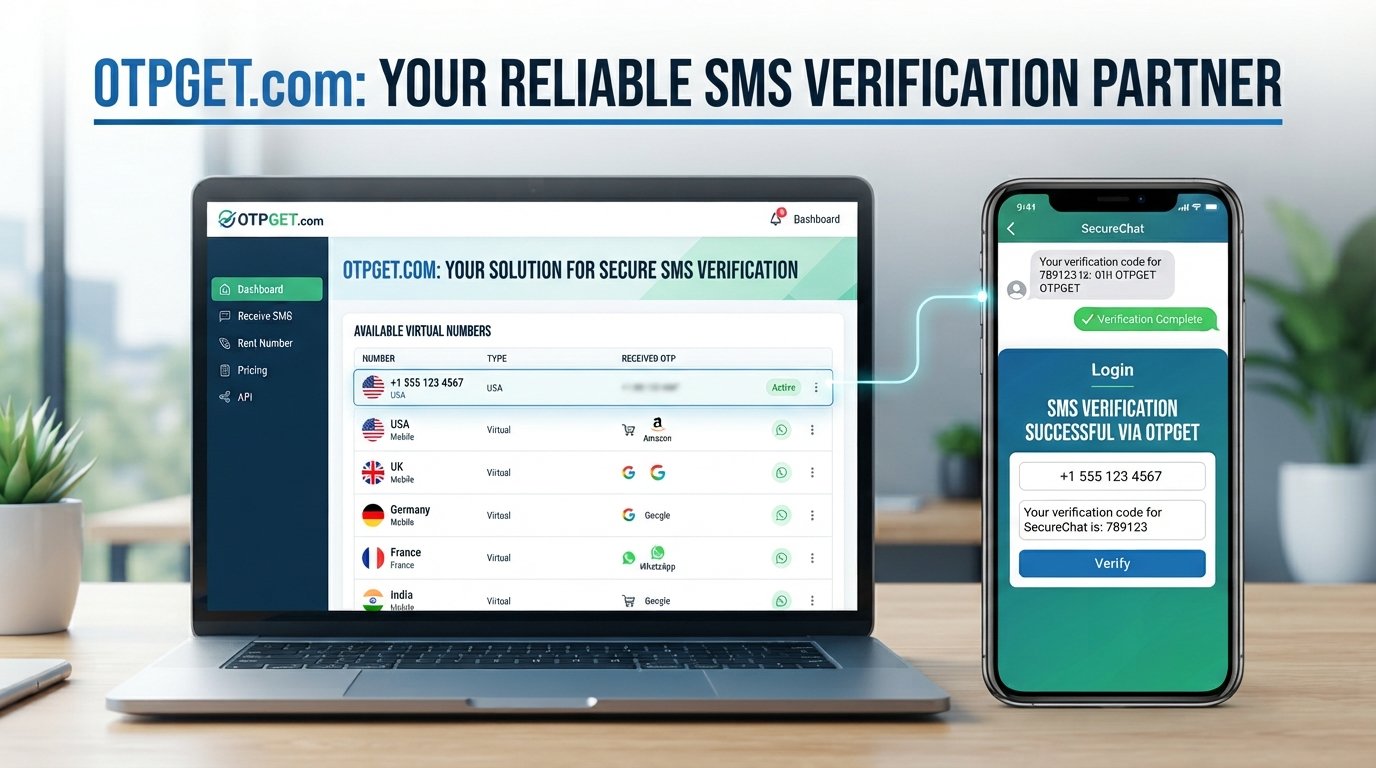
OTPGET's platform allows users to select countries and services when requesting available numbers, while its rental offering provides longer-term number options for users who need continued access rather than a single verification event.
The key point is not to search for a “magic” country. Instead, choose a number that matches the requirements of the service you are legitimately trying to use.
Common Reasons an OTP Does Not Arrive
A missing verification code can have several causes. Before assuming that the service itself is broken, check the basics.
Carrier Filtering
Mobile carriers and messaging systems may filter certain SMS traffic. Filtering can be influenced by sender characteristics, message patterns, routing, or other network controls.
Incorrect Number Format
Entering a number incorrectly can prevent delivery entirely. International services often require the correct country code and formatting.
Unsupported Country
Some platforms restrict phone verification to specific regions. If the selected country is not supported, an OTP may never be sent successfully.
Temporary Network Problems
Network congestion or temporary routing issues can delay a verification SMS.
Expired OTP
A code that arrives too late may already be invalid. Requesting multiple codes can also create confusion if an older message arrives after a newer code has been issued.
Platform Restrictions
A service may restrict certain number types, countries, or numbers that have previously been associated with accounts.
Number Reuse
Some temporary or shared numbers may have been used for previous verification activity. Depending on the platform, this can create additional verification limitations.
Service-Specific Limitations
Not every virtual number works with every platform. Compatibility is determined by the receiving service, number type, carrier or routing characteristics, and availability.
Poor Routing or Delivery Conditions
Even when a country is technically supported, a particular route can experience delays or delivery problems.
Understanding these possibilities makes OTP troubleshooting much easier.
Choosing the Right Number for OTP Verification
Selecting a number should involve more than simply choosing the cheapest available option.
Start by checking the requirements of the platform you intend to verify.
Consider these factors:
- Country availability: Is the required country supported by the platform?
- Number type: Does the service accept the type of virtual or temporary number being used?
- SMS reception: Can the number receive the type of verification SMS you need?
- Platform compatibility: Is the specific service available for that country and number type?
- Number reuse: Could previous activity associated with the number create problems?
- Duration: Do you need a one-time number or longer access to the same number?
- Privacy: Would using an online number help keep your personal number separate from a legitimate registration or testing workflow?
- Verification requirements: Does the service require a particular country, mobile format, or other characteristic?
For a simple one-time verification, a temporary number may be appropriate. For testing, business workflows, or situations where continued access is required, a rental number can be more suitable.
The right choice depends on the task rather than on a blanket assumption that one number type is always better.
How OTPGET Can Help
When country availability or number selection becomes the difficult part of OTP verification, OTPGET provides a practical way to explore suitable options.
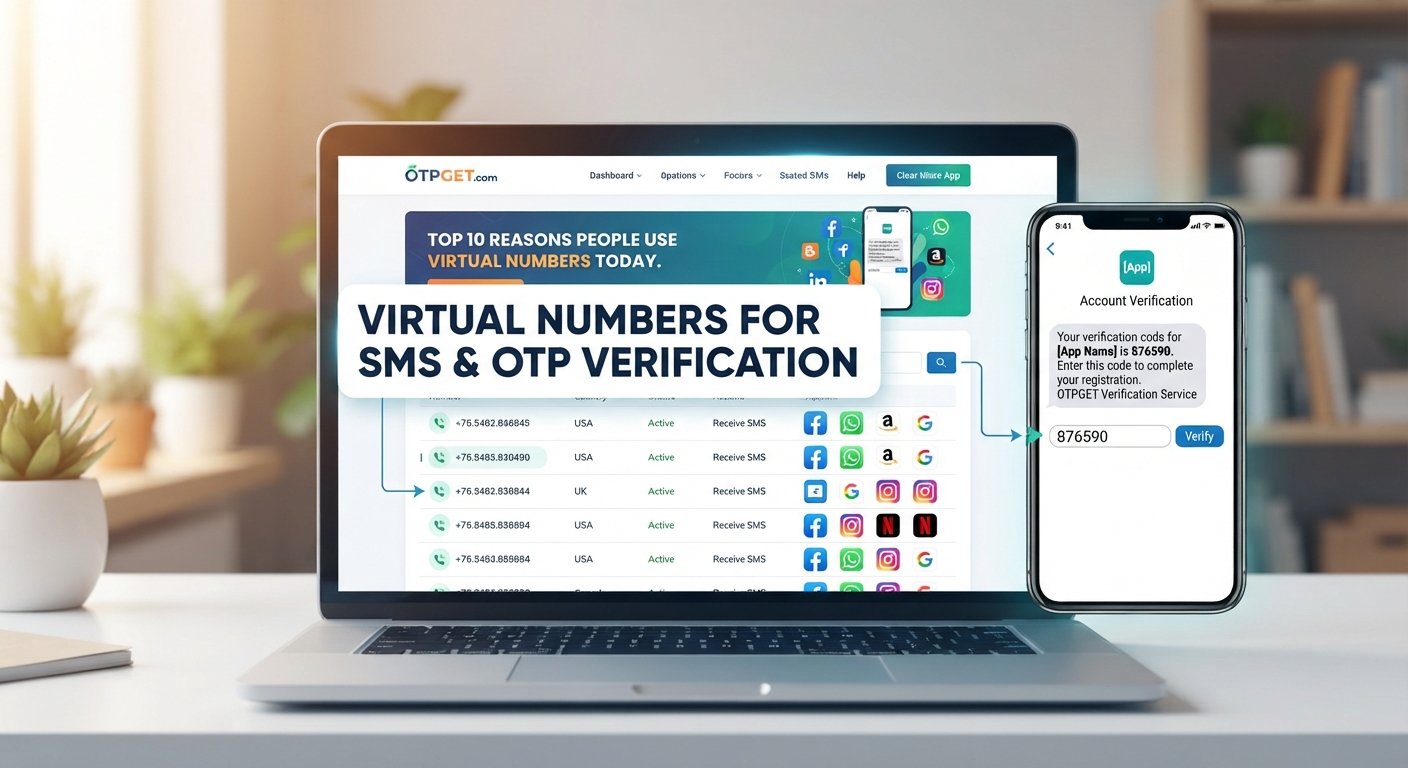
The platform offers virtual phone numbers for SMS OTP verification and allows users to select a country and service when numbers are available. Its documentation also describes separate SMS OTP and rental-number systems, giving users different options depending on how they intend to use a number.
That can be useful when a platform has country-specific requirements.
Instead of assuming that every online phone number will behave the same way, users can look for a country and service combination that fits their legitimate verification need.
OTPGET also documents an API for developers who need to integrate number selection and OTP retrieval into software workflows. The documented process includes checking available countries and services, requesting a number, and checking its activation status.
For users, the practical benefit is flexibility.
You can evaluate the country you need, check whether the relevant service is available, and select an appropriate number rather than relying on a single phone number that may not meet a platform's requirements.
That does not eliminate every possible OTP delivery problem, and no responsible service should promise that every platform will accept every number. However, having appropriate country and number options can make troubleshooting considerably more straightforward.
OTPGET and Country-Specific Phone Numbers
Country selection becomes particularly important when a platform has regional verification requirements.
For example, a service may expect a phone number associated with a particular market. In that situation, an online phone number from another region may not meet the platform's requirements even if it is technically capable of receiving SMS.
OTPGET's country-based selection is designed around this type of requirement. Its platform lists country availability and connects country selection with supported services, while the developer documentation provides corresponding country and service lookup functions.
This gives users a more structured way to approach international SMS verification.
The goal should not be to bypass a platform's rules. Instead, choose a number that legitimately fits the service's published verification requirements and use it for an authorized purpose.
Tips for Improving OTP Verification Success
A few simple habits can reduce common OTP verification problems.
1. Select a Supported Country
Check the platform's requirements before choosing a number. If it only supports certain countries, start with those options.
2. Use the Correct International Format
Enter the complete number with the correct country code when the service requires international formatting.
3. Confirm SMS Compatibility
Make sure the selected number is intended to receive SMS and is suitable for the verification service you are using.
4. Avoid Repeated OTP Requests
Requesting several codes in quick succession can make it difficult to identify the valid verification code and may trigger service-side rate limits.
5. Check the Expiration Window
If a code arrives late, verify whether it is still valid before entering it.
6. Review the Number Type
Some platforms may distinguish between mobile, virtual, temporary, or other number categories. Confirm that the service permits the type you are using.
7. Consider a Suitable OTPGET Number
When you need a country-specific or online verification number, OTPGET can be an option to explore. Its platform lets users select from available countries and services rather than relying on a single number.
When to Use an OTP Receiving Service
An OTP receiving service can have legitimate applications beyond personal account registration.
Developers may use online numbers during software testing. Businesses may need dedicated numbers for controlled verification workflows. Privacy-conscious users may prefer to keep a personal phone number separate from certain legitimate online services.
There are also international situations where a user needs a phone number associated with a particular country to meet a service's stated requirements.
A temporary phone number can be useful for a one-time verification workflow, while a longer rental can make more sense when continued access to the same number is necessary.
The important distinction is how the service is used.
OTP receiving services should not be used for fraud, spam, unauthorized access, fake identities, or attempts to defeat a platform's security controls. OTPGET's published terms likewise prohibit illegal, fraudulent, abusive, or harmful use of its services.
Used responsibly, an online phone number can be a practical tool for privacy, testing, international access, and legitimate verification workflows.
Final Thoughts
Country choice can influence OTP verification success, but it is only one piece of the puzzle.
SMS routing, carrier compatibility, filtering, platform policies, number type, regional restrictions, network conditions, and OTP expiration can all affect whether a verification message reaches its destination in time.
That is why there is no single country that guarantees successful OTP delivery for every platform.
The smarter approach is to match the country, number type, service, and verification requirements to the task at hand.
For users who need practical access to country-specific phone numbers for legitimate OTP and SMS verification, OTPGET is worth exploring. Its country and service selection, temporary number options, rental numbers, and developer tools provide different ways to approach online verification requirements.
If you are dealing with repeated OTP verification problems, start by checking the platform's country requirements and number compatibility. Then consider whether a suitable OTPGET number can provide the right fit for your particular verification workflow.
FAQ
Does the country of a phone number affect OTP delivery?
Yes. Country can affect OTP delivery because SMS routing, carrier policies, regional restrictions, and platform compatibility vary by destination. However, country is only one factor, and no country guarantees successful delivery for every service.
Why am I not receiving an OTP?
Possible causes include carrier filtering, incorrect number formatting, unsupported countries or number types, temporary network problems, routing delays, platform restrictions, and expired codes. Check the service's requirements before requesting another OTP.
Which type of number is best for OTP verification?
There is no universal best number type. The right choice depends on the platform's requirements and whether you need one-time access or continued use. Always confirm that the service supports the selected number type.
Can I receive OTPs online?
Yes. Online phone-number services can provide numbers capable of receiving SMS verification codes. Availability and compatibility depend on the country, service, number type, and platform being used.
What is OTPGET?
OTPGET is a virtual-number platform that provides phone numbers for SMS OTP verification, along with rental-number and developer API options. Its documented workflow includes selecting available countries and services and retrieving received OTP codes.
Can OTPGET help with country-specific OTP verification?
OTPGET provides country and service selection for its virtual-number offering, which can be useful when a platform has specific geographic requirements. Acceptance still depends on the platform and the particular number available.
What should I check before choosing a number for SMS verification?
Check the platform's supported countries, number format, number type requirements, SMS compatibility, and whether continued access is necessary. Choosing a suitable country and number type can help avoid common OTP verification problems.