How to Pick the Right Country for Your OTP Number Easily
How to Pick the Right Country for Your OTP Number
Choosing an OTP number is not always as simple as picking the country code that looks familiar.
When a website or app asks you to verify a phone number, the country associated with that number can affect what options are available and whether the verification process accepts it. A number that works for one service may not be suitable for another, and availability can change depending on the country, service, and number type.
That is why the smartest approach is to choose an OTP number based on your actual requirements rather than selecting a country at random.
Whether you need a temporary phone number, want to receive OTP online, or need a country-specific number for a legitimate testing or registration purpose, understanding the key selection factors can save time and unnecessary trial and error.
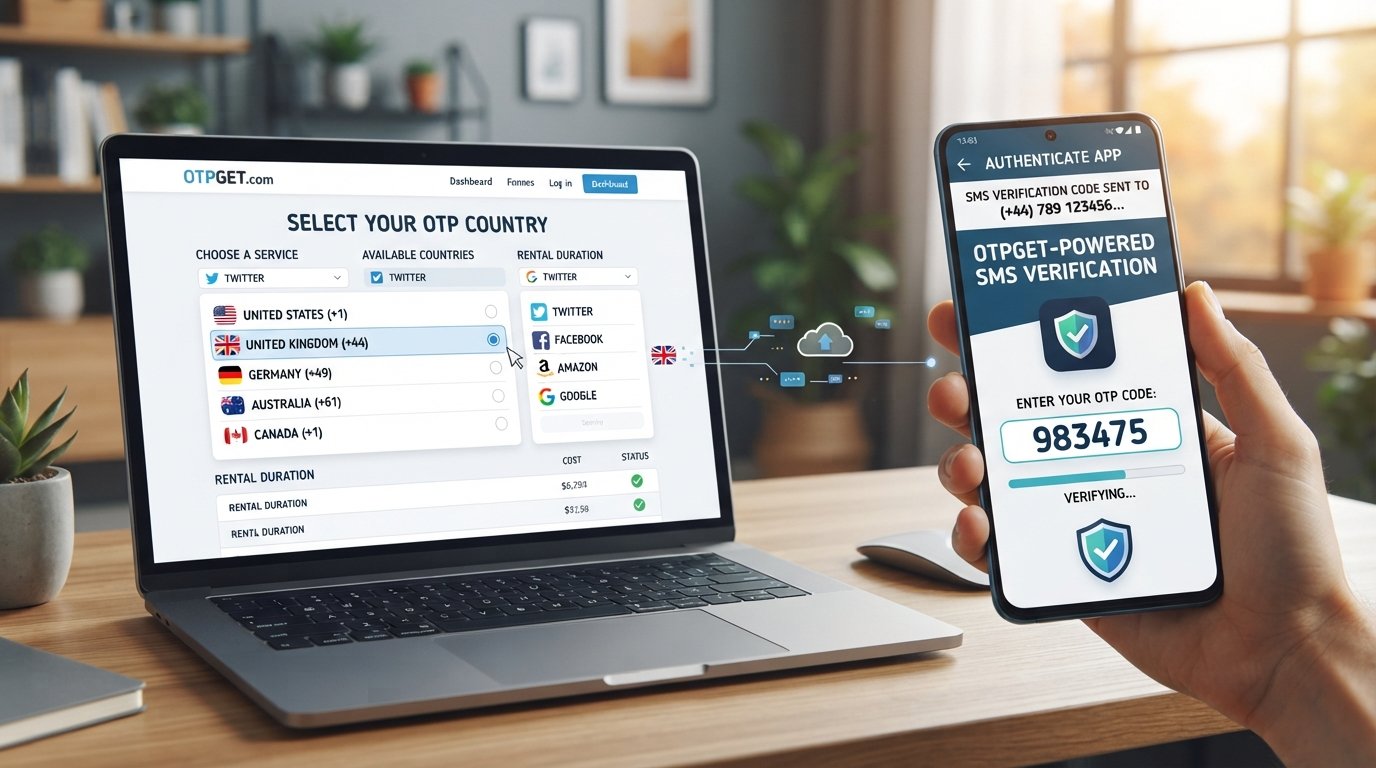
Platforms such as OTPGET can make this process more convenient by providing access to virtual numbers and country-selection options for SMS verification. OTPGET's documentation describes country and service selection as part of its number-ordering process, allowing users to choose according to their particular needs.
Why Does the Country of Your OTP Number Matter?
An international phone number is more than a sequence of digits. Its country code identifies the numbering region associated with it, and some online services use that information as part of their verification process.
For example, a service may request a number from a particular geographic market. Another service may accept numbers from several countries but have different availability depending on location.
There are several reasons country selection matters:
- Country codes: The number needs to use the correct international format.
- Service requirements: Websites and apps can have their own phone-verification rules.
- Regional availability: Numbers may not always be available in every country.
- Compatibility: A particular service may or may not accept virtual or temporary numbers.
- Privacy: Some users prefer separating their personal number from online registrations where permitted.
- Intended use: A number needed for a one-time verification is different from one needed for ongoing access.
The important point is that there is no universal "best country for OTP." The right choice depends on the service and your purpose.
What to Consider When Choosing an OTP Number Country
1. Service Compatibility
Start with the service you want to verify.
Different websites and applications can use different verification rules. Some may accept a broad range of international numbers, while others may limit the countries or number types they accept.
Before selecting a phone number for verification, check the service's own requirements. If it specifically asks for a number associated with a particular country, that requirement should guide your choice.
A virtual number provider can give you options, but it cannot override a platform's verification policy.
2. Availability
A country may be suitable in theory but unavailable when you actually need a number.
Number inventory can vary by country and service. That means it is useful to check what is currently available before committing to a specific option.
OTPGET's API documentation, for example, includes country and service lookup functions and provides availability checks for certain rental-number workflows.
This makes availability an important part of choosing an online OTP number, rather than something to consider only after selecting a country.
3. Reliability of SMS Delivery
Receiving the verification message is the entire point of an OTP receiving service.
If an SMS does not arrive, arrives too late, or cannot be retrieved, the number may not be useful for your particular task.
When comparing a temporary SMS number or virtual SMS number, consider whether the provider offers a straightforward way to monitor incoming messages and whether the number is intended for the type of verification you are performing.
No provider can guarantee acceptance or delivery for every service, so it is better to think in terms of suitability rather than guaranteed results.
4. Privacy
One reason people use a temporary number for verification is to avoid unnecessarily sharing their personal phone number.
For legitimate registrations, testing, or other permitted activities, a virtual phone number can provide separation between personal communications and online activity.
However, privacy does not mean ignoring the rules of the service you are using. Always review its verification and account policies before using a temporary or virtual number.
5. Intended Use
Think about what you actually need the number for.
A developer testing an application may have different requirements from someone completing a one-time registration. A business that needs ongoing access may need a different arrangement from a user who only needs to receive a single verification code.
Consider questions such as:
- Is the verification one-time or ongoing?
- Do you need a temporary or longer-term number?
- Will you need to receive future messages?
- Does the service require a particular country?
- Is separating your personal number important?
Your answers can narrow down the right country and number type.
6. Geographic Requirements
Some services are designed around specific markets and may require or prefer a country-specific phone number.
If the service explicitly identifies a geographic requirement, follow it rather than assuming that another country will work.
A foreign number should not be viewed as a way to bypass regional restrictions or verification rules. Acceptance ultimately depends on the platform.
7. Cost and Convenience
Price matters, but it should not be your only selection criterion.
The cheapest temporary phone number is not necessarily the most appropriate if it does not meet your intended requirements.
Instead, consider the overall balance of:
- Country availability
- Number type
- Intended duration
- Service compatibility
- Ease of receiving SMS
- Cost
- Convenience
This approach helps you choose based on value rather than simply choosing the lowest displayed price.
Should You Always Choose Your Own Country?
Not necessarily.
If a service accepts your local number and you are comfortable using your personal number, a local option may be perfectly appropriate.
However, there are legitimate situations where a user may need a number associated with another country. For example, developers may test region-specific experiences, businesses may separate operational numbers from personal communications, or users may need a country-specific number where the service explicitly permits it.
The important distinction is between using an appropriate country-specific number and attempting to circumvent a platform's restrictions.
A foreign virtual number does not automatically bypass verification requirements. A service may reject virtual numbers, restrict certain countries, or require additional verification.
How to Choose the Right Country for an OTP Number
You can simplify the decision by following a straightforward process.
1. Identify the service
First, determine which website, application, platform, or testing environment you need to use.
2. Check its requirements
Look for country, phone-number, or SMS verification requirements. If the platform specifies accepted countries, use those requirements as your starting point.
3. Decide how long you need the number
If you only need to receive verification codes once, a temporary option may be appropriate. If you need continued access to SMS, consider whether a longer-term number is more suitable.
4. Consider privacy
If you prefer not to use your personal number for a permitted online activity, determine whether a virtual number provides the separation you need.
5. Check available countries
Review the countries currently available from your chosen provider. Do not assume that a country will always have inventory.
6. Compare suitable options
Consider compatibility, availability, convenience, cost, and your intended use together.
7. Request the OTP
Once you have selected an appropriate number, use it for the permitted verification process and monitor for the incoming SMS.
OTPGET can simplify the country-selection stage by allowing users to work with country and service options when obtaining virtual numbers. Its documentation shows workflows for retrieving available countries and services before requesting a number.
How OTPGET Can Help
Choosing an OTP number manually can become inconvenient when you need to compare countries, services, and number types.
OTPGET is designed around virtual phone numbers and OTP verification, giving users a platform for obtaining numbers based on available country and service options. Its official site describes virtual numbers, rental numbers, and SMS OTP functionality, while its developer documentation provides country and service selection workflows.
That can be useful when you need:
- Convenience: Explore available options without relying on a physical SIM.
- Country selection: Choose from the countries and services currently offered.
- Temporary number access: Use virtual numbers for appropriate one-time verification scenarios.
- SMS verification workflows: Request a number and monitor its SMS status through the available platform workflow.
- Personal-number separation: Keep certain permitted online registrations separate from your personal communications.
- International options: Consider country-specific numbers when a service legitimately requires or supports them.
For users with more technical requirements, OTPGET also provides API documentation covering number requests, country lookup, service lookup, and SMS status handling.
The key benefit is not simply having more numbers. It is having a more structured way to consider which country and number type fit your particular task.
If you need a temporary or country-specific number for a legitimate verification purpose, explore the available options through OTPGET and select the country based on the requirements of the service you intend to use.
Common Mistakes to Avoid When Choosing an OTP Number
Choosing an OTP number becomes easier when you know what not to do.
Choosing a country without checking compatibility:
A country may look suitable but still be unsupported by the service you are trying to verify.
Assuming every service accepts virtual numbers:
Virtual and temporary numbers are not universally accepted. Always follow the platform's own rules.
Ignoring availability:
A country you used previously may not have suitable numbers available when you return.
Choosing solely based on price:
A low-cost number is not useful if it does not fit your requirements.
Reusing temporary numbers unnecessarily:
If an account requires future SMS access, a one-time number may not be appropriate.
Sharing personal information unnecessarily:
Use only the information required by the service and review its privacy practices.
Assuming one country works everywhere:
Different platforms can have different requirements. Treat every verification task individually.
OTP Number vs. Personal Phone Number
A temporary or virtual number and a personal phone number serve different purposes.
| Factor | OTP / Virtual Number | Personal Phone Number |
|---|---|---|
| Main purpose | Temporary or specialized verification | Everyday communication and accounts |
| Physical SIM required | Not necessarily | Usually |
| Privacy separation | Can provide separation | Directly connected to you |
| Long-term access | Depends on number type | Generally ongoing |
| Country selection | May offer multiple country options | Usually tied to your mobile provider |
| Best suited for | Permitted temporary, testing, or specialized uses | Personal and long-term communication |
Neither option is automatically better. The right choice depends on the account, service requirements, privacy preferences, and how long you need access to the number.
Frequently Asked Questions
1. What is an OTP number?
An OTP number is a phone number used to receive a one-time password or verification code by SMS. Depending on the service and provider, it may be a personal, virtual, temporary, or rented number.
2. How do I choose the right country for an OTP number?
Start with the service you need to verify. Check its country requirements, then consider availability, compatibility, intended duration, privacy, and cost before selecting a country.
3. Can I receive OTP codes online?
Yes, virtual-number services can provide ways to receive SMS verification codes online. However, whether a particular service accepts the number depends on that service's verification policies.
4. Does every website accept virtual phone numbers?
No. Websites and applications can have different verification rules, and some may restrict virtual, temporary, or certain country-specific numbers.
5. Why does OTP country selection matter?
The country determines the number's country code and can affect compatibility with services that have geographic or number-type requirements. Availability can also vary between countries.
6. Can I use a temporary phone number for SMS verification?
You can use a temporary number for permitted verification activities when the service accepts that type of number. For accounts requiring future access to the same number, a longer-term option may be more appropriate.
7. How can OTPGET help me choose an OTP number?
OTPGET provides virtual-number and OTP workflows that include country and service selection. Users can review available options and choose a number based on their specific verification requirements.
Conclusion
There is no single country that is automatically the right choice for every OTP number.
The better approach is to start with your purpose and work backward. Check the service's requirements, consider whether you need a temporary or longer-term number, review country availability, think about privacy, and compare convenience and cost before making your selection.
A country-specific number can be useful for legitimate testing, temporary registrations, privacy-conscious workflows, and services that support numbers from particular regions. But acceptance always depends on the individual platform, so choosing a foreign number should never be treated as a guaranteed way around verification restrictions.
For users who want a convenient way to explore virtual and country-specific options, OTPGET provides a practical starting point. Its platform and documentation support country and service selection as part of its virtual-number and SMS OTP workflows.
Ready to find an option that fits your needs? Explore OTPGET and choose your OTP number based on the country, service, and purpose that matter to you.
Responsible use: Always follow the terms, verification policies, and applicable rules of the website or service where you use an OTP or temporary phone number.
Suggested Internal Links
- Temporary phone numbers
- Receive SMS online
- Virtual phone numbers
- SMS verification
- International phone numbers
- OTP verification
- How OTP numbers work
- Temporary SMS numbers
SEO Checklist
- Article length: Approximately 1,200–1,800 words.
- Primary keyword: “OTP number” used naturally throughout the article.
- Secondary keywords: Relevant search phrases incorporated naturally without keyword stuffing.
- OTPGET positioning: Brand presented as a practical solution for country and service selection.
- SEO title: Written to target the requested title-length range.
- Meta description: 160 characters.
- URL slug: Short, lowercase, descriptive, and contains no year.
- Evergreen content: No calendar-year references.
- Headings: Structured with clear H2 and H3 sections.
- Search intent: Addresses informational questions while supporting commercial intent naturally.
- CTA: Included without excessive promotional language.
- Unsupported claims: No invented statistics, guarantees, certifications, partnerships, or capabilities.
- Keyword stuffing: Avoided.
- Responsible use: Verification policies and service terms are explicitly addressed.
- Human readability: Short paragraphs, practical guidance, examples, table, and FAQs included.