How Spam Starts: How Virtual Numbers Reduce Spam with OTPGET
How Spam Starts: How Virtual Numbers Reduce Spam with OTPGET
Introduction
You enter your phone number on a website to create an account. Maybe you are requesting an offer, buying something online, testing an app, or simply trying to complete an SMS verification step.
At the time, it seems harmless.
Then the calls and messages begin.
A promotional SMS arrives. Another follows. Soon, unfamiliar numbers may be calling, while your inbox becomes filled with messages you never asked for. Not every unwanted message is caused by one particular website, and legitimate businesses also use phone numbers for useful communication. But one thing is clear: the more places your personal number appears, the more opportunities there are for it to be used, shared, stored, or exposed.
That raises an important question: how does spam start, and can virtual numbers reduce the problem?
The answer begins with understanding phone-number exposure. A virtual number cannot magically eliminate spam, but it can give you a practical way to avoid sharing your primary personal number every time an online service asks for one.
How Spam Starts
Spam can begin in surprisingly ordinary situations. You may provide your number because a website requests it during registration, an online store wants to send delivery updates, or an app requires SMS verification.
Some common sources of phone-number exposure include:
-
Website registrations and account sign-ups
-
Online forms and quote requests
-
Promotions, contests, and giveaways
-
Shopping websites and marketplaces
-
Mobile apps and digital services
-
Business directories and public listings
-
Marketing databases
-
Data breaches or accidental exposure
-
Sharing your number with unfamiliar companies
-
Reusing the same number across many websites
This does not mean every website asking for your number is unsafe. Many services have legitimate reasons for collecting contact information.
The problem is repeated exposure.
When the same personal number is used across dozens of unrelated services, it becomes difficult to control where that number exists and who may contact you through it.
A phone number that was originally shared for one purpose can eventually become part of a much larger communication ecosystem.
Why Your Personal Number Can Become a Spam Target
Your primary phone number is often connected to more than just phone calls.
It may be associated with shopping accounts, social platforms, delivery services, financial services, business contacts, messaging apps, and other online accounts. That makes it an important piece of personal contact information.
Legitimate messages might include a delivery notification, appointment reminder, account alert, or verification code. Spam is different: it generally refers to unwanted or unsolicited communications that you did not request.
The more frequently you use one personal number online, the harder it becomes to separate these categories.
Imagine using the same email address for personal conversations, newsletters, shopping promotions, work registrations, and every website that asks for an account. Your inbox would quickly become difficult to manage.
Phone numbers can face a similar problem.
Using a separate number for appropriate online activities creates another layer of separation between your personal communications and your online activity.
The Hidden Cost of Sharing Your Phone Number Everywhere
Spam is more than an annoying notification.
Repeated unwanted calls and SMS messages can interrupt work, distract you while traveling, or make it harder to identify important communications. There is also a privacy issue: your phone number is a direct communication channel, so once it is widely shared, controlling who can reach you becomes more difficult.
Common consequences can include:
-
Unwanted promotional calls
-
Repeated marketing SMS
-
Unnecessary verification messages
-
Notification clutter
-
More difficulty identifying legitimate communications
-
Concerns about how your number is being used
-
Less separation between personal and online activities
For freelancers, remote workers, shoppers, marketers, and people who frequently test online services, the problem can become particularly noticeable.
The goal is not to stop using your phone number altogether. Instead, it is to be more selective about where your primary number is actually necessary.
What Is a Virtual Phone Number?
A virtual phone number is a phone number that operates through an online service rather than being tied to your everyday personal SIM in the traditional way.
Depending on the provider and service, virtual numbers can be used for online services, business communication, testing, temporary activities, and SMS verification workflows.
The key privacy benefit is straightforward: you do not have to expose your primary personal number for every online interaction that requests a phone number.
For example, if you are signing up for a service you do not expect to use regularly, a suitable virtual number may provide a layer of separation between that service and your everyday contact information.
Virtual numbers can also be useful for businesses and developers that need separate numbers for specific workflows.
They are not a replacement for every type of phone communication, however. Some accounts, financial services, recovery processes, or trusted contacts may be better connected to a primary or dedicated number that you control long term.
Can Virtual Numbers Reduce Spam?
Yes, a virtual number can help reduce exposure to spam, but it is important to understand what that actually means.
A virtual number does not automatically block every spam call or message. Instead, it can reduce the number of situations in which your personal number is exposed.
Consider this simple pattern:
Personal number → used everywhere → greater exposure
versus:
Virtual number → used for selected online activities → personal number remains more private
The distinction matters.
If you use your personal number for every website, promotion, application, marketplace, and verification request, that number becomes connected to many different services.
If you use a virtual number for appropriate activities instead, your primary number can remain reserved for people and services that genuinely need it.
That is a privacy strategy rather than a promise of zero spam.
How OTPGET Helps Reduce Number Exposure
This is where a service such as OTPGET can become useful.
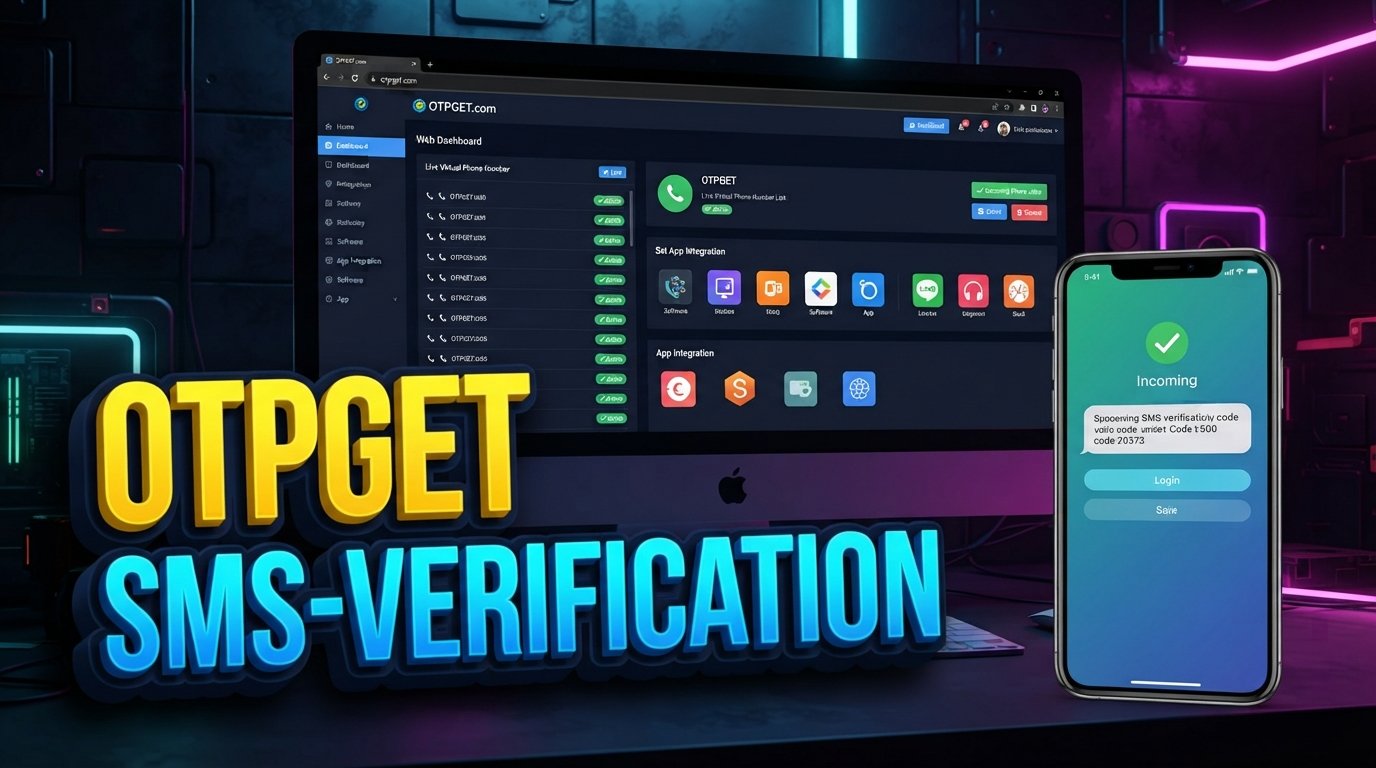
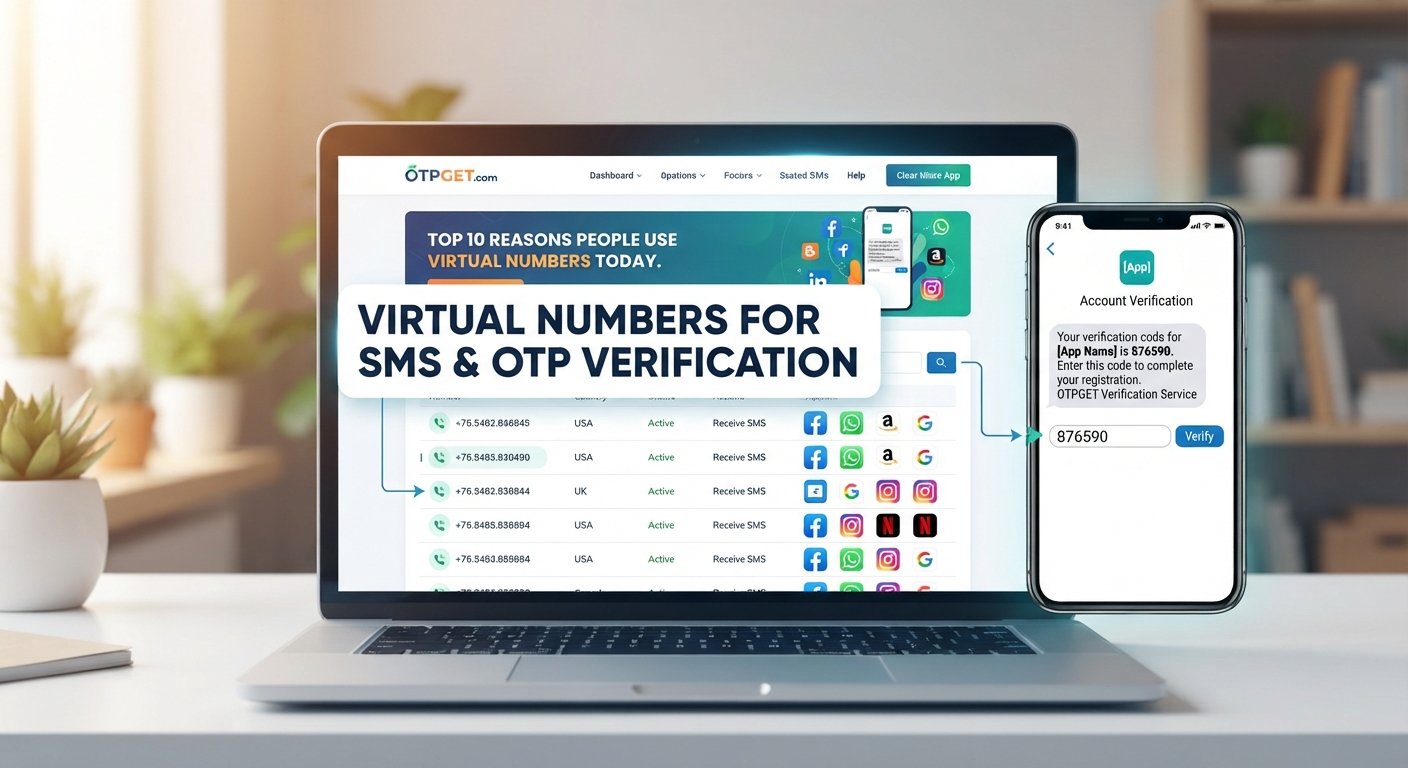
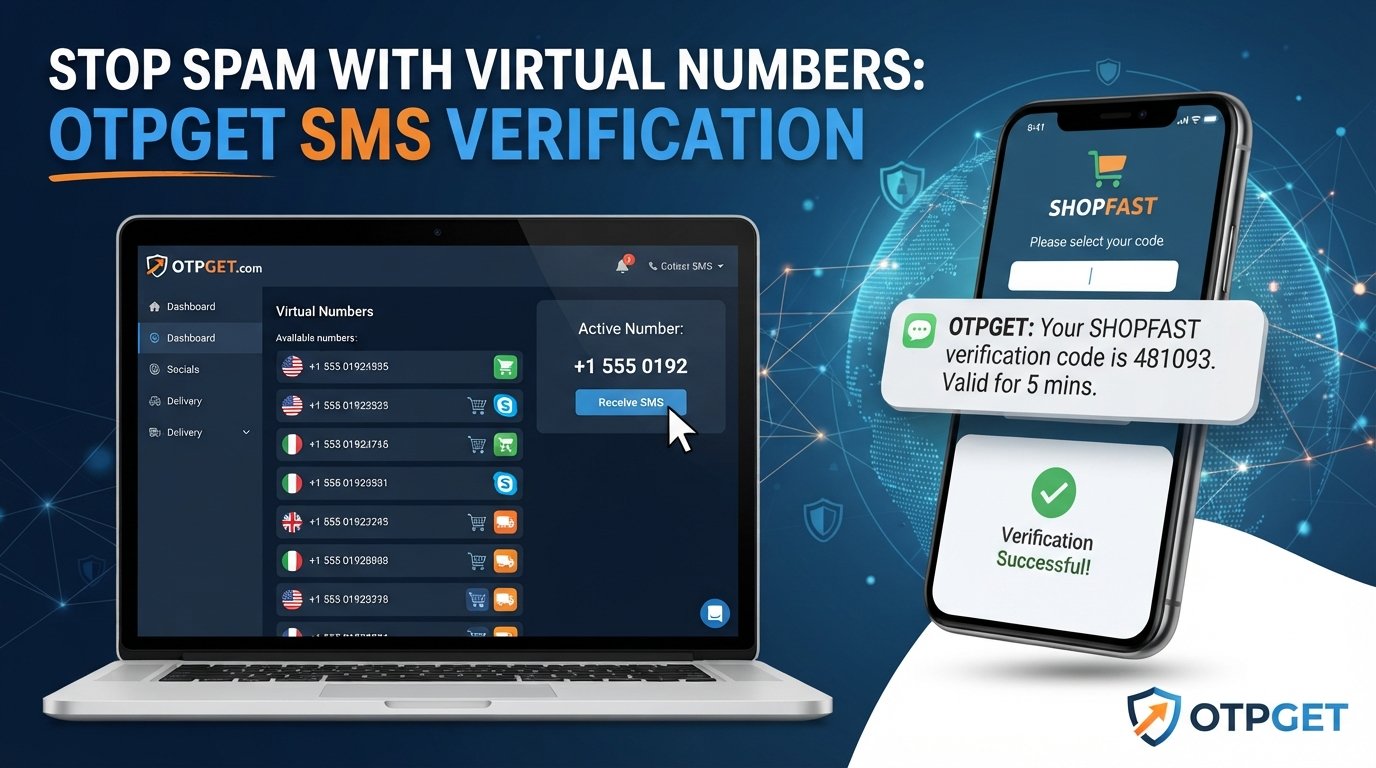
OTPGET provides virtual numbers designed for SMS OTP verification and related online workflows. Its platform offers temporary virtual numbers as well as rental numbers, giving users different options depending on how long they need a number.
The practical idea is simple: instead of automatically giving your primary personal number to every online service, use a suitable virtual number when the situation allows it.
For example, suppose you want to try an unfamiliar online service that requires SMS verification. If its terms and policies permit the use of a virtual number, you can use an OTPGET number rather than immediately exposing your everyday personal number.
This can help with:
-
Improved number privacy: Keep your primary number away from unnecessary online registrations.
-
Reduced exposure: Limit how many websites and services receive your personal contact information.
-
Convenient verification: Receive SMS verification codes through a virtual number where supported.
-
Separation: Keep online verification activity distinct from personal communications.
-
Flexible number usage: Choose temporary or longer-term number options depending on the legitimate use case.
-
Simpler management: Manage online number activity without adding another physical SIM to your everyday phone.
OTPGET's public service information describes virtual numbers across numerous countries and services, along with rental numbers and developer API options.
The important point is responsible use. A virtual number should be used for legitimate purposes and in accordance with the rules of the website or service being accessed. OTPGET's own terms prohibit illegal, fraudulent, abusive, or harmful use of its services.
OTPGET vs. Using Your Personal Number Everywhere
| Feature | Personal Number Everywhere | Virtual Number with OTPGET |
|---|---|---|
| Personal number exposure | Higher when shared repeatedly | Can reduce unnecessary exposure |
| Privacy | Less separation between activities | Adds a layer of separation |
| Online activity | Mixed with personal communications | Can be kept separate |
| Convenience | Simple, but less controlled | Convenient for suitable online workflows |
| Spam exposure management | More difficult to isolate | Can help limit exposure of the primary number |
| Online verification use | Uses your personal number | Virtual numbers can be used where permitted |
| Number management | One number for many purposes | Different numbers can serve specific needs |
This is not about declaring one option suitable for every situation.
Your primary number still has an important role. The benefit of a virtual number is having another option when sharing your personal number is unnecessary.
When Should You Use a Virtual Number?
A virtual number can make sense when you want more separation between your personal identity and a particular online activity.
Practical examples include:
-
Signing up for an unfamiliar online service
-
Using websites where you prefer not to expose your primary number
-
Participating in temporary online activities
-
Separating business and personal communications
-
Testing applications or SMS workflows
-
Completing legitimate verification processes where virtual numbers are permitted
There are also situations where your primary number or another trusted communication method is more appropriate.
For example, accounts that are important for personal security, account recovery, financial activity, or long-term communication may require a number that you control consistently. Before using a virtual number, consider whether you will need ongoing access to future messages or recovery codes.
The right choice depends on the purpose of the account and the service's requirements.
Smart Ways to Reduce Spam Beyond Using a Virtual Number
A virtual number works best as part of a broader privacy strategy.
You can also reduce unnecessary phone-number exposure by:
-
Avoiding publication of your personal number on public websites
-
Providing a phone number only when it is genuinely necessary
-
Reviewing privacy settings on accounts and apps
-
Checking how a service says it will use contact information
-
Avoiding suspicious websites and questionable forms
-
Using built-in spam filters on your phone
-
Blocking unwanted callers and senders
-
Keeping different contact details for different purposes when practical
-
Reviewing which services currently have access to your number
-
Being cautious about promotions that request more information than necessary
Small decisions add up.
The objective is not perfect privacy. It is better control over where your personal contact information goes.
Why OTPGET Is a Practical Privacy Solution
Your personal phone number is valuable contact information. Giving it away every time a website asks for it can make it increasingly difficult to control your online communication.
OTPGET offers a practical alternative for suitable situations: use a virtual number when you do not need to expose your primary personal number.
Its platform supports virtual numbers for SMS verification, along with temporary and rental options for different use cases.
That makes the service particularly relevant for people who frequently interact with online platforms, test services, manage digital accounts, or simply want more separation between their personal number and online activities.
It is not a guarantee against spam, and it does not make a user completely anonymous or untraceable. Instead, its value is more practical: fewer unnecessary situations in which your primary phone number needs to be shared.
Used responsibly, that additional layer can make phone-number privacy easier to manage.
Frequently Asked Questions
1. What is a virtual phone number?
A virtual phone number is a phone number provided through an online service rather than being tied to your everyday physical SIM in the traditional way. Depending on the service, it can support SMS, verification, business communication, or other legitimate online uses.
2. Can a virtual number reduce spam?
A virtual number can help reduce spam exposure by keeping your primary personal number out of some online registrations and activities. It cannot guarantee that all spam will stop.
3. Does using a virtual number stop spam completely?
No. Virtual numbers are a privacy and exposure-management tool, not a universal spam blocker. Other privacy practices, spam filters, and cautious online behavior are still important.
4. Why should I avoid sharing my personal phone number online?
The more websites and services that have your personal number, the harder it can be to control how widely it is stored or used. Limiting unnecessary exposure can improve your overall phone number privacy.
5. What is OTPGET used for?
OTPGET provides virtual numbers for SMS OTP verification and offers temporary and rental number options. Its public documentation also describes API tools for developers managing virtual-number workflows.
6. Can I use OTPGET for online verification?
OTPGET is designed for SMS OTP verification, but users should make sure that using a virtual number is allowed by the particular website or service they are accessing.
7. Is a virtual number useful for protecting personal privacy?
Yes, it can provide an additional privacy layer by separating selected online activities from your primary phone number. It works best when combined with sensible privacy and security practices.
Conclusion
Spam often starts with something that seems completely ordinary: entering a phone number into an online form.
One registration may not seem significant. But when the same personal number is used across shopping sites, apps, promotions, registrations, and verification workflows, its exposure can grow.
Virtual numbers offer a practical way to create more separation.
Instead of giving your primary number to every online service, you can use a virtual number for appropriate activities and keep your personal number reserved for communication that genuinely requires it.
OTPGET provides a practical way to access virtual numbers for suitable online verification and related use cases, helping users reduce unnecessary exposure without promising unrealistic protection from every form of spam.
If you want more control over where your personal phone number appears online, explore OTPGET and consider whether a virtual number fits your next online activity.