Keeping Your OTPGET Account Secure: 6 Practical Security Steps
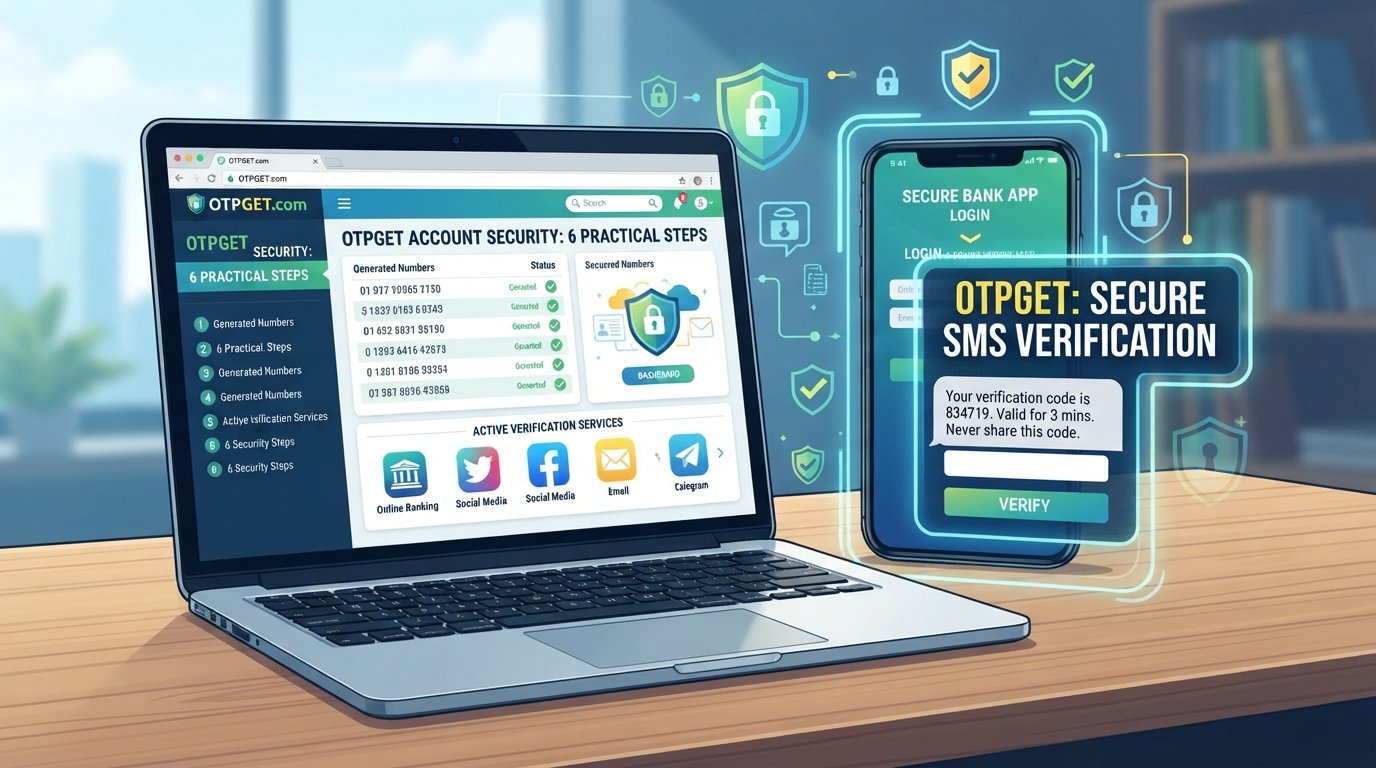
Keeping Your OTPGET Account Secure: 6 Practical Security Steps
An OTP or verification code can be a small part of an online login or signup process, but protecting it matters. These short-lived codes can help confirm that a person has access to a particular account, phone number, or verification channel. That makes good OTP security an important part of responsible online activity.
Convenience should not come at the expense of basic account protection. Whether you use OTPGET for verification needs or another secure OTP service, a few simple habits can make your account and verification information easier to protect.
This guide covers six practical steps for improving OTP account security. You will learn how to create stronger login credentials, protect verification codes, secure your recovery channels, recognize suspicious messages, and maintain better security habits over time.
The goal is simple: use OTPGET conveniently while treating your account and verification information with the same care you would give any other online account.
Why OTPGET Account Security Matters
One-time passwords and verification codes are commonly used to confirm access during online registration, authentication, and other verification processes. Because these codes can be tied to a specific verification event, users should handle them carefully.
Good verification code security starts with protecting two things: your account credentials and the codes themselves.
Weak passwords, careless sharing, suspicious links, or unsecured devices can create unnecessary risks. Even when a verification service is convenient, users still play an important role in maintaining account protection.
For OTPGET users, the best approach is to combine convenience with sensible digital security practices. Keep credentials private, verify unexpected requests, secure the email or phone connected to important accounts, and pay attention to anything unusual.
Here are six straightforward steps to help you do exactly that.
1. Use a Strong, Unique Password
A strong password is one of the simplest ways to protect a secure OTP account. Reusing the same password across multiple services creates an avoidable problem: if one account's credentials are exposed, attackers may attempt to use those same credentials elsewhere.
Your OTPGET password should therefore be unique and difficult to guess.
Consider these account security tips:
- Use a long password or passphrase.
- Combine different types of characters when appropriate.
- Avoid names, birthdays, phone numbers, or other easily guessed personal information.
- Do not reuse a password from another important account.
- Consider using a reputable password manager to create and store unique passwords.
A unique password gives your OTPGET account its own layer of protection instead of tying its security to the strength of another service.
Good online account security is rarely about one complicated action. It is usually the result of several sensible habits working together.
2. Never Share Your OTP or Verification Codes
Treat OTPs and verification codes as private information.
If a code is intended to verify an action you initiated, sharing it with another person can undermine that verification process. Be especially cautious when someone unexpectedly asks you to send a code, read it aloud, or enter it somewhere unrelated to the action you were performing.
Good OTP security also means understanding the context in which a code appears.
Watch for requests that:
- Ask you to send a verification code through chat or email.
- Create unnecessary urgency.
- Claim that your account will be closed unless you act immediately.
- Ask for your password and OTP together.
- Direct you to an unfamiliar website to "confirm" a code.
When a message feels unexpected, stop and verify the request through a trusted route before providing any information.
The same principle applies to secure verification codes received through SMS or another verification channel: if you did not expect the code or do not understand why it was generated, investigate before acting on it.
3. Secure the Email or Phone Number Connected to Your Account
Protecting your main account is only part of account protection. Your connected email address or phone can also play an important role in authentication, recovery, or communication.
If someone gains unauthorized access to an important email account, for example, they may be able to interfere with password resets or other account-related communications.
Take time to strengthen the security of the accounts and devices connected to your online services.
Useful steps include:
- Use a strong, unique password for your primary email account.
- Enable additional authentication where the service supports it.
- Keep your phone protected with a screen lock or other available security control.
- Avoid leaving important accounts signed in on shared devices.
- Review account recovery information periodically.
- Install security updates on your phone and computer when available.
Think of this as a security chain. Your OTPGET account may have strong credentials, but your overall account protection can still be weakened if a connected recovery channel is poorly secured.
4. Enable Two-Factor Authentication When Available
Two-factor authentication, commonly called 2FA, adds another layer to the authentication process.
Instead of relying only on something you know, such as a password, two-factor authentication can use an additional factor associated with your identity or possession. Depending on the service, that may include an authentication app, security key, or another supported method.
The important point is to use the security controls actually offered by the service you are protecting.
If two-factor authentication is available for your important online accounts, consider enabling it. It can provide an additional barrier when a password is exposed.
For practical 2FA security:
- Follow the service's setup instructions carefully.
- Keep backup or recovery information somewhere secure.
- Do not share authentication codes or recovery codes.
- Review your authentication methods if you lose access to a device.
- Avoid disabling additional security controls simply for convenience.
OTPGET users should apply the same principle: understand the security options available to the relevant account and use appropriate controls where supported.
5. Watch for Phishing and Suspicious Messages
Phishing is a common form of social engineering in which someone attempts to trick you into revealing information or taking an unsafe action.
A phishing message may imitate a legitimate company, service, or person. It might claim that there is a problem with your account and ask you to click a link, enter a password, or provide a verification code.
You do not need advanced technical knowledge to spot many suspicious messages. Start with a simple checklist:
Before clicking or responding, ask:
- Did I expect this message?
- Is the request unusually urgent?
- Does the sender or website address look suspicious?
- Am I being asked for a password or verification code unexpectedly?
- Can I verify the request through an official or trusted channel?
Be particularly careful with messages that pressure you to act immediately.
OTP protection is not only about keeping a code secret. It is also about preventing someone from persuading you to use that code in an unsafe situation. Protecting verification codes therefore goes hand in hand with online privacy and careful communication.
When in doubt, pause. A few extra seconds of verification can be more useful than rushing to complete an unexpected request.
6. Review Your Account Activity and Security Habits Regularly
Security is not a one-time task. Your online accounts, devices, passwords, and habits can change over time, so periodic reviews are worthwhile.
Pay attention to anything you do not recognize. Unexpected account activity, unfamiliar login notifications, or messages about actions you did not initiate deserve a closer look.
If you believe a password may have been exposed, change it promptly and avoid reusing the replacement elsewhere. If you no longer need access through a particular device or account, remove that access where the relevant service allows it.
A simple security review can include:
- Checking important account activity.
- Updating compromised or reused passwords.
- Reviewing recovery information.
- Removing access you no longer need.
- Checking the devices where accounts remain signed in.
- Reconsidering any security habits that have become too casual.
These habits can help you protect your OTP account and maintain better privacy and security over the long term.
How OTPGET Fits Into a Secure Verification Routine
OTPGET can fit naturally into a broader approach to secure verification by giving users a convenient way to handle OTP and verification-code needs.
The important distinction is that a verification service is only one part of a responsible security routine. Users should also protect their credentials, keep verification codes private, secure their devices, and remain alert to suspicious requests.
A practical routine can look like this:
- Use OTPGET for your verification needs.
- Keep account credentials private and unique.
- Treat every verification code as sensitive information.
- Check unexpected messages before taking action.
- Secure the email, phone, and devices associated with important accounts.
- Use available security controls where appropriate.
This approach balances convenience with personal responsibility. Instead of treating verification as a task to complete as quickly as possible, think of it as one step within a larger account security process.
OTPGET can be part of that process while good security habits provide the additional layer of care that users control themselves.
Common OTP Security Mistakes to Avoid
Small mistakes can make otherwise sensible security practices less effective. Keep these common issues in mind:
- Reusing passwords: A password used across several services can create unnecessary exposure.
- Sharing verification codes: Treat OTPs as private and avoid disclosing them casually.
- Clicking suspicious links: Check unexpected messages before opening links or entering credentials.
- Ignoring unusual activity: Investigate activity you do not recognize.
- Using unsecured devices: Avoid entering sensitive information on devices you do not trust.
- Leaving accounts accessible on shared devices: Sign out when appropriate.
- Ignoring available security controls: Use additional protection when it is offered and suitable for your situation.
Avoiding these mistakes can strengthen your overall digital security without making everyday verification unnecessarily complicated.
A Simple OTPGET Security Checklist
Use this quick checklist whenever you review your account security:
- ☐ Use a unique, strong password for your OTPGET account.
- ☐ Keep OTPs and verification codes private.
- ☐ Secure the email or phone associated with important accounts.
- ☐ Use two-factor authentication when available.
- ☐ Check suspicious messages before clicking links or sharing information.
- ☐ Review unexpected account activity.
- ☐ Avoid leaving accounts open on shared or unsecured devices.
- ☐ Review your security habits regularly.
- ☐ Use OTPGET responsibly as part of a broader secure verification routine.
Final Thoughts
Keeping an OTPGET account secure does not require complicated technical knowledge. The most important habits are straightforward: use a unique password, protect your verification codes, secure your connected accounts and devices, use available authentication controls, watch for phishing, and review your security habits regularly.
These steps help create a stronger foundation for OTP security while keeping everyday verification convenient.
OTPGET can be a practical part of that routine, but responsible usage remains essential. Treat your account credentials and verification information carefully, stay alert to suspicious requests, and make security part of your normal online habits.
Ready to make OTP verification part of a more security-conscious routine? Explore OTPGET and use it alongside sensible account protection and verification-code security practices.
8. FAQ Section
1. What is OTP account security?
OTP account security refers to the practices used to protect an account and the one-time passwords or verification codes associated with authentication. It includes using strong credentials, keeping codes private, securing connected devices, and recognizing suspicious requests.
2. How can I keep my OTPGET account secure?
Use a strong, unique password for OTPGET, keep verification codes private, secure your email and phone, use available security controls, avoid suspicious links, and review your security habits regularly.
3. Should I share my OTP or verification code?
No. OTPs and verification codes should generally be treated as private information. If someone unexpectedly asks you to provide a code, pause and verify why it is being requested before taking action.
4. Is two-factor authentication useful for account security?
Two-factor authentication can add another layer of protection by requiring an additional authentication factor beyond a password. When a service supports 2FA, follow its recommended setup and recovery procedures.
5. How can I recognize a suspicious OTP message?
Look for unexpected requests, urgent language, unfamiliar links, unusual sender information, or requests for passwords and verification codes. If something seems unusual, verify the request through a trusted channel before responding.
6. What should I do if I think my OTP account has been compromised?
Change the account password promptly, especially if it may have been exposed or reused elsewhere. Review relevant account activity and connected security information, and follow the service's available account-recovery or security guidance.
7. How does OTPGET fit into a secure verification routine?
OTPGET can be used as part of a broader verification routine focused on convenience and responsible security practices. Users should combine the service with strong passwords, private handling of verification codes, secure devices, phishing awareness, and appropriate account protection.