Virtual Numbers for SMS Verification: How OTPGET Can Help You
Virtual Numbers for SMS Verification: How OTPGET Can Help You
Online services often ask for a phone number before allowing an account registration, login, or other verification step. For many people, using a primary personal number for every website and app is not always convenient.
A virtual number can provide a separate channel for supported SMS verification workflows. Instead of relying on another physical SIM card, users can access a number through an online platform and receive eligible SMS messages through that service.
OTPGET is designed around this type of use case. Its official documentation describes virtual-number services for receiving SMS OTPs, along with temporary and rental-number options.
If you are researching virtual numbers for SMS verification, understanding how they work, where they are useful, and what limitations to consider can help you choose an appropriate solution.
What Is a Virtual Number for SMS Verification?
A virtual number is a phone number that can be managed through an online service rather than requiring you to keep a separate physical SIM card in your phone.
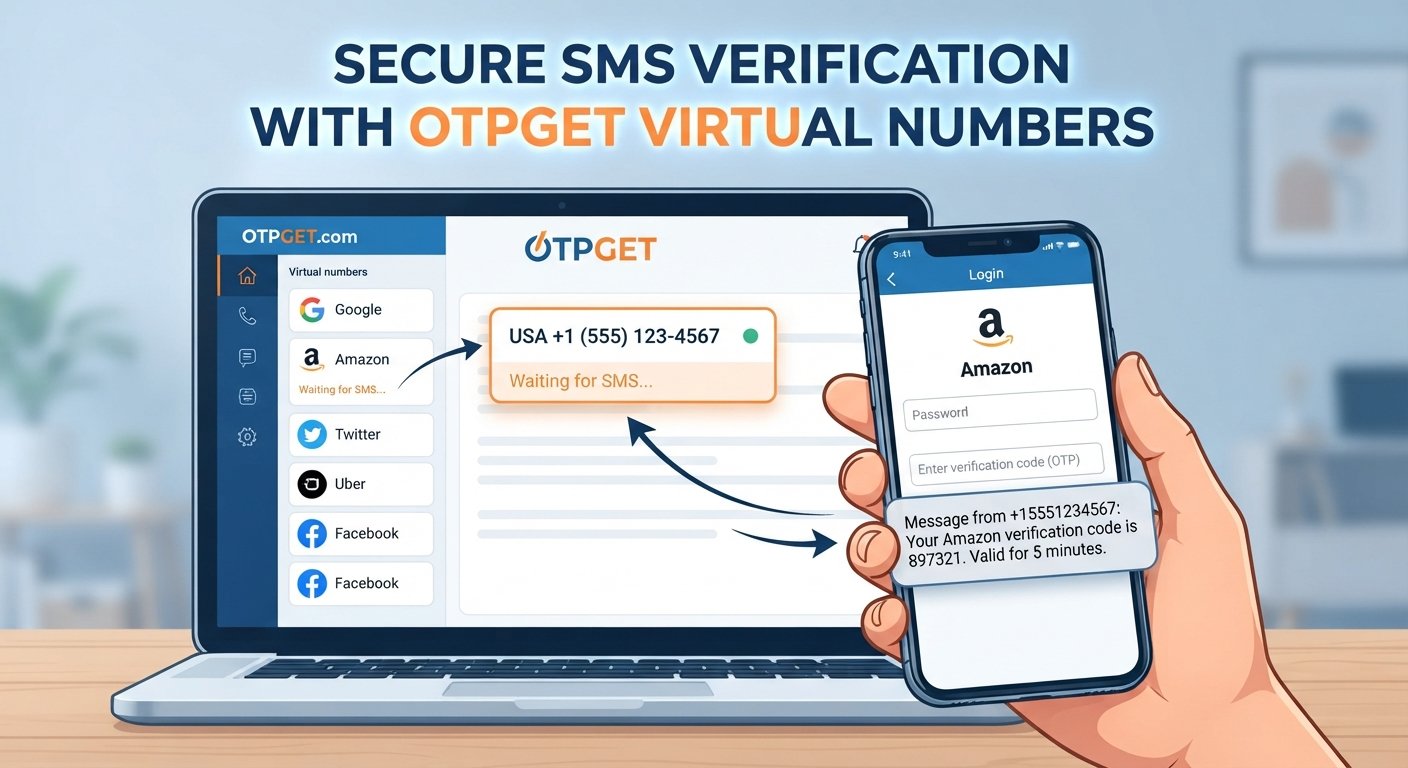
For SMS verification, the basic process is straightforward:
- A website or application asks for a phone number.
- You provide an eligible virtual number.
- The service sends a verification SMS.
- The SMS is received through the virtual-number platform.
- You view the verification code and enter it where requested.
The important distinction is that a virtual number is still subject to the receiving platform's requirements. Some websites accept certain virtual or VoIP numbers, while others may restrict them.
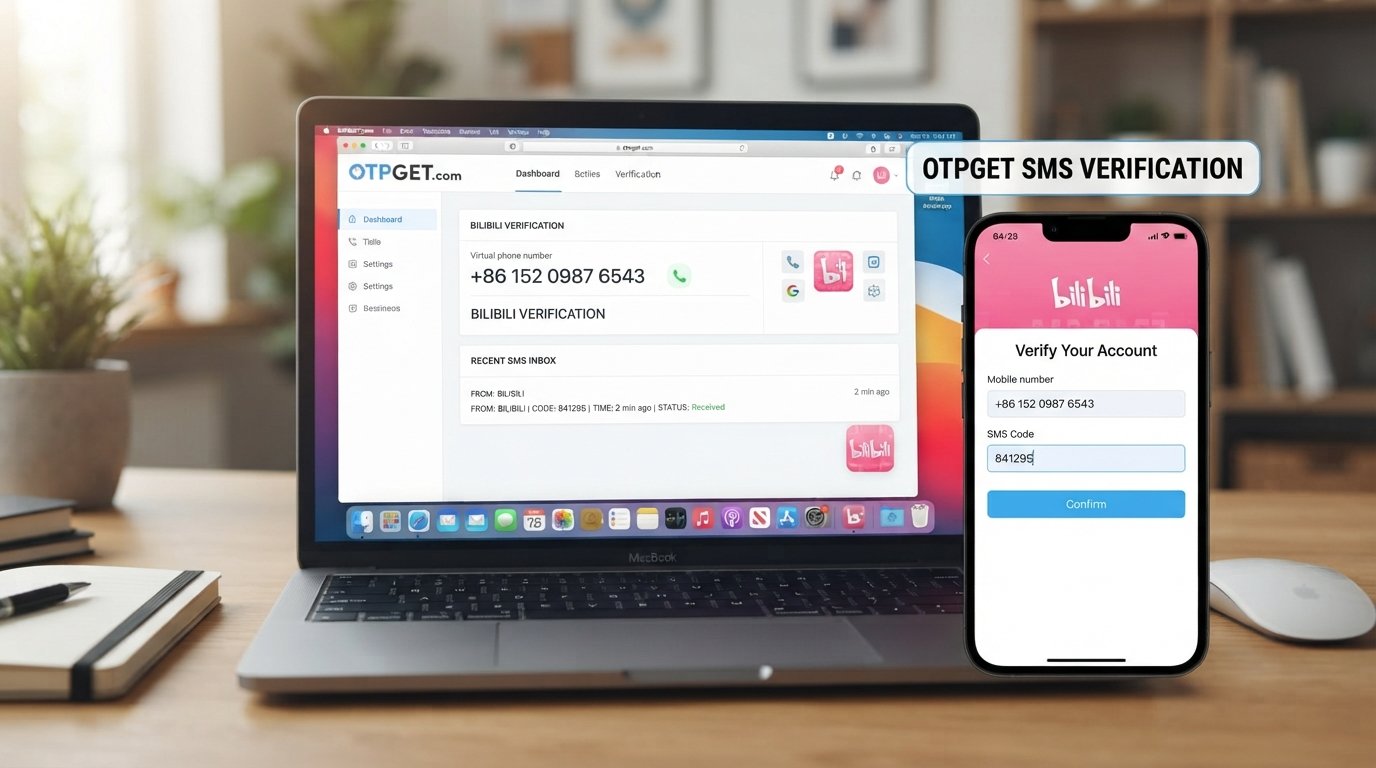
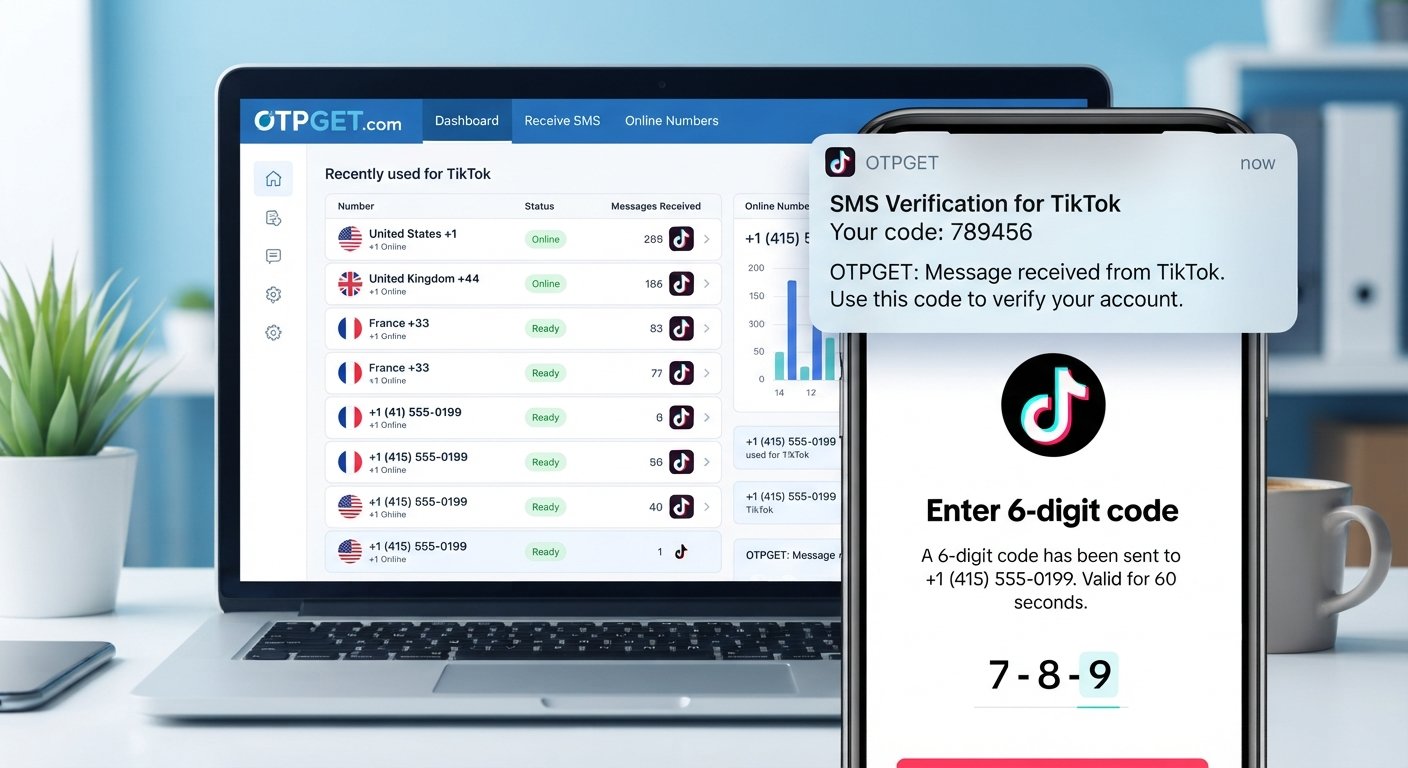
OTPGET's documentation describes a workflow where users select an available country and service, request a number, and check the status for an incoming SMS code.
Why Do Websites and Apps Use SMS Verification?
SMS verification is commonly used as an additional way to confirm that someone has access to a particular phone number.
Depending on the service, a verification code may be used to:
- Confirm a phone number during registration
- Help reduce automated or duplicate registrations
- Confirm access during a login or account action
- Add another authentication step
- Support account recovery or security workflows
An SMS OTP can be useful, but it should not be treated as a complete security solution. SMS-based authentication has limitations, and the security of an account also depends on the website's broader authentication and recovery systems.
For users, the practical question is often whether they want to expose their primary phone number during a particular online interaction.
Why Use a Separate Number for Verification?
There are several legitimate reasons someone might prefer a separate virtual number for online services.
Keep your personal number separate
Your primary phone number may be connected to family, friends, work, banking, and other important services. Using a separate number for appropriate online registrations can keep those activities distinct.
Reduce unnecessary messages
Not every registration needs to be connected to your main number. A separate SMS receiving number can make online verification messages easier to manage.
Simplify online registrations
A virtual number can be convenient when you need a number specifically for a supported verification workflow without obtaining another physical SIM.
Support privacy-conscious workflows
Using a separate number can reduce the number of websites and services that receive your primary phone number. This is a privacy consideration, not a guarantee of anonymity.
Always check the rules of the service you are registering with. If a platform requires a personal, mobile, or otherwise specific type of number, that requirement should be respected.
How OTPGET Works
The exact interface and availability can change, but the general OTPGET workflow is simple.
1. Visit OTPGet.com
Start by visiting OTPGet.com and reviewing the currently available virtual-number options.
2. Choose an appropriate number or service
Select a virtual number based on the supported service and availability shown on the platform.
3. Use the number where permitted
Enter the number on the website or application requesting SMS verification, provided that the platform allows that type of number.
4. Request the verification SMS
Submit the normal verification request through the relevant website or application.
5. Check for the incoming code
Monitor the OTPGET service for the verification message. OTPGET's documentation describes checking activation status for an incoming SMS.
6. Enter the verification code
Copy the received verification code into the appropriate verification field.
7. Complete the process
If the service accepts the number and the SMS is successfully received, the standard verification process can be completed.
Availability and compatibility can vary, so a particular number should not be assumed to work with every website or application.
Key Benefits of OTPGET
The main appeal of an OTPGET virtual number is convenience: it gives users an alternative to exposing their primary phone number for supported online verification workflows.
Potential practical benefits include:
- Access to virtual numbers: Obtain a number through an online platform rather than managing another physical SIM.
- Separation from your primary number: Keep selected online registrations separate from personal communications.
- Online SMS access: Receive supported verification messages through the service.
- Simpler verification workflows: Manage the number and incoming verification message in one place.
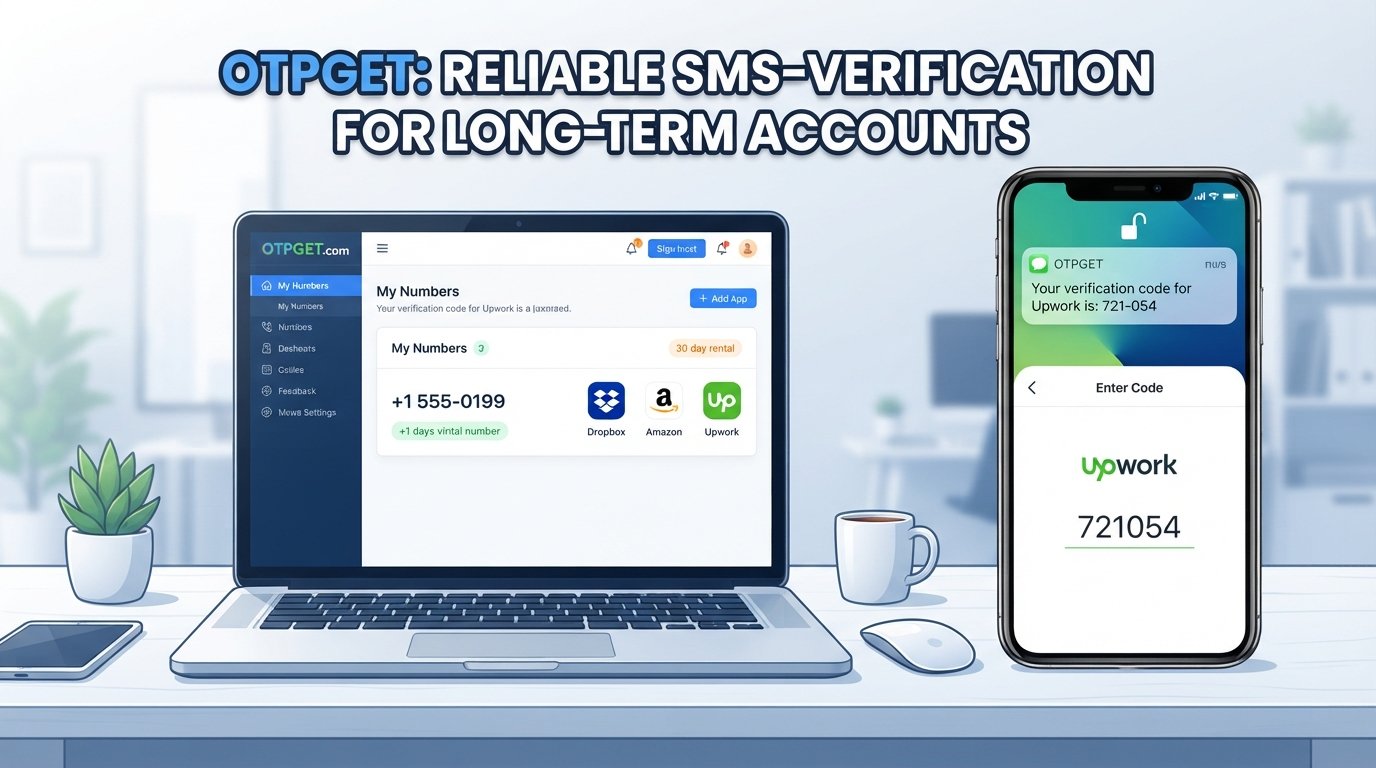
- Different usage options: OTPGET's documentation describes both SMS OTP and rental-number systems, allowing users to consider short-term or continuing requirements.
- Developer-oriented access: OTPGET also documents an API for programmatic virtual-number and SMS workflows, which may be relevant to technical users.
These benefits should be viewed practically rather than as guarantees. Number availability, SMS delivery, and acceptance can depend on the service being verified.
OTPGET vs. Using Your Personal Phone Number
Neither approach is automatically right for every situation. The better option depends on how the number will be used and whether the relevant platform accepts virtual numbers.
| Factor | Personal Number | Virtual Number with OTPGET |
|---|---|---|
| Privacy separation | Connected directly to your personal communications | Can provide separation for supported online services |
| Convenience | Already available on your phone | Managed through an online virtual-number service |
| Online accessibility | Usually tied to your mobile device/SIM | SMS can be accessed through the service |
| Personal number exposure | Your primary number is shared | A separate number can be used where permitted |
| Use-case flexibility | Suitable for personal and long-term needs | Useful for selected supported verification workflows |
| Service compatibility | Generally intended for normal mobile use | Depends on whether the target platform accepts the number |
If an account is important and may require repeated recovery, calls, or long-term access, the choice deserves additional consideration.
Common Use Cases for Virtual SMS Numbers
Virtual numbers can be useful in several legitimate situations.
Application testing
Developers and QA teams may need phone numbers when testing registration and verification flows, provided their testing activities comply with the application's rules.
Separating online activity
A separate number can help distinguish certain online registrations from personal communications.
Supported temporary registrations
For services that explicitly permit temporary or virtual numbers, a temporary virtual number can provide a convenient way to complete an SMS-based registration.
Business and project registrations
Teams may sometimes need separate numbers for project-related services, provided the relevant platform's policies allow them.
Reducing unnecessary exposure of a primary number
Some users simply prefer not to give their main phone number to every online service they interact with.
The key principle is legitimate use. A virtual number should not be used to bypass identity checks, evade restrictions, create fraudulent accounts, impersonate others, or circumvent a platform's security controls.
Things to Consider Before Choosing a Virtual Number
Before using a virtual number for verification, consider the following checklist:
- Service compatibility: Does the website or application accept virtual numbers?
- Number availability: Is an appropriate number currently available?
- SMS delivery: Can the selected number receive the type of message you need?
- Number reuse: Understand whether the number may later be assigned to another user.
- Privacy: Consider what information the service requires and how you will manage the number.
- Account recovery: Decide whether you will need the same number again later.
- Terms of service: Check the rules of the website or application being verified.
- Long-term access: A temporary number may not be suitable for an account you expect to keep for a long time.
- Dedicated vs. temporary use: Consider whether you need a number for one verification event or ongoing access.
One of the most important considerations is account recovery. If a platform might send another verification SMS months later, losing access to the original number could create a problem.
Is a Virtual Number Right for You?
A virtual number may make sense when you need a separate number for a supported online verification workflow and do not want to use your primary phone number.
A personal or dedicated mobile number may be more appropriate when the account is highly important, requires long-term recovery, or may need voice calls or repeated authentication.
Ask yourself:
- Will I need this number again?
- Could the account require recovery SMS?
- Does the service accept virtual numbers?
- Will I need phone calls as well as SMS?
- Is this a temporary registration or a long-term account?
- Would losing access to this number create a problem?
For short-term, supported verification needs, a virtual number can be practical. For important long-term accounts, continuity and recovery should carry more weight in the decision.
Frequently Asked Questions
1. What is a virtual number for SMS verification?
A virtual number for SMS verification is a phone number accessed through an online service that can receive eligible SMS messages, including verification codes, without requiring you to use your primary physical SIM.
2. How does OTPGET work?
OTPGET provides virtual-number functionality for supported SMS verification workflows. Its documented process includes selecting a country and service, obtaining a number, and checking for an incoming verification SMS.
3. Can I receive verification codes online?
Yes, a virtual-number service can allow supported SMS verification messages to be received through an online platform. Whether a particular verification code arrives depends on number availability, service compatibility, and the policies of the website sending it.
4. Can I use an OTPGET number for every website?
No service should be assumed to work with every website. Some platforms restrict virtual, VoIP, temporary, or previously used numbers. Always check the requirements of the specific service.
5. Is a virtual number suitable for long-term account recovery?
It can depend on the type of virtual number and how the service manages it. If an account requires reliable long-term recovery, make sure you can retain appropriate access to the number before choosing it.
6. What is the difference between a virtual number and a temporary number?
A virtual number describes how the number is provided and accessed, while a temporary number generally emphasizes limited or short-term use. A virtual number can be temporary or, depending on the service, available for longer-term use.
7. Why use a separate number for SMS verification?
A separate number can help keep personal communications distinct from online registrations, reduce exposure of your primary number, and make certain verification workflows easier to manage.
8. What should I check before using a virtual number?
Check whether the target service accepts the number type, whether SMS delivery is supported, whether you need the number again for recovery, and whether your intended use complies with the platform's terms.
Conclusion
Virtual numbers for SMS verification can be a practical option when you want to separate your primary phone number from certain online services. They can simplify supported verification workflows while giving users another way to receive SMS codes online.
OTPGET provides virtual-number functionality designed around SMS OTP and verification use cases, with documentation covering number selection, SMS status checking, and related virtual-number services.
The right choice ultimately depends on your specific situation. Consider compatibility, number availability, privacy, future account recovery, and the rules of the service you are verifying.
If a virtual number fits your legitimate use case, explore the available options at OTPGet.com and review the current service information before choosing a number.
11. Internal Link Suggestions
1. Anchor text:
How SMS verification works
Suggested article topic:
A Beginner's Guide to SMS Verification and OTP Codes
Why it fits:
This naturally expands on the verification process introduced in the article and can explain OTPs, verification messages, and common authentication workflows.
2. Anchor text:
temporary vs. long-term virtual numbers
Suggested article topic:
Temporary vs. Rental Virtual Numbers: Which One Do You Need?
Why it fits:
Readers considering OTPGET may need help deciding whether they require a short-term number or continued access.
3. Anchor text:
how to receive SMS online
Suggested article topic:
How to Receive SMS Online With a Virtual Phone Number
Why it fits:
It addresses a closely related search intent and provides an opportunity to explain the general process in greater depth.
4. Anchor text:
virtual phone numbers for businesses
Suggested article topic:
How Businesses Can Use Virtual Phone Numbers for Online Services
Why it fits:
Business users may have different requirements around separation, testing, account management, and long-term number access.
5. Anchor text:
SMS verification privacy considerations
Suggested article topic:
Privacy Considerations When Using Your Phone Number Online
Why it fits:
This provides useful context around personal-number exposure without promising complete anonymity or security.