What Should You Expect From a Professional OTP Provider? | OTPGET
What Should You Expect From a Professional OTP Provider?
When a customer signs up for an account, logs in from a new device, resets a password, or confirms a phone number, a simple verification code can determine whether the experience feels smooth or frustrating.
That is why choosing a professional OTP provider matters. Businesses need more than a way to send one-time passwords. They need an OTP verification service that fits their application, supports secure authentication workflows, provides practical API integration, and helps create a dependable experience for users.
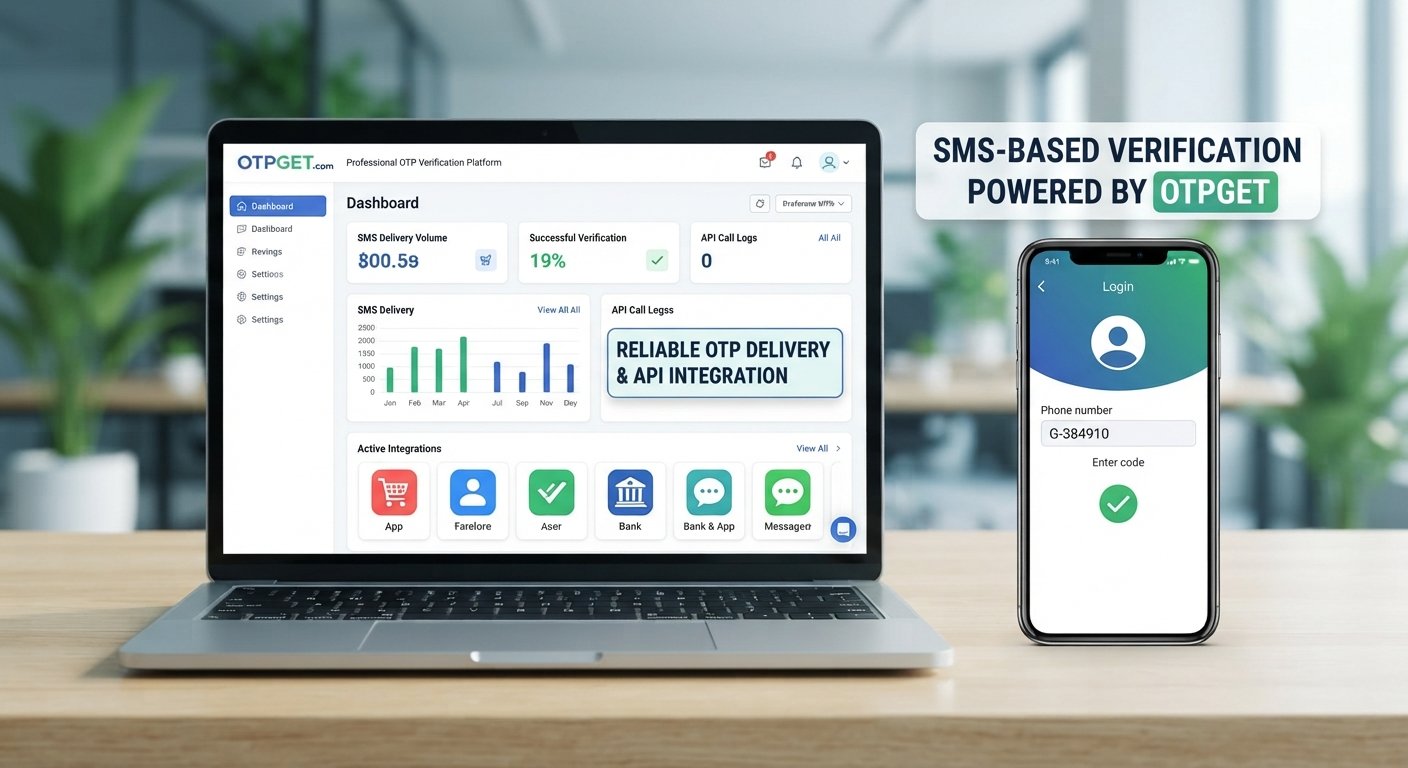
For businesses evaluating their options, OTPGET can be considered as a professional solution for OTP verification, SMS-based verification, phone number verification, authentication workflows, and related business verification requirements.
But what should you actually expect from a professional OTP service provider? The answer goes beyond simply sending an SMS.
What Is an OTP Provider?
An OTP, or one-time password, is a temporary verification code used to confirm that a user has access to a particular phone number or authentication channel.
For example, a user may enter their phone number while creating an account. The application can request an OTP, the user receives the code, and then enters it into the application. The system verifies the submitted code before allowing the next step.
An OTP provider typically sits between the business application and the delivery process. A business integrates its verification workflow with the provider, and the provider supports the process of delivering and verifying one-time passwords.
Businesses commonly use OTP verification for:
- New-user registration
- Phone number verification
- Account login
- Password recovery
- Transaction confirmation
- Two-factor authentication
- Account verification
- Other authentication and fraud-prevention workflows
For users, the process can look simple. For businesses, however, the underlying OTP service needs to be reliable, secure, scalable, and practical to integrate.
What Should You Expect From a Professional OTP Provider?
A professional OTP provider should support more than basic code delivery. Businesses should evaluate the entire verification experience, from integration and security to reliability and scalability.
Reliable OTP Delivery
An OTP is only useful if the user receives it when they need it.
Delayed or unsuccessful OTP delivery can interrupt registration, login, password recovery, and other important actions. Even when the rest of an application works correctly, a poor verification experience can cause users to abandon the process.
Businesses should therefore evaluate an OTP provider based on how well its service fits their required delivery and authentication workflows. The goal is a verification process that is straightforward for both the application and its users.
Easy API Integration
Developers should not have to navigate unnecessary complexity just to add OTP verification to an application.
A professional OTP API should fit naturally into the application's verification flow. Businesses should look for clear integration requirements, understandable request and response handling, useful documentation, and practical approaches to errors and verification states.
The easier an OTP API is to understand and implement, the simpler it can be for development teams to incorporate phone verification and authentication into websites, applications, and digital services.
Security and Authentication
OTP verification is fundamentally an authentication process, so security needs to be considered from the beginning.
Businesses should evaluate how an OTP service fits into their broader security architecture. Appropriate controls around OTP generation, delivery, verification, expiration, authentication attempts, and application access can all contribute to a more responsible verification workflow.
An OTP should be treated as part of a larger authentication system rather than as a standalone security solution.
Scalability
Verification requirements can change as a business grows.
A small application may initially have a limited number of verification events. As registration, login, customer activity, or transaction volume increases, the business may need its OTP service to support a larger operational workload.
When evaluating an OTP service provider, businesses should consider whether the provider and its integration approach can accommodate their expected growth and evolving verification requirements.
Delivery Performance and Reliability
Verification often happens at a critical moment in the customer journey. A user waiting for a code may be unable to continue until the message arrives.
For this reason, businesses should examine an OTP provider's approach to delivery reliability and overall service performance rather than focusing solely on headline features.
It is also useful to consider how the provider fits into the application's retry, error-handling, and user-support processes. A dependable verification experience is a combination of the OTP service and the way the business implements it.
Developer-Friendly Experience
A professional OTP provider should make life easier for the teams responsible for implementation and maintenance.
Important considerations include:
- Clear API documentation
- Straightforward integration
- Understandable authentication requirements
- Predictable request and response handling
- Useful error information
- Practical verification workflows
- Integration flexibility
These details may not be visible to customers, but they can have a significant effect on how efficiently a business can implement and maintain its verification system.
Multi-Use-Case Support
Businesses rarely use OTPs for just one purpose.
The same organization may need phone number verification during registration, OTP authentication during login, and additional verification during account recovery or sensitive actions.
A professional OTP solution should therefore be evaluated according to the business's actual use cases rather than a single feature.
Why Choosing the Right OTP Service Matters
A verification code may be only a few digits long, but its role in the customer journey can be significant.
If a user cannot receive or successfully complete an OTP verification step, the result may be a failed registration, interrupted login, abandoned purchase, or additional customer-support request.
Common consequences of a poor verification experience include:
- Failed verification attempts
- Delayed authentication
- Frustrated users
- Abandoned registrations
- Increased support requests
- Unnecessary friction during account access
A professional OTP service can help businesses build a smoother verification journey by providing the capabilities needed to connect authentication workflows with OTP delivery and verification.
The important point is that OTP verification should support the customer journey, not become an obstacle within it.
OTP API Integration: What Businesses Should Look For
An OTP API is one of the most important considerations when selecting an OTP API provider.
Before choosing a service, technical and business teams should evaluate several areas.
API simplicity: The integration process should be understandable and appropriate for the application's architecture.
Documentation: Developers need clear information about how to make requests, process responses, handle verification states, and troubleshoot common issues.
Authentication: The provider's API access should fit the business's security requirements and development practices.
Request and response handling: Teams should understand what information is required, what the API returns, and how the application should respond to different outcomes.
Error handling: Verification systems need sensible approaches to failed requests, invalid codes, expired codes, and other expected conditions.
Integration flexibility: Businesses should consider how easily the verification service can fit into their websites, applications, backend systems, or existing authentication workflows.
Scalability: The integration should make sense not only for current requirements but also for the business's anticipated growth.
For businesses evaluating OTPGET, these same criteria provide a useful framework. Rather than selecting an OTP API based on marketing language alone, teams can assess how OTPGET fits their technical environment and verification requirements.
How OTPGET Can Help With OTP Verification
OTPGET can be considered by businesses looking for a professional OTP provider to support OTP verification and related authentication workflows.
Its relevance comes from the core requirements businesses often have around verification: OTP-based authentication, SMS-based verification, phone number verification, and integration with business applications through an OTP API.
Depending on the organization's requirements, OTPGET can be evaluated as part of workflows such as:
- New-user phone verification
- Account registration
- Login authentication
- Password recovery
- SMS-based verification
- Two-factor verification
- Business verification processes
The right approach is to begin with the business requirement and then evaluate how OTPGET fits that workflow.
For example, a SaaS company may need phone verification during registration, while an e-commerce platform may need OTP authentication for account access or specific customer actions. The technical implementation can differ, but the underlying objective is similar: verify the user's phone-based identity through a practical authentication workflow.
This makes OTPGET a solution worth considering for businesses that want to assess professional OTP verification and authentication services against their own operational and technical needs.
Who Can Benefit From a Professional OTP Provider?
A professional OTP service can be relevant to many types of digital businesses.
SaaS Platforms
SaaS applications can use phone verification and OTP authentication during account registration, login, and account recovery.
E-commerce Businesses
Online stores can use SMS verification and OTP workflows as part of account access and selected customer actions.
Mobile Applications
Mobile apps can incorporate OTP verification into onboarding, account verification, and authentication experiences.
Online Marketplaces
Marketplaces may use phone number verification to support account creation and customer authentication workflows.
Financial Technology Platforms
Digital financial services may require carefully designed authentication and verification workflows. Businesses in this category should evaluate an OTP provider according to their specific security and operational requirements.
Customer and Membership Portals
Organizations with customer dashboards, membership systems, or digital portals can use OTP verification as part of account access and phone verification.
The common requirement is a reliable way to incorporate one-time password verification into a broader digital experience.
How to Choose an OTP Provider for Your Business
Choosing an OTP provider becomes easier when you turn the decision into a practical checklist.
Ask the following questions before committing to a service:
- Does the provider support my verification workflow?
- Is the OTP API practical for my development team?
- Is OTP delivery suitable for my user experience?
- Can the service accommodate my expected business growth?
- Is clear documentation available?
- Does the provider support the use cases I actually need?
- Are security considerations built into the implementation process?
- Can the service fit my existing technical infrastructure?
- Can my team handle errors and verification states effectively?
- Will the resulting verification experience be simple for users?
These questions help prevent businesses from choosing an OTP provider based on a single feature or price point.
OTPGET can be evaluated using the same framework. Businesses can compare their requirements with the OTPGET solution and determine whether it fits their verification, authentication, and integration needs.
Common Mistakes Businesses Make When Choosing an OTP Provider
Selecting an OTP service based only on the most obvious factor can create problems later.
Choosing only on price: A low-cost service may not necessarily provide the integration experience or reliability your application requires. Cost should be considered alongside functionality and business requirements.
Ignoring reliability: If users regularly struggle to receive verification codes, even a well-designed application can suffer from unnecessary friction.
Overlooking API documentation: Poor documentation can increase development effort and make troubleshooting more difficult.
Failing to consider scalability: A solution that works for an early-stage application should also be evaluated against future requirements.
Ignoring security: OTPs are part of an authentication workflow. Security should be treated as a core consideration rather than an afterthought.
Not testing the user experience: Technical teams should consider the experience from the customer's perspective. Receiving, entering, and validating an OTP should be as straightforward as the workflow allows.
Ignoring long-term requirements: Businesses should consider where verification fits into their broader product and authentication strategy, not just the immediate implementation.
Frequently Asked Questions
What is an OTP provider?
An OTP provider is a service that supports businesses with one-time password delivery and verification. It typically connects an application's authentication workflow with the process used to send and validate OTP codes.
Why do businesses need OTP verification?
Businesses use OTP verification to confirm phone numbers, support account authentication, assist with password recovery, and add verification steps to selected user workflows.
What should I look for in a professional OTP provider?
Look for reliable OTP delivery, practical API integration, clear documentation, security-conscious workflows, scalability, suitable use cases, and a smooth user experience.
What is an OTP API?
An OTP API is an interface that allows an application to connect with an OTP service. It can be used to initiate verification workflows, manage requests, and process verification results as part of an application's authentication flow.
How does SMS OTP verification work?
A business application requests an OTP for a user, the code is delivered through an SMS-based verification process, and the user enters the code into the application. The system then validates the submitted code.
Can OTP verification be used for phone number verification?
Yes. Phone number verification is one of the common applications of OTP technology. A user can receive a one-time password on their phone and enter it into the relevant application to complete the verification process.
Why should businesses consider a professional OTP service?
A professional OTP service can help businesses incorporate verification into their digital products without building every part of the OTP delivery and verification process independently. The right provider can support a more practical authentication experience and reduce unnecessary implementation complexity.
Final Thoughts: Choosing a Professional OTP Provider
A professional OTP provider should offer more than a mechanism for sending codes. Businesses should consider the complete verification experience, including delivery reliability, API integration, security-conscious authentication workflows, scalability, developer experience, and ease of use.
The right choice depends on the application's requirements, user journey, technical environment, and expected growth.
For businesses looking for OTP verification, SMS-based verification, phone number verification, and authentication workflows, OTPGET is a practical solution to consider. Evaluating OTPGET against your specific business and technical requirements can help determine whether its OTP services fit your verification strategy.
When OTP verification works smoothly, it becomes a natural part of the customer journey rather than another source of friction. That is the standard businesses should aim for when selecting a professional OTP service provider.