Why Protecting Your Real Phone Number Matters Online | OTPGET
Why Your Real Number Is Worth Protecting
Think about how often you are asked for your phone number online.
A website wants it before you create an account. An app asks for it during sign-up. An online marketplace requests it so buyers or sellers can contact you. A promotional form promises a discount after you enter your details. Then there are SMS verification prompts asking you to enter a code sent to your phone.
Giving out your number can feel harmless because it is such a normal part of modern communication. But your phone number is more than a way to receive calls and messages. It can become connected to online accounts, verification systems, customer records, marketing databases, and other personal information.
That raises an important question: Does every website really need your real phone number?
The answer is not always yes. Being selective about where you share your primary number is a simple but valuable part of phone number privacy. For suitable online verification situations, using an alternative number can help you reduce unnecessary exposure while keeping your main number focused on the people and services that genuinely need it.
Why Your Real Phone Number Deserves Protection
Your primary phone number is personal contact information. Once you give it to a website or service, you may have limited control over how it is stored, used, shared, or retained.
This does not mean every service that asks for a number is unsafe. Many legitimate platforms use phone number verification for reasonable purposes, including account verification and fraud prevention. The important point is to avoid sharing your personal number automatically when there is no clear reason to do so.
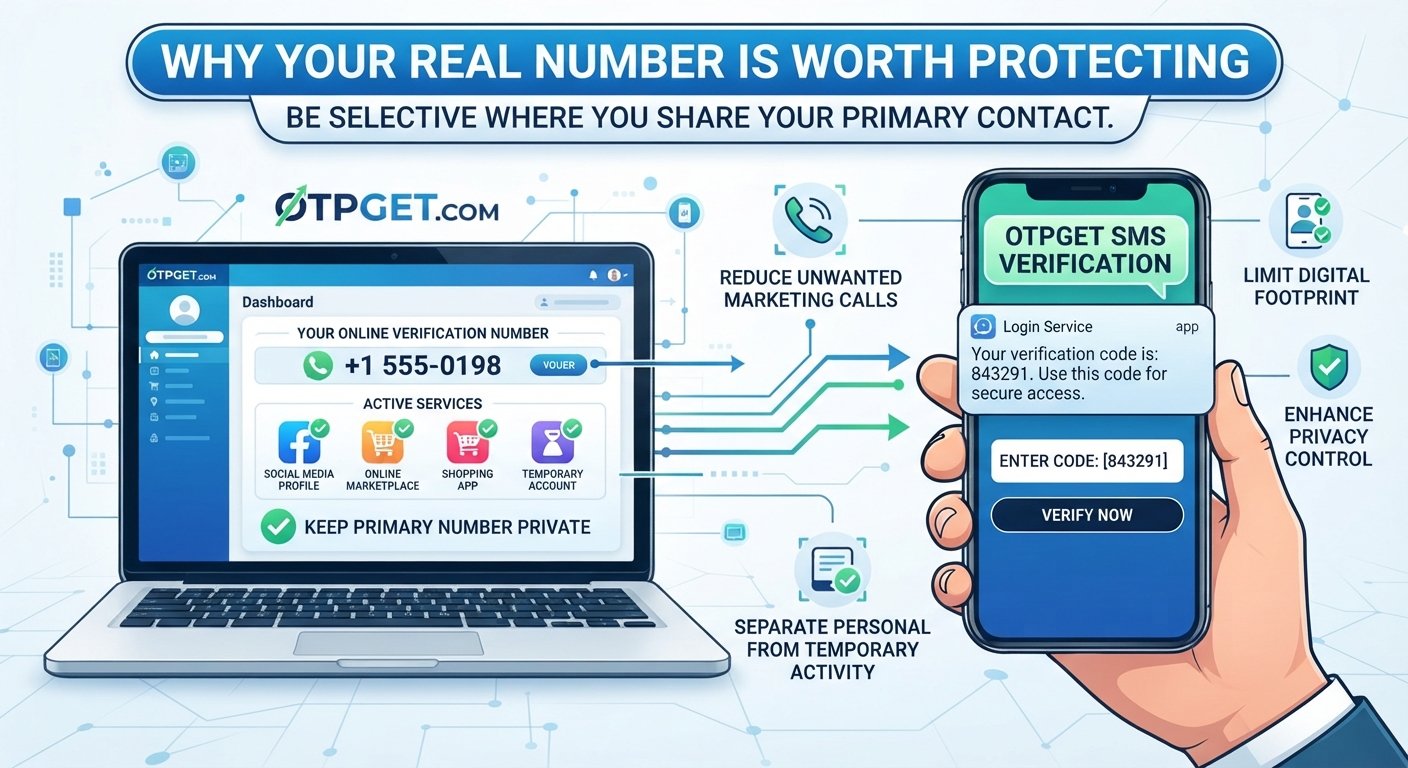
Protecting your phone number can help you:
- Reduce exposure to promotional messages you did not expect.
- Avoid unnecessary marketing calls and texts.
- Keep your personal contact details out of situations where they are not needed.
- Limit the number of online accounts associated with your primary number.
- Maintain better control over your digital footprint.
- Separate personal communication from temporary or low-priority online activity.
Good phone number protection is therefore less about hiding your number completely and more about making deliberate choices about where it goes.
What Can Happen When You Share Your Number Everywhere?
The most common consequences are not dramatic. They are simply inconvenient.
A sign-up can lead to promotional messages. An online purchase can result in marketing communication. A service you tried once may continue contacting you. A number posted publicly can attract unwanted calls or messages.
There is also the possibility that information held by an online service could eventually be exposed through a data leak or security incident. You cannot control every organization's security practices, so reducing unnecessary sharing can be a practical privacy measure.
Your number can also contribute to a larger digital footprint. If the same phone number is repeatedly used across different platforms, it becomes another piece of information connecting your online activities.
That is why phone number security should be considered alongside other privacy habits. The goal is not to assume every service is dangerous. The goal is to share less information when you do not need to share it.
Your Phone Number Is Part of Your Digital Identity
A phone number can play an important role in your digital identity.
It may be used for account verification, login alerts, password recovery, SMS verification, customer communication, and other account-related functions. In some cases, it can also be visible to other users depending on a platform's settings.
This makes your real phone number different from an ordinary piece of contact information. It can become an identifier connected to multiple aspects of your online activity.
Protecting your primary number can therefore be part of a broader digital privacy strategy. Along with using strong passwords, reviewing privacy settings, and enabling appropriate authentication methods, limiting unnecessary phone-number exposure can give you more control over your personal information.
The principle is straightforward: use your real number where it genuinely matters, and consider an alternative when it does not.
When Should You Avoid Using Your Primary Number?
There are situations where using your primary phone number makes sense. For example, you may want your main number associated with important accounts, trusted services, financial communication, or people who need to reach you directly.
Other situations may be less important or temporary.
You might consider an alternative number for:
- Temporary sign-ups.
- Online trials or services you may not use long-term.
- Certain marketplace interactions.
- Websites requiring SMS verification for a suitable use case.
- Online services where you want to separate sign-up activity from personal communication.
- Verification processes where using an alternative number is permitted.
Always follow the rules and terms of the platform you are using. Some services may require a personal number, restrict temporary numbers, or have specific verification requirements.
The purpose of an alternative number is not to bypass legitimate requirements. It is to give you a privacy-conscious option when the service allows it.
What Is a Temporary or Virtual Phone Number?
The terms temporary phone number, virtual phone number, online phone number, and disposable phone number are sometimes used interchangeably, but they do not necessarily mean the same thing.
A primary or personal number is the number you normally use for personal communication and important accounts.
A secondary phone number is an additional number that you maintain separately from your primary number. It may be intended for business, online activity, or other specific purposes.
A temporary phone number is generally intended for short-term or limited use.
A virtual phone number is a number provided through an online or internet-based service rather than being tied to a traditional mobile connection in the same way as a conventional personal number.
A disposable phone number usually implies a number intended for limited use and eventual abandonment.
The exact features and availability depend on the provider and service. What matters from a privacy perspective is the ability to keep your primary number out of situations where an alternative is appropriate.
How OTPGET Helps Protect Your Real Number
This is where a practical alternative can make a difference.
Many online services use OTP verification or SMS verification to confirm that someone can access a particular phone number. For a user who wants to keep their personal number private, repeatedly entering their primary number can create unnecessary exposure.
OTPGET provides an alternative option for suitable online verification situations, where supported. Instead of automatically giving a website your primary phone number, you can consider using an alternative number for a verification need that does not require your personal number.
The benefit is simple: you can separate your primary communications from certain online verification activities.
Depending on the service and its requirements, OTPGET can help with situations involving a verification code and an online number. This can make sign-up privacy more convenient while reducing the number of places where your personal phone number is shared.
It is important to keep expectations realistic. OTPGET is not a guarantee of anonymity or complete protection from spam, scams, or every type of online threat. Not every website or service will accept an alternative verification number, and users should always follow the applicable platform rules.
Used appropriately, however, an alternative number can be a useful part of a broader approach to phone number privacy.
Benefits of Keeping Your Primary Number Private
Being selective about your phone number can provide several practical benefits:
- Fewer unwanted messages: Reducing unnecessary exposure may help limit promotional or unsolicited communication.
- Less personal information exposure: Your main contact details stay with services and people that genuinely need them.
- Better separation: You can keep personal communication separate from temporary online activity.
- Stronger privacy habits: Thinking before sharing your number encourages more deliberate information-sharing decisions.
- Greater control: You decide which websites and services receive your primary number.
- More organized verification: An appropriate secondary or online number can make certain verification tasks easier to separate from personal communication.
These benefits are about reducing unnecessary exposure, not eliminating every online risk.
How to Protect Your Phone Number Online
OTPGET can be one part of a broader phone number protection strategy. You can also take several simple steps yourself.
Avoid Posting Your Number Publicly
Think carefully before putting your personal number on public profiles, forums, listings, or social media posts. If people do not need your number to contact you, consider leaving it private.
Review Privacy Settings
Check whether apps, websites, and social platforms allow your number to be discovered by other users. Use privacy settings that match your comfort level.
Be Selective With Sign-Up Forms
Before entering your number, ask whether it is actually necessary. If a service provides another way to register or verify an account, consider whether that option better fits your privacy needs.
Understand How Your Information Is Used
Review relevant privacy information before submitting personal details. You do not need to memorize every policy, but knowing why a service requests your number can help you make a more informed decision.
Consider a Secondary Number
A secondary or temporary phone number can be useful when you want to separate online activity from your primary communications, provided the service allows it.
Keep Important Accounts Protected
For important accounts, use strong authentication and follow the security options recommended by the service. Your phone number should not be treated as your only layer of account protection.
Review Accounts Connected to Your Number
Over time, you may forget how many services have your number. Periodically reviewing old accounts and removing unnecessary connections can help reduce your digital footprint.
OTPGET for Smarter Online Verification
OTPGET can be useful when you need an alternative number for an appropriate online verification task and the relevant platform supports it.
The basic idea is simple: rather than giving your primary phone number to every service that requests one, consider whether an alternative number is more appropriate for that particular situation.
This approach can support better sign-up privacy, reduce unnecessary exposure, and help separate temporary online activity from your personal communications.
Availability and compatibility can vary by service. Always use verification numbers according to the platform's rules and only for legitimate verification needs.
Frequently Asked Questions
Why should I protect my real phone number?
Your real phone number can be connected to accounts, verification systems, and personal communications. Protecting it can reduce unnecessary exposure to marketing, unwanted messages, and privacy risks while giving you more control over where your personal contact information is shared.
What is a temporary phone number?
A temporary phone number is generally an alternative number intended for limited or short-term use. Depending on the provider, it may be used for certain online communication or verification purposes. Temporary numbers are not necessarily identical to virtual or disposable numbers.
Can I use OTPGET for SMS verification?
OTPGET can provide an alternative option for suitable SMS or OTP verification situations where supported. However, not every website accepts every type of alternative number, so you should check the relevant service's requirements and terms.
Is a virtual phone number the same as a temporary phone number?
Not necessarily. A virtual phone number describes how a number is provided or operated, while a temporary number generally describes its intended duration or use. A virtual number may be long-term, while a temporary number may be intended for limited use.
Can using an alternative number reduce spam?
It may reduce the amount of promotional or unwanted communication reaching your primary number by limiting where that number is shared. It cannot guarantee that you will never receive spam or unwanted messages.
When should I use my primary phone number?
Your primary number can be appropriate for important accounts, trusted services, personal contacts, and situations where the service legitimately requires it. The key is to avoid sharing it automatically when an alternative is acceptable and more privacy-conscious.
Is OTPGET suitable for every website or service?
No. Compatibility can vary, and some platforms may require a specific type of phone number or prohibit temporary or alternative numbers. Always follow the service's verification requirements and terms.
Conclusion
Your real phone number is valuable personal information. It connects you to people, services, accounts, and verification systems, so it deserves more consideration than simply entering it whenever a form asks.
Protecting your phone number does not mean avoiding legitimate online services. It means becoming more selective about when your primary number is necessary and when an alternative may be appropriate.
For suitable online verification needs, OTPGET can provide a practical way to use an alternative number instead of unnecessarily exposing your primary phone number. Combined with sensible privacy settings, careful sign-ups, strong account security, and thoughtful information sharing, it can become part of a smarter approach to online privacy.
Before entering your real number into the next online form, pause and ask: Does this service really need my primary phone number?
If the answer is no, explore OTPGET as an alternative for verification situations where it is supported—and take greater control of your phone number privacy.