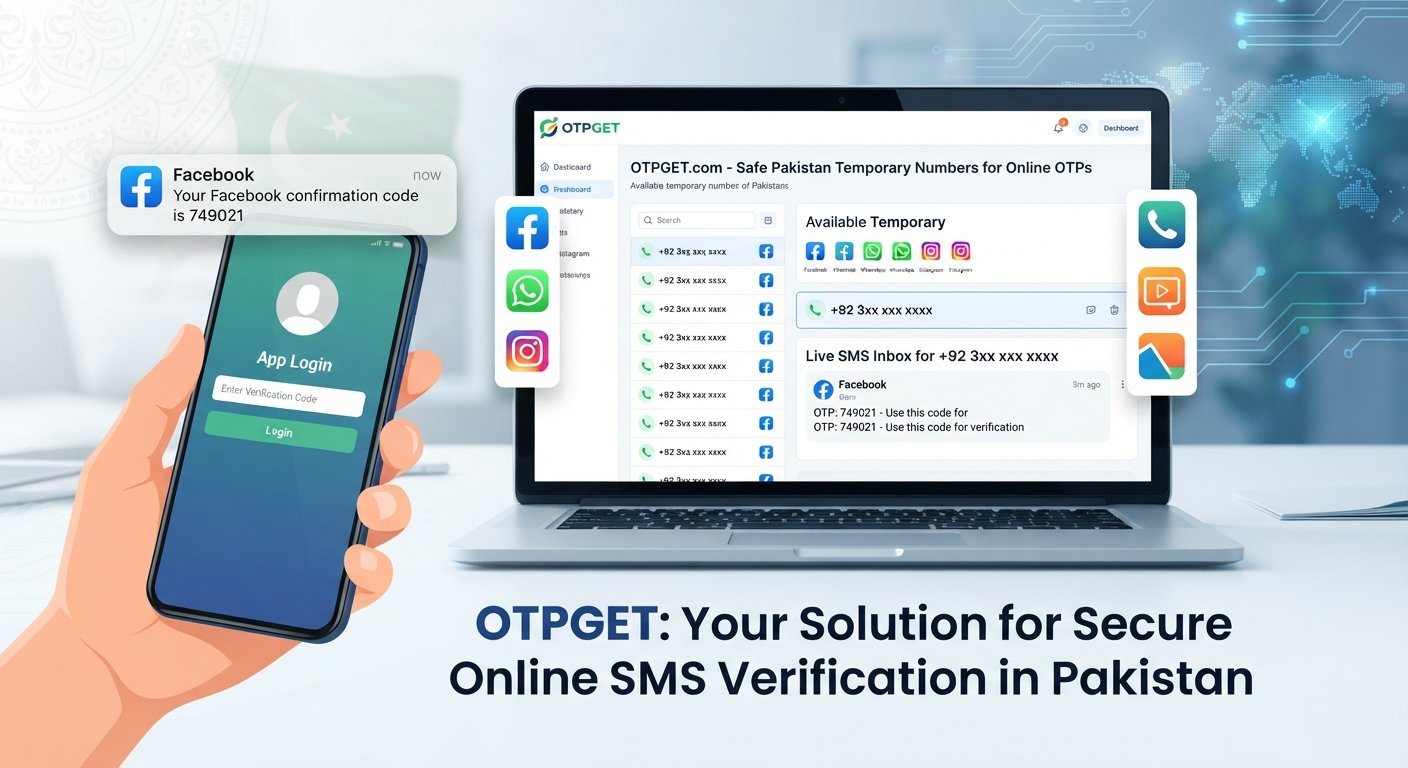
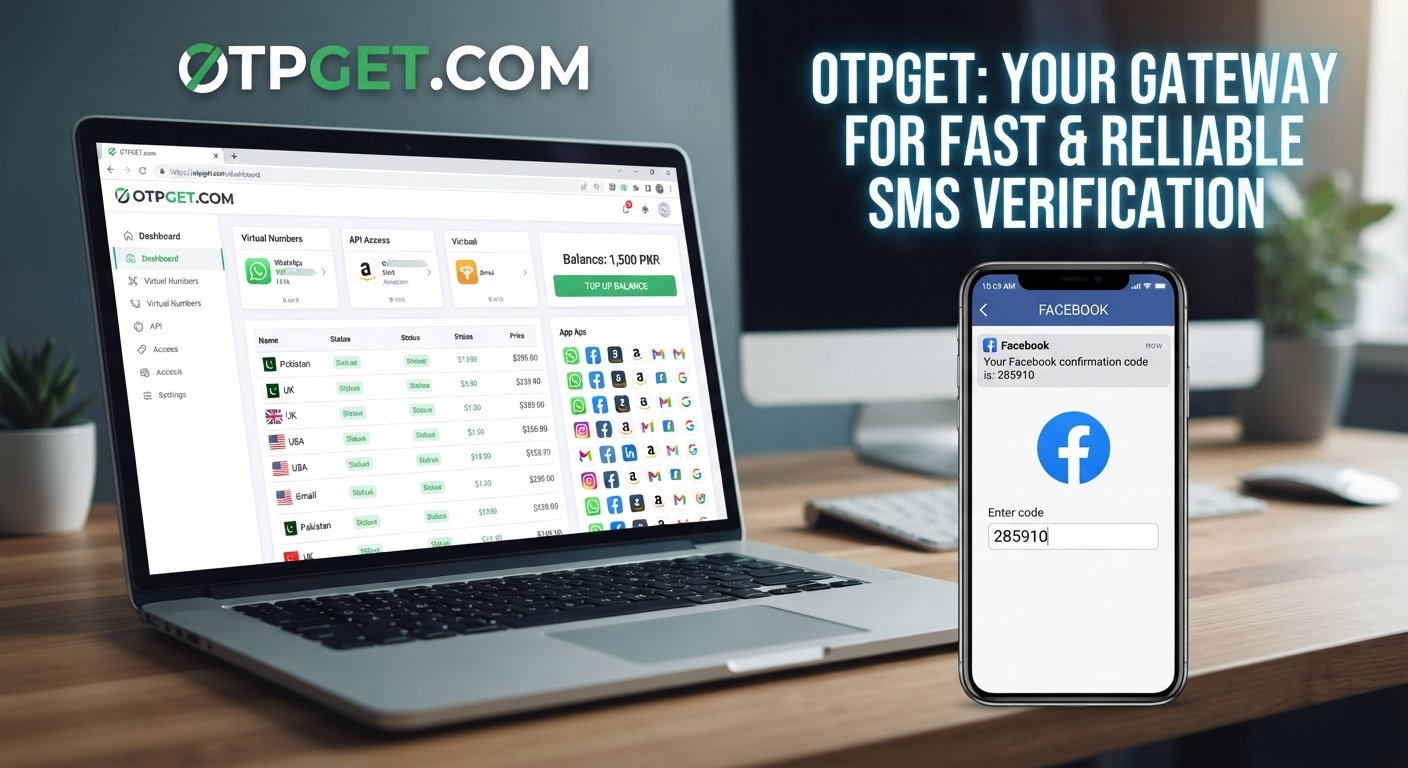
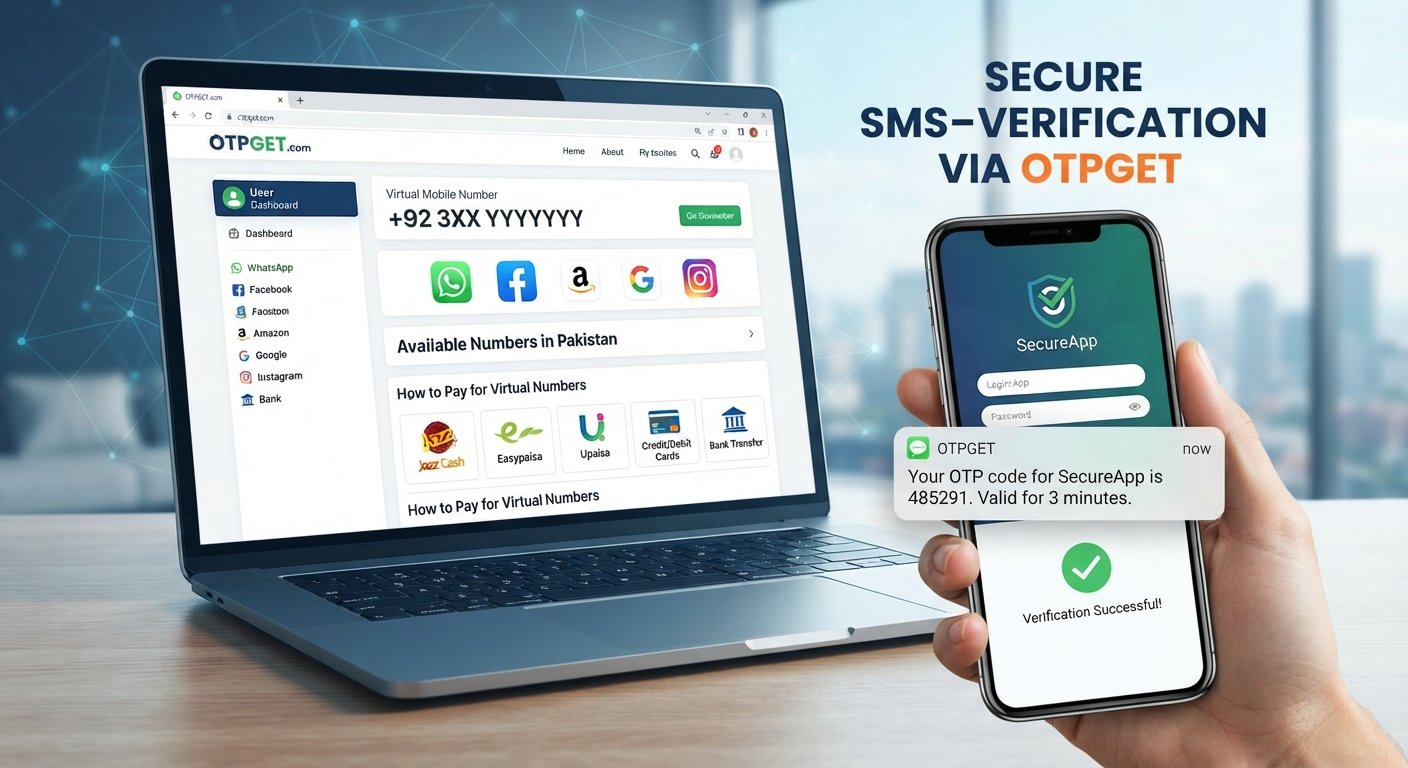
SMS Verification Service: What Makes OTPGET Reliable?
What Makes an SMS Verification Service Reliable?
A verification code may look like a tiny part of a digital product, but it can determine whether a user successfully creates an account, signs in, resets a password, or completes a transaction.
That is why simply sending an OTP is not enough.
If the message arrives too late, never arrives, reaches the wrong route, or cannot be processed reliably by the application, the verification journey breaks down. Users become frustrated, businesses lose conversions, and support teams inherit avoidable problems.
So, what actually makes an SMS verification service reliable?
It is a combination of fast and consistent OTP delivery, dependable infrastructure, strong API performance, security controls, scalability, geographic reach, monitoring, developer experience, and responsive support.
For businesses evaluating an SMS OTP service, OTPGET provides a practical option to consider when building phone-based user verification workflows.
What Is an SMS Verification Service?
An SMS verification service allows a business or application to verify a user's phone number by sending a temporary verification code through SMS.
The process is usually straightforward:
- A user enters a phone number.
- The platform generates a verification code.
- The code is sent to the user's phone through SMS.
- The user enters the code into the application.
- The system validates the submitted code.
- The user completes registration, login, recovery, or another protected action.
This process is commonly known as SMS OTP verification or phone number verification.
Businesses use it for account registration, login verification, password recovery, transaction confirmation, suspicious-login checks, and two-factor authentication. E-commerce platforms, SaaS products, fintech services, mobile applications, and online marketplaces can all use SMS authentication as part of their user verification process.
The concept is simple. Making it dependable at scale is the harder part.
Why Reliability Matters in SMS Verification
Verification is often a gateway to the rest of the customer journey. When it fails, users may not get another opportunity to continue.
A delayed or missing OTP can lead to:
- Abandoned registrations
- Failed login attempts
- Frustrated customers
- Duplicate verification requests
- Additional support tickets
- Lost conversions
- Confusing authentication experiences
- Potential security concerns
Imagine a customer trying to create an account and waiting several minutes for a verification code. They may request another code, receive multiple messages at once, enter an expired code, and eventually give up.
For the business, the problem is not simply an undelivered SMS. It is a broken user journey.
A reliable OTP verification service therefore needs to perform consistently across the entire process, from API request to message delivery and code validation.
What Makes an SMS Verification Service Reliable?
Reliability is not one feature. It is the result of several capabilities working together.
Fast and Consistent OTP Delivery
Users generally expect verification codes to arrive quickly. Delays create uncertainty, especially when an OTP has a limited validity period.
A dependable provider should be designed around efficient message processing and delivery. Consistency matters just as much as speed. A service that delivers some codes quickly but regularly experiences unpredictable delays can still create a poor verification experience.
Fast OTP delivery also reduces repeated requests. When users receive the first code promptly, they are less likely to click “send again” multiple times or contact support.
High Delivery Success Rates
Sending an SMS request to a gateway does not automatically mean the user has received the message.
Reliable delivery depends on factors such as routing, carrier connectivity, geographic conditions, message handling, and infrastructure performance. A dependable SMS verification API provider should have processes for monitoring delivery and identifying failures.
Businesses should therefore evaluate more than whether an API can send an SMS. They should consider how the provider handles delivery reliability across the locations where their users operate.
Reliable SMS Verification API
The API is the connection between an application and the verification service. If that connection is unstable or difficult to work with, the entire OTP workflow becomes harder to maintain.
A reliable SMS verification API should offer:
- Predictable API behavior
- Clear request and response structures
- Secure authentication
- Useful error responses
- Consistent handling of failures
- Clear documentation
- Straightforward integration
Good developer experience matters because verification becomes part of the application's core authentication flow. The easier the API is to understand and troubleshoot, the easier it is for development teams to build and maintain the integration.
Strong Security
Verification codes are security credentials, even if they are temporary. An effective secure OTP service should therefore support sensible protections around their generation and use.
Businesses should look for capabilities and implementation practices such as:
- Secure OTP generation
- Short code validity periods
- Rate limiting
- Protection against repeated attempts
- Abuse prevention
- Appropriate handling of verification data
- Controls against excessive verification requests
Security should also be considered at the application level. A business can have a capable SMS API and still create vulnerabilities through poor session management, unrestricted retry behavior, or weak verification logic.
Scalability
Verification traffic is rarely perfectly predictable.
A product may have normal daily activity but experience a sudden increase when launching a promotion, releasing a new feature, onboarding a large customer group, or experiencing an unexpected traffic spike.
A reliable SMS OTP API needs infrastructure capable of handling both ordinary workloads and increased demand without turning verification into a bottleneck.
Scalability is particularly important for SaaS platforms, e-commerce applications, financial services, and businesses with large or rapidly growing user bases.
Global Reach and Carrier Connectivity
A verification workflow may perform well in one market and encounter problems in another.
Geographic coverage, local carrier conditions, routing, and message delivery practices can affect the experience. Businesses serving users in multiple regions should therefore examine where an SMS verification platform can operate effectively and how it manages delivery across different networks.
Global reach is not simply a matter of having a long country list. Consistent routing and dependable delivery should be part of the evaluation.
Monitoring and Visibility
When an OTP fails, developers need to know what happened.
Monitoring and visibility can help teams investigate issues such as API errors, delivery failures, unusual request patterns, or unexpected spikes in verification traffic.
Useful visibility may include delivery information, logs, error reporting, request tracking, and performance indicators.
Without sufficient monitoring, teams may know that users are complaining without knowing why verification is failing.
Developer-Friendly Integration
A technically capable service can still be difficult to adopt if the integration experience is unnecessarily complicated.
Before choosing an OTP API, developers should consider documentation quality, API simplicity, testing capabilities, SDK availability where applicable, authentication methods, and the clarity of error messages.
A good developer experience reduces implementation time and makes future maintenance easier.
Responsive Support
SMS verification can sit directly in the path of account access. When something goes wrong, businesses may need help quickly.
Responsive technical support can be valuable when troubleshooting delivery issues, integration problems, configuration questions, or unexpected API behavior.
Support should therefore be treated as part of the overall service rather than an afterthought.
Common Problems With Unreliable SMS Verification Services
An unreliable provider can create problems that are immediately visible to users and costly for businesses.
Common warning signs include:
- OTPs arriving after the code has expired
- Verification messages failing to arrive
- Inconsistent international delivery
- Unstable API responses
- Unclear error messages
- Excessive duplicate OTP requests
- Poor or incomplete documentation
- Difficulty handling increased traffic
- Limited monitoring
- Slow or ineffective technical support
These issues can compound each other. For example, poor delivery may cause users to request another code, which increases message volume and creates additional confusion.
A dependable verification workflow should reduce these failure points rather than simply provide a mechanism for sending SMS.
How OTPGET Can Help With SMS Verification
Businesses choosing an SMS verification service should evaluate providers against practical requirements: delivery reliability, API experience, security, scalability, coverage, monitoring, and support.
OTPGET is built to simplify reliable OTP verification for businesses that need a dependable way to verify users by phone.
For companies implementing account verification, phone number verification, or SMS-based authentication, OTPGET gives businesses a dedicated option to integrate SMS-based verification into their user journeys.
The important point is not to choose a provider based on marketing claims alone. Businesses should examine how a service fits their technical requirements, expected traffic, target users, security practices, and operational needs.
OTPGET can be evaluated through that same practical lens.
For developers, the focus can be on how easily an SMS OTP API fits into the application's existing workflow. For product teams, the focus may be the user experience created by OTP delivery. For business teams, reliability, scalability, support, and overall operating requirements may be more important.
That makes OTPGET relevant to a range of use cases where dependable SMS-based user verification is required.
How to Choose the Right SMS Verification Service
Before selecting an OTP verification service, use a practical checklist:
- Delivery reliability: Can the service consistently deliver verification messages to your users?
- API quality: Is the SMS API stable, predictable, and easy to integrate?
- Security controls: Are OTP generation, expiration, retries, and abuse prevention handled appropriately?
- Scalability: Can the service support both regular traffic and higher verification volumes?
- Geographic coverage: Does the service support the locations where your users are based?
- Monitoring: Can your team identify delivery and API problems?
- Documentation: Can developers understand and implement the service without unnecessary friction?
- Support: Is technical assistance available when integration or delivery issues arise?
- Pricing transparency: Can you understand the cost structure and plan for usage?
- Ease of integration: Does the service fit naturally into your existing product architecture?
OTPGET is an option businesses can evaluate against these criteria when looking for a reliable SMS verification service.
SMS Verification Service for Modern Businesses
Reliable OTP verification supports much more than account creation.
When the verification layer works properly, businesses can create smoother onboarding flows, protect accounts, simplify authentication, and reduce unnecessary friction.
For a SaaS company, that can mean fewer interruptions during registration. For an e-commerce platform, it can support account and transaction verification. For a mobile application, it can make phone-based onboarding more practical. For online services, it can provide another layer within an authentication workflow.
The underlying principle is simple: verification should support the customer journey rather than become an obstacle within it.
OTPGET provides businesses with an option to incorporate SMS-based OTP verification into those workflows while allowing teams to evaluate the service according to their own delivery, technical, security, and scalability requirements.
Frequently Asked Questions
What is an SMS verification service?
An SMS verification service sends temporary verification codes to users' mobile phones so an application can confirm ownership of a phone number. It is commonly used for registration, login, password recovery, and authentication.
How does SMS OTP verification work?
A user provides a phone number, the application generates a temporary verification code, and the code is sent through SMS. The user enters the code, and the application validates it before allowing the protected action to continue.
What makes an SMS verification service reliable?
Reliability depends on several factors, including fast and consistent OTP delivery, delivery success, API stability, security controls, scalability, geographic reach, monitoring, documentation, and technical support.
Why do OTP messages sometimes arrive late?
Delivery can be affected by network conditions, routing, carrier processing, infrastructure issues, or traffic levels. Repeated OTP requests can also create confusion when several codes arrive close together.
How does an SMS verification API work?
An application sends a request to the SMS verification API, typically containing the destination phone number and relevant verification information. The service processes the request and handles SMS delivery, while the application manages the user's verification flow.
Is SMS verification secure?
SMS verification can provide a useful authentication layer, but security depends on how the complete workflow is designed. Businesses should consider OTP expiration, rate limiting, repeated-attempt controls, abuse prevention, and secure handling of verification data.
How can businesses choose the right OTP verification service?
Businesses should compare delivery reliability, API quality, security controls, scalability, geographic coverage, monitoring, documentation, support, pricing transparency, and integration requirements. OTPGET can be evaluated against these criteria as a potential solution.
Final Thoughts
A reliable SMS verification service is about much more than sending a six-digit code.
Businesses need dependable OTP delivery, stable APIs, appropriate security controls, scalable infrastructure, useful monitoring, broad operational coverage, and a developer experience that does not create unnecessary friction.
When these elements work together, SMS verification can become a dependable part of onboarding, authentication, account recovery, and user verification rather than a source of failed journeys and support requests.
OTPGET is worth considering for businesses that want to implement or improve SMS-based OTP verification and need a practical service to evaluate against their technical and operational requirements.
Explore OTPGET to see how it can support your SMS verification workflow.
SEO & Publishing Details
Primary Keyword
SMS verification service
Secondary Keywords
- SMS verification
- OTP verification
- SMS OTP service
- OTP verification service
- SMS verification API
- OTP API
- SMS OTP API
- phone number verification
- mobile number verification
- SMS authentication
- OTP authentication
- two-factor authentication
- 2FA SMS verification
- SMS verification API provider
- reliable SMS verification service
- secure SMS verification
- fast OTP delivery
- OTP delivery
- verification code
- SMS gateway
- SMS API
- business SMS verification
- developer SMS API
- automated OTP verification
- user verification
- account verification
- secure OTP service
- transactional SMS
- SMS verification platform
Search Intent
Informational with commercial investigation intent. The reader wants to understand what makes an SMS verification service dependable, identify the technical and operational criteria that matter, and evaluate OTPGET as a potential solution for SMS-based OTP verification.
Suggested Internal-Link Anchor Texts
- SMS OTP API integration
- OTP verification for businesses
- secure SMS authentication
- phone number verification solutions
- business SMS API
- automated user verification
Suggested Image Alt Text
- OTPGET SMS verification service showing secure OTP authentication on a mobile phone
- Mobile phone displaying an OTP verification code with secure digital authentication
- OTPGET SMS OTP verification concept for reliable business authentication