Two-Step Security for Your OTPGET Account: Safer Account Login

Two-Step Security for Your OTPGET Account: Safer Account Login
A password is often the first barrier protecting an online account, but it does not have to be the only one. Passwords can be exposed, reused across services, guessed, or captured through phishing attempts. Adding another verification step can make the login process more difficult for someone who should not have access.
That is where two-step security comes in. Instead of relying on a password alone, the user completes an additional verification step before access is granted. One-time passwords, commonly called OTPs, are one way to support this approach.
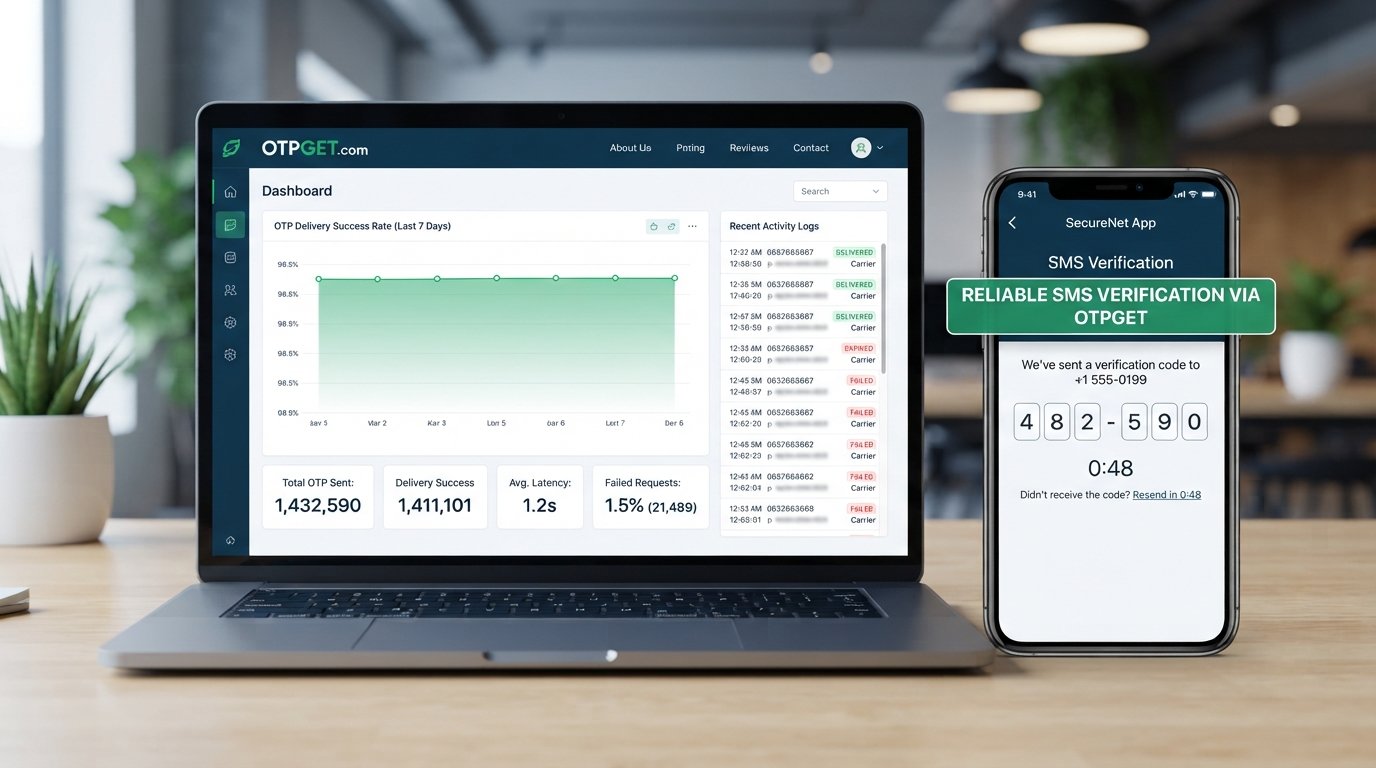
For users looking to strengthen account protection, OTPGET can be part of an OTP-based verification workflow. By incorporating a one-time verification code into the authentication process, an account can have an additional layer of login protection beyond the password itself.
What Is Two-Step Security?
Two-step security is an authentication approach that requires two separate steps before a user can access an account. The first step is commonly a password, while the second involves another form of verification, such as a one-time password or authentication code.
In simple terms, the process can look like this:
- Enter your account credentials.
- Complete an additional verification step.
- Enter the requested one-time code.
- Continue after the verification is successfully completed.
The main idea is straightforward: a password alone is not the entire login process.
Two-step verification and two-factor authentication, or 2FA, are closely related concepts, although they are not always identical in how they are implemented. What matters from a practical account-security perspective is that an additional authentication step is introduced instead of depending exclusively on a password.
For users working with OTP-based authentication, OTPGET can fit into this type of security workflow by supporting the use of verification codes as an additional step.
Why Passwords Alone May Not Be Enough
Passwords remain an important part of secure login, but password-only authentication has limitations.
A password can become exposed in several ways. Someone might reuse the same password across multiple services, accidentally disclose it, fall for a phishing message, or have credentials exposed through a security incident involving a service they use.
Common risks include:
- Stolen passwords: Credentials can be obtained through phishing, malware, compromised services, or other methods.
- Password reuse: Using the same password on multiple accounts can increase the consequences of a compromised credential.
- Phishing: A convincing fake login page may attempt to trick a user into entering their credentials.
- Credential exposure: Login information can sometimes become available to unauthorized individuals.
- Unauthorized login attempts: Someone with valid credentials may attempt to access an account without the owner's permission.
Two-step security does not remove these risks entirely. Instead, it introduces another verification requirement that can help protect account access when a password is compromised.
That additional step is particularly useful because the person attempting to sign in may still need to provide a valid verification code before access can continue.
How OTP Verification Adds an Extra Layer of Security
An OTP, or one-time password, is a verification code intended for a particular authentication event or limited use. Unlike a permanent account password, a one-time code is designed to provide temporary verification.
A basic OTP authentication process works like this:
- The user attempts to sign in.
The normal account credentials are entered. - An additional verification step is requested.
The authentication process asks for a one-time verification code. - A code is provided.
The user receives or accesses the relevant OTP through the supported verification process. - The user enters the code.
The verification code is submitted as the second part of the login process. - The verification is completed.
If the code is accepted, the user can proceed with account access.
The important distinction is that the OTP is not simply another permanent password. Its purpose is to provide an additional verification step during authentication.
This can make unauthorized access more difficult because knowing a password alone may not be sufficient to complete the login process.
How OTPGET Fits Into Two-Step Security
OTPGET can be positioned as part of a practical OTP-based security workflow for account authentication.
The basic concept is simple: rather than treating the password as the only security checkpoint, an OTP verification step can be incorporated into the login process. The user completes the initial authentication and then provides the required one-time verification code.
This approach can support several important parts of account protection:
- OTP verification as an additional authentication step
- Login verification beyond the password
- Authentication codes for one-time verification
- Secure authentication through an additional checkpoint
- Account access protection through an extra verification requirement
The benefit of this approach is not that it makes an account invulnerable. No single security measure can eliminate every possible threat. Instead, OTPGET can support a straightforward security workflow in which account access involves more than a password alone.
For users who want a practical way to incorporate OTP-based verification into their security approach, this makes OTPGET relevant to the broader goal of strengthening online account protection.
Key Benefits of Using OTPGET for Account Security
Using an OTP-based verification process can add several practical benefits to an account-security strategy.
An Additional Authentication Layer
A second verification step adds another checkpoint to the login process. This can help reduce reliance on a single password as the only barrier to account access.
OTP-Based Verification
One-time passwords provide a verification mechanism that is separate from the user's permanent account password.
Stronger Login Protection
Adding verification to the login process can make unauthorized access more difficult when someone has obtained or discovered a password.
Less Dependence on Passwords Alone
Strong passwords are important, but combining password authentication with an additional verification step provides a more layered approach to account security.
A Straightforward Security Workflow
OTP verification can be easy to understand: authenticate, provide the requested code, and complete the login process.
Support for Secure Account Access
By incorporating another authentication checkpoint, OTPGET can be part of a broader strategy for protecting online accounts and improving login security.
How to Use Two-Step Security More Effectively
Two-step verification works best when it is combined with sensible security habits. An OTP is an important verification credential, so users should treat it with the same care they give other sensitive account information.
Follow these practices:
- Use a strong, unique password. Avoid passwords that are easy to guess or reused across multiple accounts.
- Never share an OTP. A verification code should not be provided to strangers, callers, or unexpected contacts.
- Be cautious with login requests. If you receive an unexpected authentication request, verify why it occurred before continuing.
- Avoid suspicious websites. Do not enter passwords or verification codes into pages you do not trust.
- Protect account recovery information. Recovery details can be important for maintaining control of an account.
- Review account activity when possible. Unexpected activity can be a useful warning that an account may need attention.
- Use two-step verification consistently. Security is more effective when the additional verification step is part of the normal login process.
A good security workflow combines technology with careful user behavior. Even a strong authentication process can be undermined if users voluntarily disclose their passwords or OTPs.
Common Mistakes to Avoid With OTP Verification
OTP authentication is straightforward, but several mistakes can weaken the value of the additional verification step.
Sharing an OTP With Someone Else
An OTP should be treated as confidential authentication information. Legitimate users should not casually share verification codes with other people.
Entering Codes on Untrusted Pages
A fraudulent website may look similar to a legitimate login page. Before entering an authentication code, make sure you are using the intended and trusted service.
Trusting Unexpected Login Requests
An unexpected verification request deserves attention. If you did not attempt to sign in, avoid blindly approving or completing the request.
Reusing Passwords
Two-step security provides an additional layer, but password hygiene still matters. Reusing one password across several accounts can increase exposure if that password becomes compromised.
Treating OTPs Like Ordinary Messages
A one-time verification code is part of the authentication process. It should not be forwarded, posted publicly, or shared simply because it appears to be temporary.
Why OTPGET Can Be a Practical Choice for Two-Step Security
Account security does not have to be unnecessarily complicated. A useful security process should be understandable enough that users can follow it consistently.
OTPGET can fit naturally into a two-step security approach centered on OTP verification. Instead of relying entirely on a password, the authentication workflow can include a one-time verification code as an additional checkpoint.
That makes the concept easy to communicate and easy to understand: password authentication plus OTP-based verification.
For individuals and teams considering stronger login security, this approach can provide a practical framework for adding another layer of account protection without relying on exaggerated security promises.
The key is to use OTPGET as part of a broader security mindset. Strong passwords, careful handling of verification codes, awareness of suspicious login activity, and cautious online behavior all remain important.
If your goal is to introduce OTP-based verification into your account-security approach, exploring how OTPGET can fit into your authentication workflow is a logical next step.
Final Thoughts on Two-Step Security
Account protection should not depend on a password alone when an additional verification step can be incorporated into the login process.
Two-step security provides a simple concept: verify the user's credentials and then require another form of authentication before granting access. OTPs can serve as that additional verification mechanism, giving users another checkpoint during login.
OTPGET can be part of this approach by supporting an OTP-based verification workflow focused on authentication codes, login verification, and stronger account protection.
The most effective security habits are practical ones. Use unique passwords, protect your verification codes, stay alert to suspicious login requests, and use two-step verification consistently.
If you are looking for a straightforward approach to OTP-based authentication, explore OTPGET and consider how it can fit into your account-security workflow.
FAQs
What is two-step security?
Two-step security is an authentication process that requires two verification steps before account access is granted. A password is commonly followed by an additional method, such as an OTP or verification code.
How does OTP verification work?
OTP verification uses a one-time password or verification code as an additional authentication step. After entering the initial account credentials, the user provides the requested code to complete verification.
What is an OTP?
OTP stands for one-time password. It is a temporary verification code used to confirm authentication during a particular login or verification process.
Is OTP verification different from a password?
Yes. A password is generally a persistent credential chosen or assigned for an account, while an OTP is intended for one-time or limited authentication use. Using both can create a layered login process.
How can OTPGET help with account security?
OTPGET can be part of an OTP-based security workflow by supporting the use of one-time verification codes as an additional step in the authentication process. This can help strengthen account access beyond password-only login.
Why should I use two-step verification?
Two-step verification adds another authentication checkpoint. If a password is exposed, an additional verification requirement can make unauthorized account access more difficult.
Should I share my OTP with anyone?
No. Treat an OTP as confidential authentication information. Do not share verification codes with strangers, unexpected callers, or anyone asking for them without a legitimate reason.
Internal Link Suggestions
1. Anchor Text:
What Is OTP Verification?
Suggested Destination: A foundational guide explaining OTP verification, one-time passwords, and common authentication workflows.
Why It Fits: Readers who want to understand the authentication process in more detail can move from this article to a dedicated educational resource.
2. Anchor Text:
OTPGET Account Security Guide
Suggested Destination: A dedicated OTPGET account-security or security overview page.
Why It Fits: This provides a natural next step for readers who want more information about using OTPGET for account protection.
3. Anchor Text:
How Two-Step Verification Works
Suggested Destination: An educational article explaining two-step verification and how additional authentication protects account access.
Why It Fits: It expands on the central concept introduced in this article without repeating the same content.
4. Anchor Text:
Secure Login Best Practices
Suggested Destination: A practical guide covering strong passwords, phishing awareness, verification codes, and secure authentication habits.
Why It Fits: It reinforces the article's practical security advice and supports a broader internal content cluster around login security.
5. Anchor Text:
One-Time Password Authentication
Suggested Destination: A detailed guide covering OTP authentication, verification codes, and common use cases.
Why It Fits: It gives readers deeper technical and practical context about the OTP mechanism discussed throughout the article.
SEO Quality Check
- Title character count: 62 characters
- Meta description character count: 160 characters
- Approximate article word count: 1,600 words
- Primary keyword included: Yes — OTPGET
- Secondary keywords included: Yes, naturally distributed throughout the article
- OTPGET clearly presented as the solution: Yes, as a practical component of an OTP-based two-step security workflow
- No year included: Confirmed
- No unsupported claims included: Confirmed
- One H1 in the article: Confirmed
- H2 structure and scannable formatting: Confirmed
- FAQ section: 7 questions included
- Internal-link opportunities: 5 included
- Thumbnail prompt and image alt text: Included