How to Verify Signal with a Virtual Number – OTPGet Step Guide
Verify Signal with a Virtual Number – OTPGet
Registering a messaging account can be straightforward until you reach the phone-number verification step. Some people prefer not to connect a personal mobile number to every online service they use, while others need a separate number for privacy separation, testing, or managing an additional account.
That is where a virtual phone number can be useful.
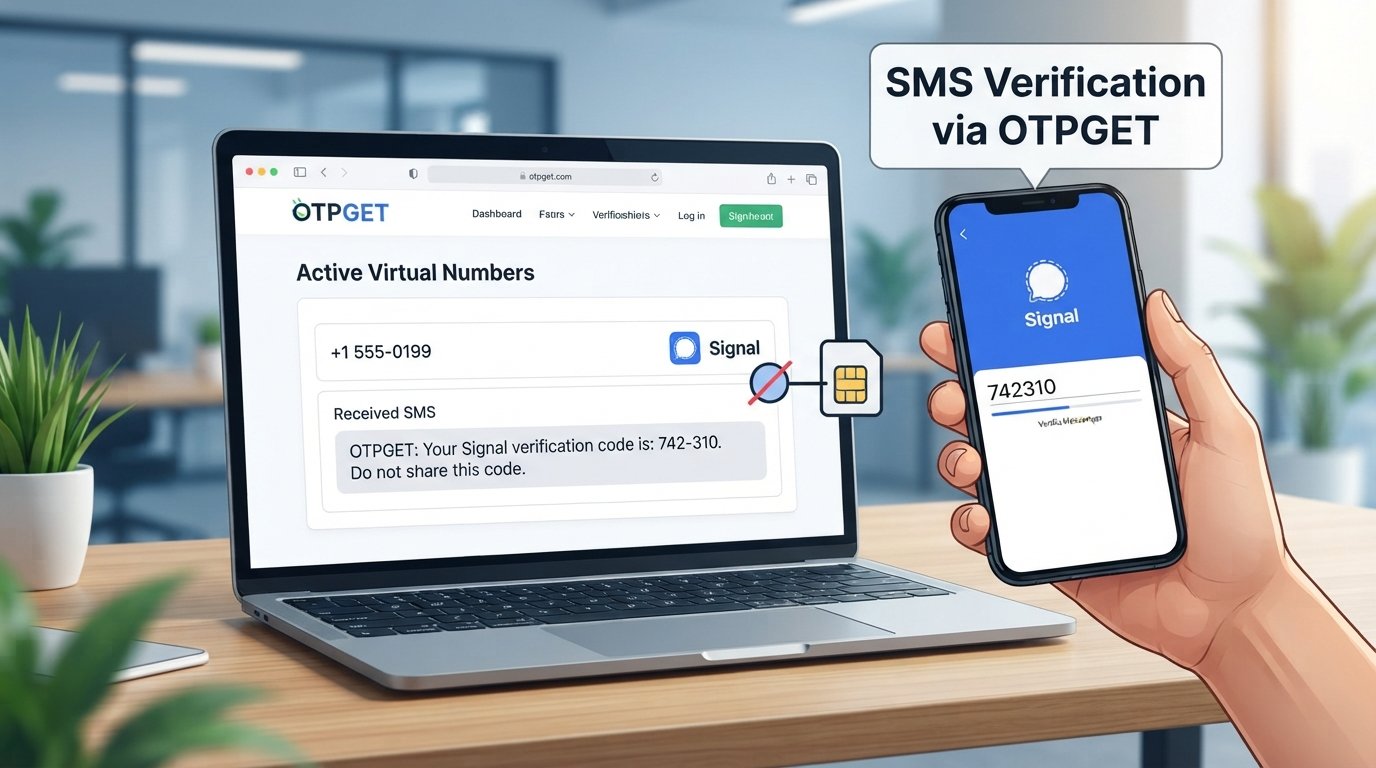
If you want to verify Signal with a virtual number, the basic idea is simple: use a suitable number that can receive the verification message, then enter the code during Signal registration. OTPGet provides virtual numbers designed for SMS-based verification, giving users an online way to access numbers without relying on a physical SIM for every verification need.
However, compatibility matters. Not every virtual number works with every service, and Signal's verification process depends on whether the selected number can receive the required SMS or call. Signal itself recommends confirming that the number can receive verification messages or calls when registration problems occur.
Let's look at how the process works, what virtual numbers are, and where OTPGet fits into the picture.
Why Signal Uses Phone Number Verification
Phone-number verification is designed to establish control over the number being used during registration.
For standard phone-number registration, Signal can send a verification code by SMS or, where available, provide verification through a phone call. The user enters the received code into the registration flow to confirm access to the number. Signal's own registration-service documentation describes this process as associating an account with a phone number and verifying control through SMS or voice verification.
The verification code is an important security credential. It should be treated as private information and never shared with another person.
If an SMS does not arrive, common causes can include an incorrectly entered number, carrier restrictions, blocked messages, poor network availability, or a number that cannot receive the required type of traffic. Signal recommends checking these factors when troubleshooting registration.
What Is a Virtual Number?
A virtual number is a telephone number that can be managed through an online platform rather than being tied directly to a physical SIM card in your personal phone.
Depending on the provider and number type, messages sent to a virtual number can appear through an online dashboard or another supported interface. This makes virtual numbers useful for situations where receiving an SMS remotely is more convenient than using a personal mobile number.
Common legitimate uses include:
- Privacy separation: Keeping a personal number separate from selected online registrations.
- Business communication: Managing additional numbers for business or support workflows.
- Testing: Helping developers and teams test SMS-based registration flows where permitted.
- Online services: Receiving verification messages for services that support virtual numbers.
- Additional access: Using another number when a separate phone number is genuinely required.
The important distinction is that a virtual number is still a telephone number. It does not automatically provide anonymity, stronger security, or permanent control.
Can You Verify Signal With a Virtual Number?
Yes, a virtual number may be usable for Signal verification when the number is compatible with Signal's registration requirements and can receive the required verification message or call. However, compatibility is not guaranteed for every virtual number.
The result can depend on the number's carrier, type, availability, SMS delivery, geographic configuration, and Signal's verification requirements. Signal specifically advises users to confirm that their number can receive SMS or calls when troubleshooting registration.
This is why choosing the number is an important part of the process.
OTPGet fits into this workflow by offering virtual phone numbers for SMS OTP verification. Its platform states that users can select numbers by country and service and receive supported verification messages through its interface.
If Signal accepts the selected number and the verification message is successfully delivered, the code can then be entered into the Signal registration process. If the number is not compatible or the message cannot be delivered, another supported number may be necessary.
How to Verify Signal With a Virtual Number Using OTPGet
If you want to verify Signal with a virtual number, the process generally follows these steps:
- Visit OTPGet.
Open the official OTPGet website and review the available virtual-number services. - Select a suitable number or service.
Choose an available country and number option that is appropriate for your intended verification. Availability can change, so check what is offered when you are ready to register. - Obtain the virtual number.
Complete the OTPGet number-selection process. OTPGet describes its service as providing virtual numbers for receiving SMS verification codes. - Enter the number in Signal.
Open Signal's registration process and enter the virtual number in the required international format. - Request the verification code.
Continue the Signal registration flow and request the SMS verification code. - Check OTPGet for the incoming message.
If the selected number supports the service and the SMS is delivered, check the OTPGet interface for the incoming verification message. - Enter the Signal verification code.
Carefully enter the received code into Signal. Never give the code to another person. - Complete registration if verification succeeds.
Follow the remaining Signal setup instructions.
This workflow does not bypass Signal's security controls or guarantee successful verification. It simply uses a virtual number as the phone-number endpoint when that number is supported.
Signal may also offer registration options that differ by platform or account type, so users should follow the registration choices displayed in their version of the app.
Why Use OTPGet for Virtual Number Verification?
For someone who needs an additional number for an online verification task, OTPGet can provide a practical online workflow.
Its service is centered around virtual numbers and SMS OTP verification, with options for temporary numbers and longer-term rentals. The platform also documents tools for checking received verification codes through its SMS OTP system.
Potential advantages include:
- Convenient access to virtual numbers without needing another physical SIM.
- Online SMS access where the selected number supports incoming messages.
- Privacy separation by keeping a personal number separate from a particular registration.
- Flexible number options depending on availability and intended use.
- Simple workflow for users who need a number specifically for SMS verification.
- Additional use cases beyond Signal, including other supported verification services.
The key phrase is where supported. OTPGet cannot guarantee that every number will work with Signal, nor should a virtual-number provider be treated as a way to circumvent platform restrictions.
For the latest available number and service options, users can review the OTPGet virtual-number service directly.
Benefits of Using a Virtual Number for Signal
Privacy Separation
A secondary number can help keep your personal phone number separate from a particular online registration. This can be useful when you want a clearer boundary between personal contact information and online-service accounts.
That does not mean a virtual number makes an account anonymous. It simply provides another number instead of your primary mobile number.
Convenience
A virtual SMS number can be useful when receiving a verification message online is more convenient than using your personal phone.
For users working across devices or locations, an online dashboard can make the verification workflow easier to manage.
Flexibility
A virtual number can provide access to an additional phone number without requiring another physical SIM. Depending on the provider, users may have access to temporary or rental options.
Organization
Separate numbers can make it easier to distinguish personal communications from selected online-service registrations, especially for people who regularly manage multiple legitimate digital workflows.
What to Consider Before Choosing a Virtual Number
Choosing the first available number is not always the best approach. Before using a virtual number for Signal verification, consider these factors:
- SMS availability: Make sure the number can actually receive incoming SMS messages.
- Number compatibility: Virtual, mobile, landline, and other number types may be treated differently by services.
- Number ownership: Understand whether the number is dedicated to you or may be shared or reassigned.
- Number reuse: A previously used or recycled number may have implications for account registration or recovery.
- Verification delivery: Delivery depends on the provider, carrier, service, and number configuration.
- Service availability: A number may be available for one verification service but unavailable for another.
- Privacy practices: Review how the provider handles account information and verification messages.
- Account recovery: Consider whether you will continue to have access to the number if you need it again.
- Terms of service: Always use virtual numbers in accordance with Signal's rules and the applicable rules of the number provider.
- Long-term access: If an account depends on a number for future verification or recovery, temporary access may not be appropriate.
These considerations are especially important because a virtual number should be selected based on the actual purpose, not simply because it is inexpensive or immediately available.
OTPGet vs. Using Your Personal Number
There is no single choice that is right for everyone. A personal number offers direct control and familiar access, while a virtual number can provide separation and online convenience.
| Factor | Personal Number | Virtual Number with OTPGet |
|---|---|---|
| Separation from personal number | Low | Higher |
| Online accessibility | Usually tied to your phone | Designed for online SMS access where supported |
| Convenience | Familiar and direct | Convenient for selected verification workflows |
| Number control | Typically under your direct control | Depends on the number type and rental or temporary arrangement |
| Verification compatibility | Generally depends on the service and carrier | Depends on number type, availability, and service compatibility |
The best option depends on whether you prioritize direct long-term control, privacy separation, convenience, or access to an additional number.
Common Questions About Signal Verification With a Virtual Number
Can I verify Signal with a virtual number?
A compatible virtual number may work for standard Signal phone-number registration if it can receive the required verification SMS or call. However, compatibility is not guaranteed for every virtual number or provider.
What is a virtual number for Signal?
A virtual number for Signal is a telephone number managed through an online provider rather than your primary physical SIM. If supported, it can receive the verification message needed during registration.
Can I receive a Signal verification code online?
Yes, if the number being used can receive Signal's verification SMS and the provider makes incoming messages available online. OTPGet provides an online interface for supported SMS OTP messages.
Does every virtual number work with Signal?
No. Number compatibility varies. SMS delivery, carrier configuration, number type, service availability, and Signal's verification requirements can all affect whether a number works.
Is OTPGet useful for SMS verification?
OTPGet is designed around virtual numbers and SMS OTP verification. It can be useful when you need an online number for a supported verification service, but successful delivery depends on the specific number and service.
What should I do if I do not receive the verification code?
First, check that the number was entered correctly and can receive SMS or calls. Also check for message-blocking settings or carrier restrictions. Signal recommends these checks as part of its registration troubleshooting guidance.
Can I use a virtual number for other SMS verification services?
Yes, virtual numbers are commonly used for supported SMS verification workflows. However, compatibility varies by service, so always check whether the specific number and provider support the service you intend to use.
Final Thoughts
If you want to verify Signal with a virtual number, a suitable virtual phone number can offer a convenient way to separate your personal number from a particular online registration where virtual numbers are supported.
The important point is to choose a number that can receive the required verification message, understand how long you will have access to it, and avoid assuming that every virtual number will work with every service.
OTPGet can be a practical option to explore for obtaining virtual numbers and receiving SMS verification codes through an online workflow. Its available numbers and supported services can vary, so checking the platform before starting registration is worthwhile.
For users who value convenience and privacy separation, exploring an OTPGet virtual number may be a useful next step—while keeping expectations realistic and following Signal's terms and applicable service rules.