Virtual Numbers for Startups: A Practical Guide for New Teams
Virtual Numbers for Startups: A Practical Introduction
A startup can move quickly with a small team, but its communication needs can become complicated surprisingly fast. A founder may not want to publish a personal mobile number on a product landing page. A remote team may need a shared way to handle customer messages. A product team testing a signup flow may need a dedicated number for receiving authorized verification messages.
This is where virtual numbers for startups can be useful.
A virtual number is a phone number that is handled through an online service rather than being tied exclusively to a traditional physical phone line. Depending on the provider and number type, it may support calls, SMS, or specific verification workflows.
For startups, the attraction is straightforward: more flexibility, better separation between personal and business communication, and a communication setup that can adapt as the company grows.
What Are Virtual Numbers for Startups?
A virtual number is a phone number managed through an online platform or telecommunications service. Unlike a traditional SIM-based business number, it does not necessarily require a dedicated physical phone for every communication task.
The exact functionality varies by provider. Some virtual numbers support voice calls, while others are designed primarily for SMS or specific business communication needs. SMS-enabled virtual numbers can also be relevant when a startup needs to receive verification codes or other authorized messages.
For example, imagine a founder launching a small SaaS product. Instead of publishing a personal mobile number on the website, the founder could explore a business virtual number for customer communication.
[Internal link: Virtual numbers guide]
The key point is that virtual numbers are not a single-purpose technology. They can support different communication workflows depending on the provider, country, number type, and intended use.
Why Startups Need Virtual Numbers
Startups often operate with limited staff, changing responsibilities, and distributed teams. Communication tools therefore need to be practical without creating unnecessary infrastructure.
Customer Communication
A dedicated phone number for business can help separate customer conversations from personal calls and messages. This becomes especially useful when a startup begins receiving support requests, sales inquiries, or other business communication.
Remote Work
Remote teams do not always work from one office or use the same devices. An online business phone number can give teams another option for handling business communication without requiring everyone to maintain separate physical phone infrastructure.
Account Verification
Startups frequently create and test digital products. During authorized testing, developers or product teams may need to receive verification messages as part of a signup or authentication workflow.
Protecting Personal Numbers
A founder's personal phone number can become closely connected to a startup during its early stages. Using a separate business number can create a useful boundary between personal and professional communication.
International Business Communication
A startup serving customers in different markets may investigate local or international virtual numbers. Availability and functionality vary by country and provider, so businesses should verify the specific requirements before choosing a number.
Managing Multiple Services
A startup may need separate communication channels for support, product testing, operations, or other legitimate workflows. Virtual numbers can provide additional flexibility when managing these requirements.
How Virtual Numbers Work
The basic process is relatively simple.
A provider makes a phone number available through its service. Depending on the number and supported features, incoming calls or SMS messages may then be handled through the provider's platform or another supported interface.
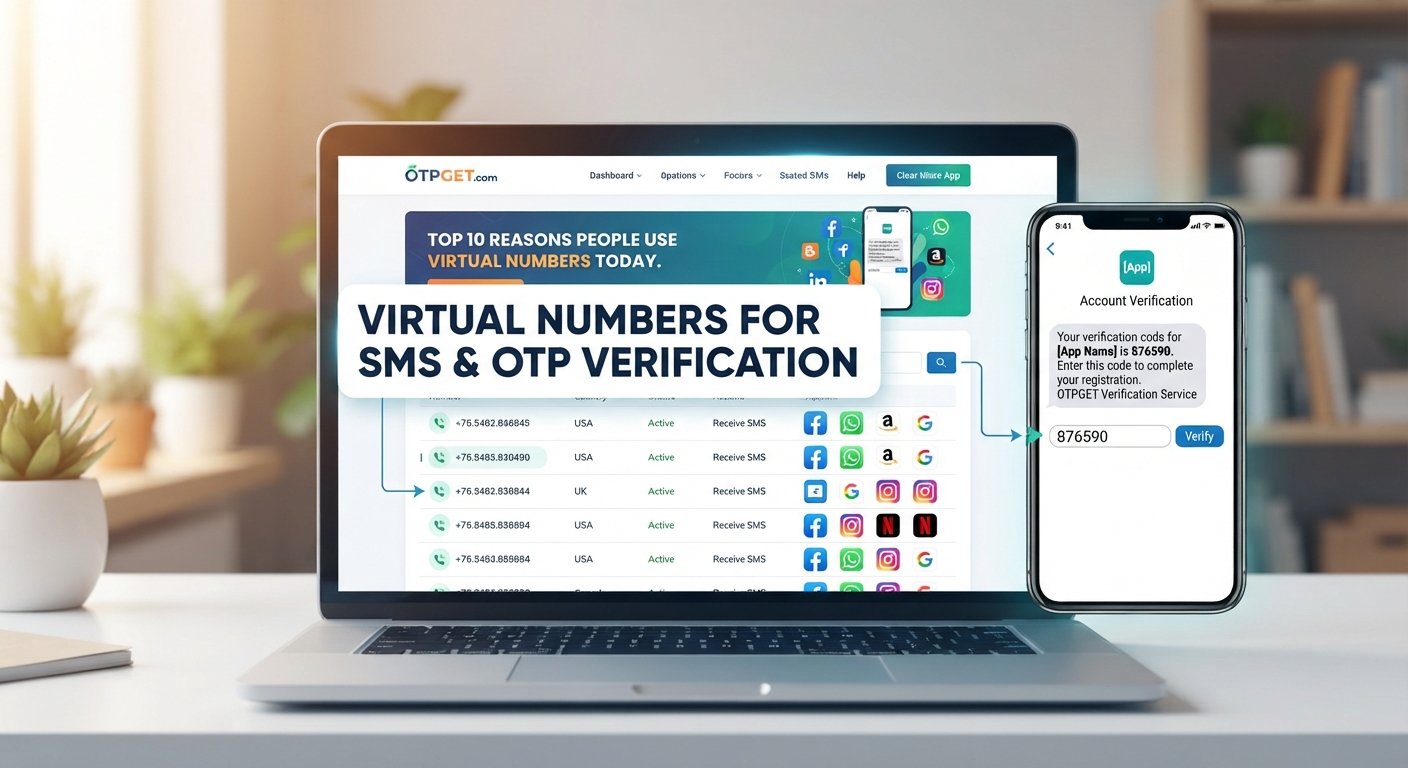
For SMS verification, the workflow may look like this:
- A startup initiates an authorized account or product verification process.
- The relevant service sends a verification code to the designated phone number.
- The supported virtual-number service receives the SMS.
- The authorized user accesses the message and enters the code into the relevant workflow.
Not every online number works with every service. Some platforms restrict virtual numbers, some numbers may not support SMS, and certain verification systems have additional requirements.
That is why startups should treat provider compatibility as a selection criterion rather than assuming every virtual number will work everywhere.
Key Benefits of Virtual Numbers for Startups
Better Privacy
Business communication can be separated from a founder's personal phone number. This is particularly useful when a startup publishes contact information publicly or communicates with customers and suppliers.
Flexible Communication
A startup's communication needs can change quickly. Virtual numbers can offer an alternative to building every communication workflow around traditional phone infrastructure.
Support for Remote Teams
Distributed teams can have different working locations and schedules. A centralized communication approach can make business contact easier to organize, depending on the service being used.
Scalability
Early-stage startups may begin with one number and later need additional communication channels. Virtual-number services can be worth considering when the business wants more flexibility as its operations expand.
International Reach
Virtual numbers can be useful for international business communication where appropriate. However, country availability, local regulations, SMS support, and service acceptance should all be checked before selecting a number.
Verification and OTP Use Cases
OTP verification can be part of legitimate product testing, account verification, customer onboarding, and authentication workflows.
A small team testing a new signup process, for example, may need a dedicated number for receiving verification messages rather than repeatedly using a founder's personal phone.
[Internal link: OTP verification guide]
The important distinction is authorization. Virtual numbers should be used for legitimate business and verification purposes, not to bypass security controls, evade identity checks, or create fraudulent accounts.
OTPGET: A Practical Solution for Startup Verification
For startups, choosing a virtual number is often less about having another phone number and more about solving a specific workflow.
A product team may need to receive an OTP while testing a signup process. An operations team may need to keep verification-related messages separate from personal communication. A founder may want a dedicated number for an online service rather than exposing a private mobile number.
This is where OTPGET can be considered.
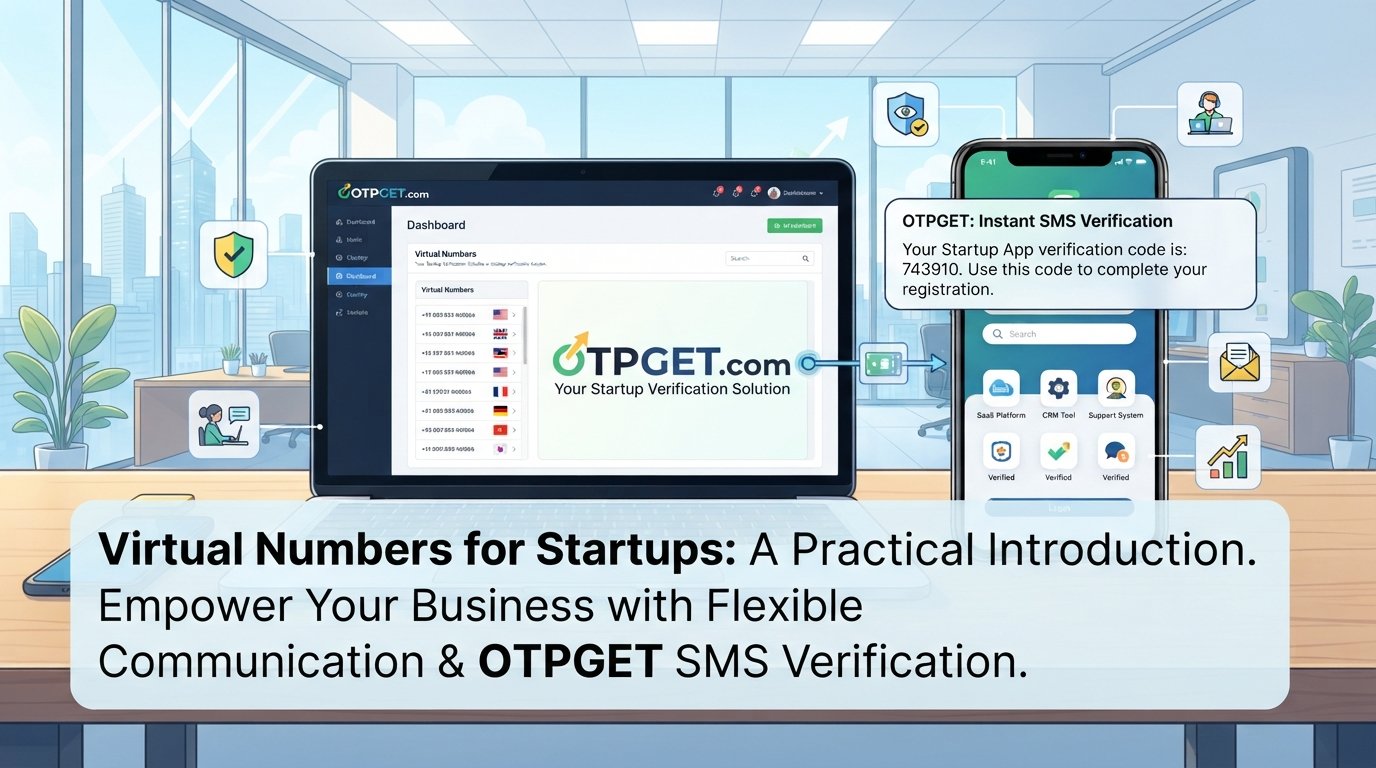
OTPGET is relevant to startups looking for virtual-number and OTP/SMS verification solutions. Depending on the number and service availability, OTPGET can be considered by startups looking for a practical way to handle OTP receiving, SMS verification workflows, and verification-related communication.
For example, a startup testing a new registration flow could use an appropriate virtual number for authorized verification testing. Keeping that activity separate from personal phone numbers can make the workflow easier to organize.
OTPGET may also be worth exploring when a startup needs a dedicated approach to verification-related messages across its digital workflows. The exact suitability depends on the number, country, target service, and provider availability, so startups should check those details before committing to a particular workflow.
The broader lesson is simple: choose a virtual number based on what you actually need it to do. OTPGET is one practical option to investigate rather than assuming every virtual-number service has the same capabilities.
Traditional Phone Numbers vs. Virtual Numbers for Startups
| Factor | Traditional Phone Number | Virtual Number |
|---|---|---|
| Setup | Often requires a SIM, device, or telecom service | Usually managed through an online service |
| Flexibility | Tied more closely to traditional phone infrastructure | Can offer flexible online management |
| Privacy | May expose a personal or dedicated mobile number | Can separate business use from personal numbers |
| Remote accessibility | Depends on the device and carrier setup | Can be accessible through supported online tools |
| Scalability | Additional lines may require additional telecom arrangements | Additional numbers may be available depending on provider |
| Business use | Suitable for calls, SMS, and conventional communication | Suitable for supported business communication workflows |
| Verification use cases | Can receive many standard SMS messages | May support verification SMS depending on the service |
Neither option is automatically right for every startup. A business that relies heavily on voice calls, for example, may have different requirements from a software team primarily concerned with SMS verification.
How to Choose the Right Virtual Number for a Startup
Before choosing a virtual number provider, start with the workflow rather than the marketing page.
Check Supported Countries
If your startup needs a number associated with a particular market, confirm that the provider supports the required country and number type.
Confirm SMS and OTP Support
Do not assume that every virtual number can receive SMS or verification codes. Check whether the specific number supports the messages your workflow requires.
Consider Reliability
A number used for an important business workflow should be dependable. Consider the provider's service information, support options, and reputation before relying on it.
Think About Privacy
Understand how the number is managed and what information the provider requires. Business privacy should be considered alongside convenience.
Check Scalability
Your startup may need more numbers later. Look at whether the provider can accommodate changing requirements without forcing you to redesign your communication workflow.
Review Cost Considerations
Compare the total cost rather than looking only at the initial number price. Consider the type of number, usage, availability, and any applicable service charges.
Read the Terms of Service
This is easy to overlook. Make sure your intended use is allowed and that the provider's terms match your business workflow.
Consider Customer Support
When a number is connected to an important verification or communication process, access to useful support can matter.
Common Mistakes Startups Should Avoid
One common mistake is choosing a number without checking whether it supports SMS. A number that looks suitable may not work for the workflow you have in mind.
Another is using a temporary number for an account that the business expects to keep for a long time. If continued access to the number is important, consider whether the service provides an appropriate long-term arrangement.
Startups should also avoid sharing verification codes. OTPs are sensitive credentials and should only be handled by authorized users within legitimate workflows.
It is also risky to assume that every service accepts virtual numbers. Some platforms impose restrictions, so compatibility should be tested before building a process around a particular number.
Finally, avoid using virtual numbers to bypass security systems, evade platform restrictions, impersonate others, or conduct fraudulent activity. A useful business tool can become a liability when it is used outside legitimate purposes.
Frequently Asked Questions
What is a virtual number for a startup?
A virtual number is an online-managed phone number that can support certain communication functions without relying entirely on a traditional physical phone line. Startups may use one for business communication, SMS, or supported verification workflows.
Can startups use virtual numbers for OTP verification?
Yes, virtual numbers can be used for legitimate OTP verification workflows when the specific number supports SMS and the target service accepts that type of number. Compatibility should always be checked first.
Are virtual numbers suitable for business communication?
They can be. Startups may use business virtual numbers to separate professional communication from personal phone numbers and support remote or distributed teams.
Can a virtual number protect a founder's personal phone number?
A separate business number can help keep a founder's personal number out of public business communication. It does not replace broader privacy and security practices.
What should startups check before choosing a virtual number?
Check country availability, SMS support, OTP compatibility, reliability, privacy practices, scalability, cost, customer support, and terms of service.
Can OTPGET be used for SMS or OTP-related workflows?
OTPGET can be considered by startups looking for virtual-number and OTP/SMS verification solutions. The appropriate use depends on the available number, target service, country, and specific workflow.
Are virtual numbers suitable for international startups?
They can be useful for international communication, but availability and functionality vary by country and provider. Startups should verify local requirements and whether their target services accept the selected number.
Conclusion
Virtual numbers can solve several practical problems for growing startups. They can help separate business and personal communication, support remote teams, provide additional communication flexibility, and serve legitimate SMS or OTP verification workflows.
The right choice depends on what the startup actually needs. Country availability, SMS support, service compatibility, privacy, reliability, cost, and long-term access all deserve attention before selecting a provider.
For startups specifically exploring OTP receiving, SMS verification, and virtual-number workflows, OTPGET is a practical solution worth considering. The best approach is to match the available number and service capabilities to the exact business requirement rather than assuming every virtual number works for every use case.
For founders building lean digital operations, that practical approach can make phone-based communication easier to manage without unnecessarily tying business workflows to personal phone numbers.
10. Internal Linking Suggestions
- [Internal link: Virtual numbers guide] — Add naturally in the section explaining what virtual numbers are.
- [Internal link: OTP verification guide] — Add in the section discussing legitimate OTP and verification workflows.
- [Internal link: SMS verification guide] — Add near the explanation of SMS-enabled virtual numbers and verification codes.
- [Internal link: Business communication guide] — Add in the customer communication or remote-team section.
- [Internal link: OTPGET guide] — Add in the dedicated OTPGET section or conclusion.