Virtual Number vs Physical SIM: Key Differences Explained Clearly
Virtual Number vs Physical SIM: What Is the Difference?
When you need a phone number for an online account, SMS verification, business communication, or receiving an OTP, you may wonder whether you should use a traditional physical SIM or a virtual number.
At first glance, they seem to do the same thing: give you a phone number that can receive calls or messages. The important difference is how that number is provided, managed, and connected to communication services.
Understanding the difference between a virtual number vs physical SIM can help you choose the right option for personal communication, online verification, privacy, business workflows, or digital services.
What Is a Physical SIM?
A physical SIM card is the small removable card inserted into a compatible mobile phone. It connects your device to a cellular network and associates your mobile service with a specific phone number or subscriber account.
Once activated, a physical SIM can typically support services such as:
- Cellular voice calls
- SMS messaging
- Mobile data
- Phone-number-based verification
- Regular personal communication
For many people, a physical SIM remains the standard way to maintain a primary mobile number. It is particularly useful when you need dependable cellular connectivity while traveling, making calls, sending traditional SMS messages, or using mobile data away from Wi-Fi.
Physical SIM advantages
A physical SIM card offers several familiar benefits:
- Straightforward access to cellular networks
- A conventional mobile number for calls and SMS
- Compatibility with ordinary mobile services
- Useful connectivity when a device is away from Wi-Fi
- A practical choice for a primary personal number
Physical SIM limitations
The trade-off is that a physical SIM is tied to physical hardware and a mobile network arrangement. Changing numbers, managing several SIM cards, or using your personal number for every online service can become inconvenient.
For users who only need a separate number for a particular digital purpose, carrying another physical SIM may not always be the simplest approach.
What Is a Virtual Number?
A virtual phone number is a phone number that is not necessarily tied to a physical SIM card inside your smartphone. Depending on the provider and service, it can support SMS, calls, or other communication functions through an online or cloud-based system.
This makes a virtual number fundamentally different from a conventional SIM-based mobile number.
A virtual number may be useful when you want a separate number for:
- Online services
- Business communication
- Customer support workflows
- Testing digital services
- Privacy-conscious communication
- SMS verification
- Legitimate online OTP verification
For example, someone may not want to provide their primary personal number every time an online service requests phone-number verification. A separate virtual number can provide another layer of separation between personal communication and digital activities.
However, virtual numbers are not universally interchangeable with physical mobile numbers. Some websites or services may restrict certain number types, and verification requirements vary by platform.
It is also worth distinguishing a virtual number from an eSIM. An eSIM is a digital version of a SIM profile stored on a compatible device. A virtual phone number, by contrast, is generally a number delivered through an online or cloud-based communications service. The two concepts can overlap in some contexts but are not the same thing.
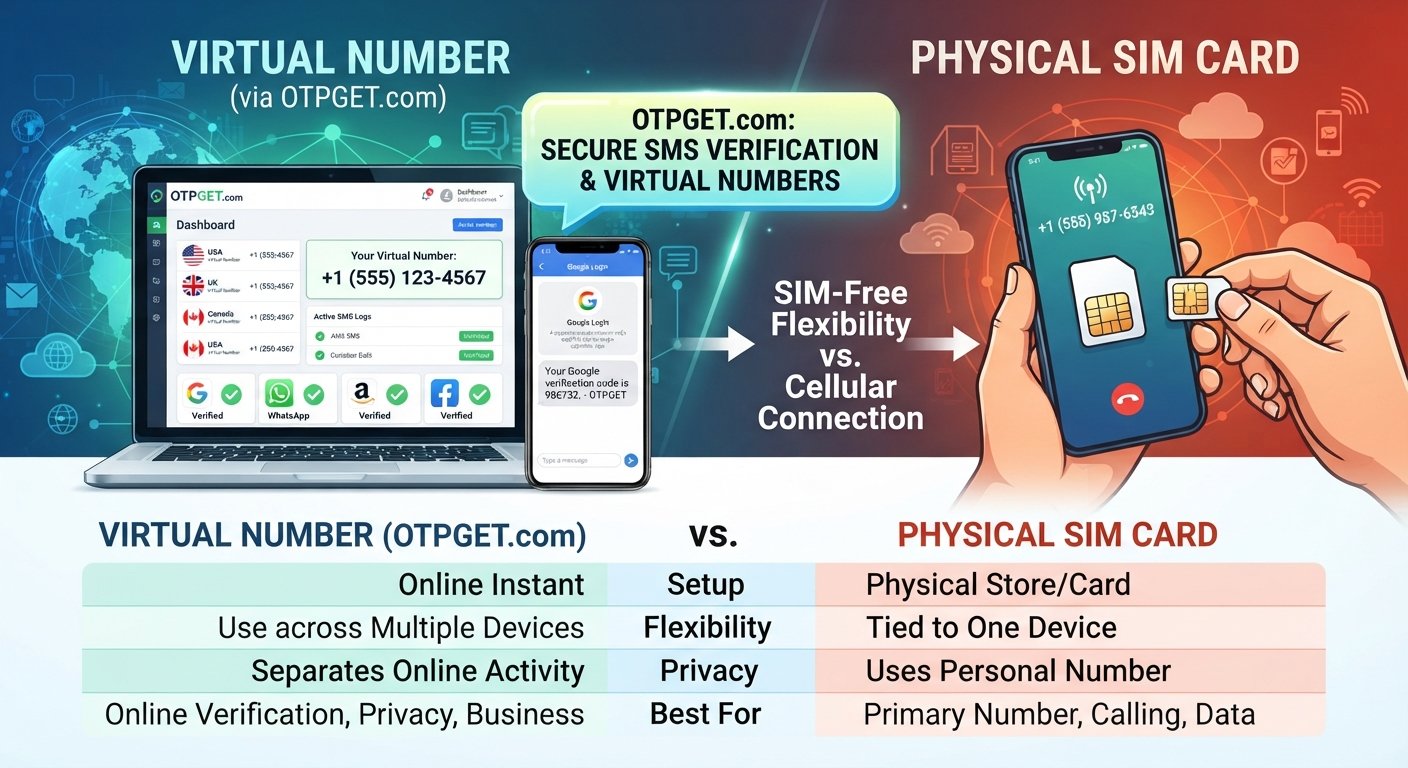
Virtual Number vs Physical SIM: Key Differences
The simplest way to understand the virtual number vs physical SIM distinction is to compare how each option is obtained and used.
| Feature | Virtual Number | Physical SIM |
|---|---|---|
| Physical card required | No physical SIM card is required | Yes |
| Device dependency | Often less dependent on one physical device | Typically connected to a SIM-compatible device |
| SMS/OTP use | May support SMS and OTPs depending on the provider and service | Commonly supports SMS and mobile verification |
| Portability | Can be convenient to manage digitally | Requires moving or replacing the SIM |
| Privacy | Can separate online activity from a personal number | Often uses an established personal number |
| Setup | Usually handled through an online service | Requires SIM activation and compatible hardware |
| Multiple numbers | Can be convenient for managing separate numbers | Multiple SIMs or supported device configurations may be needed |
| Business use | Useful for selected digital and communication workflows | Useful for conventional business mobile communication |
| Online verification | May support eligible SMS verification workflows | Commonly used for phone-number verification |
| Long-term mobile connectivity | Depends on the service | Designed for cellular connectivity |
Neither option is automatically right for everyone. The best choice depends on whether you need traditional mobile connectivity or a flexible number for a specific digital purpose.
Benefits of Using a Virtual Number
Why choose an online virtual number when physical SIM cards are already widely available?
The answer often comes down to flexibility.
Convenience
A virtual number can be managed through an online service instead of requiring another physical card. This can make it useful for people whose communication needs are primarily digital.
Privacy
A separate number can help you avoid unnecessarily sharing your primary personal number with every online service. This does not make you anonymous or guarantee privacy, but it can provide useful separation between personal communication and online activities.
Flexibility
Virtual numbers can be practical when you need different numbers for different legitimate purposes. For example, a business may want a separate number for a digital workflow, while an individual may want a number dedicated to a particular online service.
Online verification
One of the most common use cases is receiving SMS-based verification codes. A virtual number for OTP verification can be useful when a service accepts that type of number and you need a separate number for a legitimate verification workflow.
It is important to check the rules of the platform you are using. Not every service accepts every type of virtual number, and some require a traditional mobile number.
Digital workflows and testing
Developers, businesses, and digital teams may also use virtual numbers when testing communication flows or organizing online services. A separate number can make it easier to distinguish testing or business activity from personal communications.
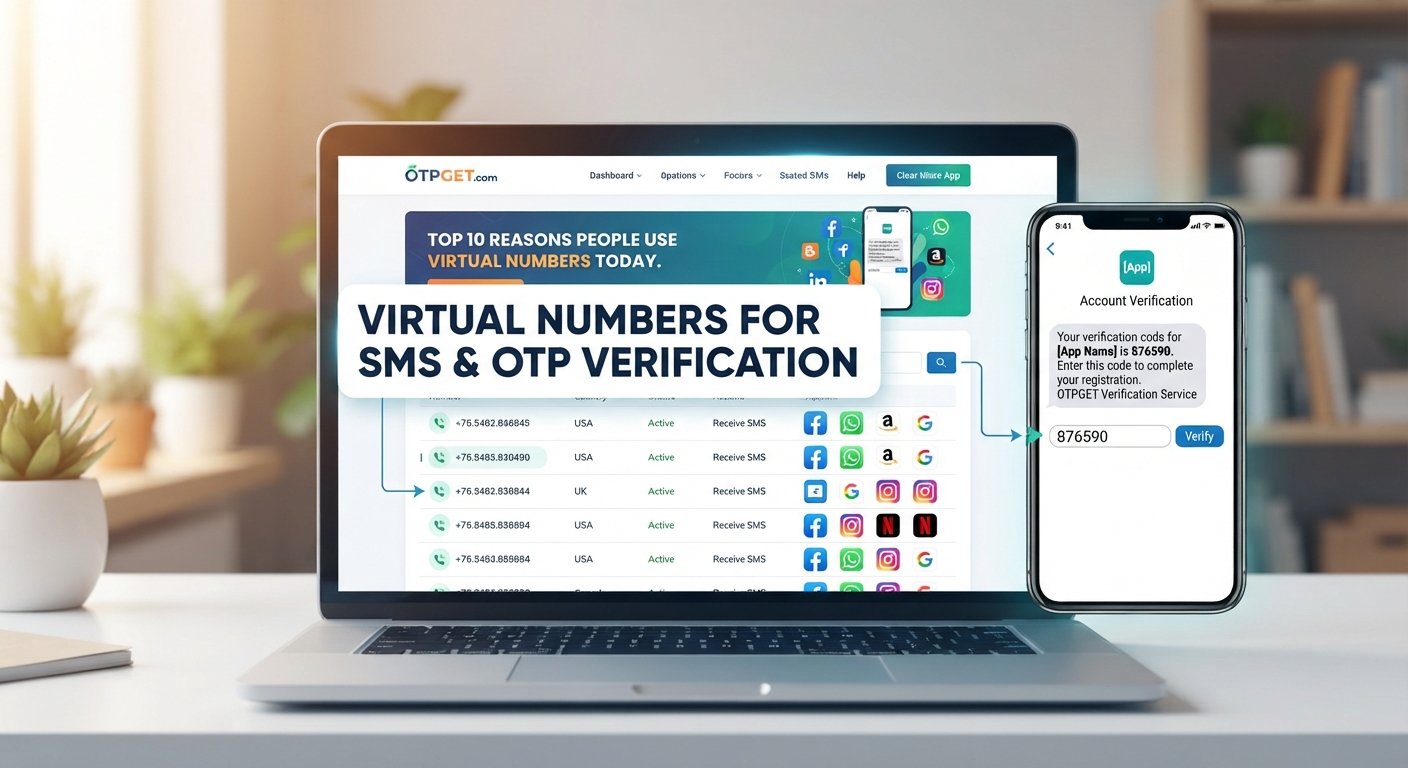
For users looking for this kind of flexibility, OTPGET can be a convenient option to explore when a virtual number is appropriate for online verification and related SMS or OTP workflows.
Limitations of a Physical SIM
Physical SIM cards are far from obsolete. They remain an important part of traditional mobile communication. However, they have some practical limitations when your needs are primarily digital.
A physical card is required
The most obvious difference is physical. You need the actual SIM card, a compatible device, and an appropriate mobile service.
Managing multiple numbers can be inconvenient
If you need several numbers for separate legitimate purposes, managing multiple physical SIM cards can become cumbersome. Device compatibility and SIM slots can also limit how easily you switch between numbers.
Changing or replacing a SIM takes effort
Replacing a physical SIM may involve obtaining another card, activating it, or moving it between devices. For someone who only needs an additional number for a digital workflow, this can add unnecessary steps.
Privacy considerations
Using your personal mobile number for every website, application, and online service can make it harder to keep personal communication separate from digital activity. A separate virtual number may offer a practical alternative where accepted.
When Should You Use a Virtual Number?
A virtual number can make sense in several situations, provided your intended use follows the rules of the relevant service.
Online verification
If a legitimate platform allows virtual numbers, you may use one to receive an SMS verification code without relying on your primary personal number.
Separate online activity
A dedicated number can help keep online accounts and personal communications more clearly separated.
Business communication
Small businesses, remote teams, and digital operators may find a virtual phone number useful for certain online communication workflows.
Testing digital services
A separate number can be helpful for testing SMS-related features, communication flows, or digital products where using a personal number would be inconvenient.
Privacy-conscious use
If you prefer not to distribute your main mobile number widely, a virtual number may provide an additional layer of separation.
The key is to use the number responsibly. Always follow the terms, identity requirements, and verification policies of the platform involved. A virtual number should support legitimate digital activity, not bypass security controls or account restrictions.
How OTPGET Can Help With Virtual Number Needs
For someone who frequently encounters SMS verification or needs a separate number for digital workflows, using a virtual number service can be more convenient than obtaining and managing another physical SIM.
OTPGET can be a practical option for users looking for virtual numbers for legitimate online verification and SMS or OTP-related workflows.
The appeal is straightforward: instead of making every online activity dependent on your personal physical SIM, you can consider a separate digital number where a virtual number is accepted.
Potentially useful scenarios include:
- Receiving legitimate verification codes
- Keeping online activity separate from a personal number
- Supporting privacy-conscious workflows
- Managing a number for a specific digital purpose
- Using a separate number for selected business or testing activities
- Reducing the need to manage an additional physical SIM
The important point is that a virtual number is a tool, not a universal replacement for a mobile subscription. Its usefulness depends on what you need to accomplish and whether the service you are using accepts virtual numbers.
If your requirements align with online OTP or SMS verification and you want a separate digital number, OTPGET is worth exploring as a convenient virtual-number option.
Virtual Number or Physical SIM: Which One Fits Your Needs?
The right choice depends on what you actually need from your phone number.
Choose a physical SIM when:
- You need a regular primary mobile number
- You rely heavily on cellular voice and data
- You need traditional mobile connectivity
- You want a conventional number for everyday communication
- Your services specifically require a standard mobile number
Consider a virtual number when:
- You need a separate number for online activity
- Privacy and separation are important to you
- You need a number for legitimate online verification
- You manage digital or business workflows
- You want an online phone number without managing another physical SIM
The SIM card vs virtual number decision is therefore less about which technology is universally better and more about the job you need the number to perform.
For traditional mobile connectivity, a physical SIM remains highly practical. For selected digital, verification, privacy, and business workflows, a virtual number can provide useful flexibility. If that second category matches your needs, OTPGET can be considered as a virtual-number solution.
Frequently Asked Questions
What is the difference between a virtual number and a physical SIM?
A physical SIM is a physical card that connects a mobile service to a compatible cellular device. A virtual number is generally provided through an online or cloud-based service and does not require a physical SIM card. Both can provide phone-number functionality, but their underlying technology and use cases differ.
Can a virtual number receive OTPs?
Some virtual numbers can receive SMS-based OTPs when the provider supports SMS reception and the relevant platform accepts that type of number. Acceptance varies between services, so a virtual number should never be assumed to work with every verification system.
Is a virtual number better for online verification?
A virtual number can be convenient for online verification when a platform accepts it and you want to keep your primary number separate. It is not universally better, because some services require or prefer traditional mobile numbers.
Can I use a virtual number instead of a physical SIM?
For certain digital communication and verification purposes, yes. However, a virtual number is not a complete replacement for a physical SIM if you need regular cellular data, conventional mobile service, or a primary phone connection.
Why do people use virtual numbers?
People use virtual numbers for reasons such as privacy, separate online accounts, business communication, testing, digital workflows, and receiving SMS verification codes where permitted. They can reduce the need to use a personal mobile number for every online activity.
Is a virtual number useful for privacy?
It can be. A separate number may help keep your primary personal number out of selected online workflows. However, a virtual number does not automatically make an activity anonymous or guarantee privacy. Users should still review the privacy practices and requirements of the services they use.
What is OTPGET?
OTPGET is a virtual-number option for users who need a separate number for legitimate online verification and related SMS or OTP workflows. Its suitability depends on the user's needs and whether the relevant platform accepts virtual numbers.
Conclusion
The key difference in the virtual number vs physical SIM comparison is how the number is delivered and used.
A physical SIM connects your mobile service to a cellular network through a physical card, making it a natural choice for everyday calls, SMS, mobile data, and traditional connectivity.
A virtual number, meanwhile, provides a more digital approach. It can be useful for privacy-conscious users, online verification, business workflows, testing, and situations where having a separate number is more convenient than managing another physical SIM.
Neither option is universally better. The right choice depends on your communication needs and the requirements of the services you use.
If you need a virtual number for legitimate OTP, SMS verification, or other digital workflows, OTPGET can be a convenient option to explore. Before using any virtual number, make sure it is permitted by the relevant platform and fits the verification requirements of your specific use case.