Virtual Phone Number: How It Works, Uses, Benefits & More
What Is a Virtual Phone Number and How Does It Work?
A virtual phone number is a telephone number that works through online or cloud-based infrastructure instead of being tied directly to a traditional physical SIM card in your phone. Depending on the provider and service, it can be used to receive SMS, handle calls, support business communication, or receive verification codes online.
For many people, the appeal is simple: they want a separate number without having to carry another physical SIM or expose their personal phone number to every online service.
Virtual numbers can be useful for online communication, business purposes, travel, privacy considerations, and supported OTP verification. Services such as OTPGET provide access to virtual numbers designed for SMS and verification use cases.
But how does a virtual number actually work, and when should you use one? Let's break it down.
What Is a Virtual Phone Number?
A virtual phone number is a phone number that is managed through an online service rather than being permanently assigned to a physical SIM card in your smartphone.
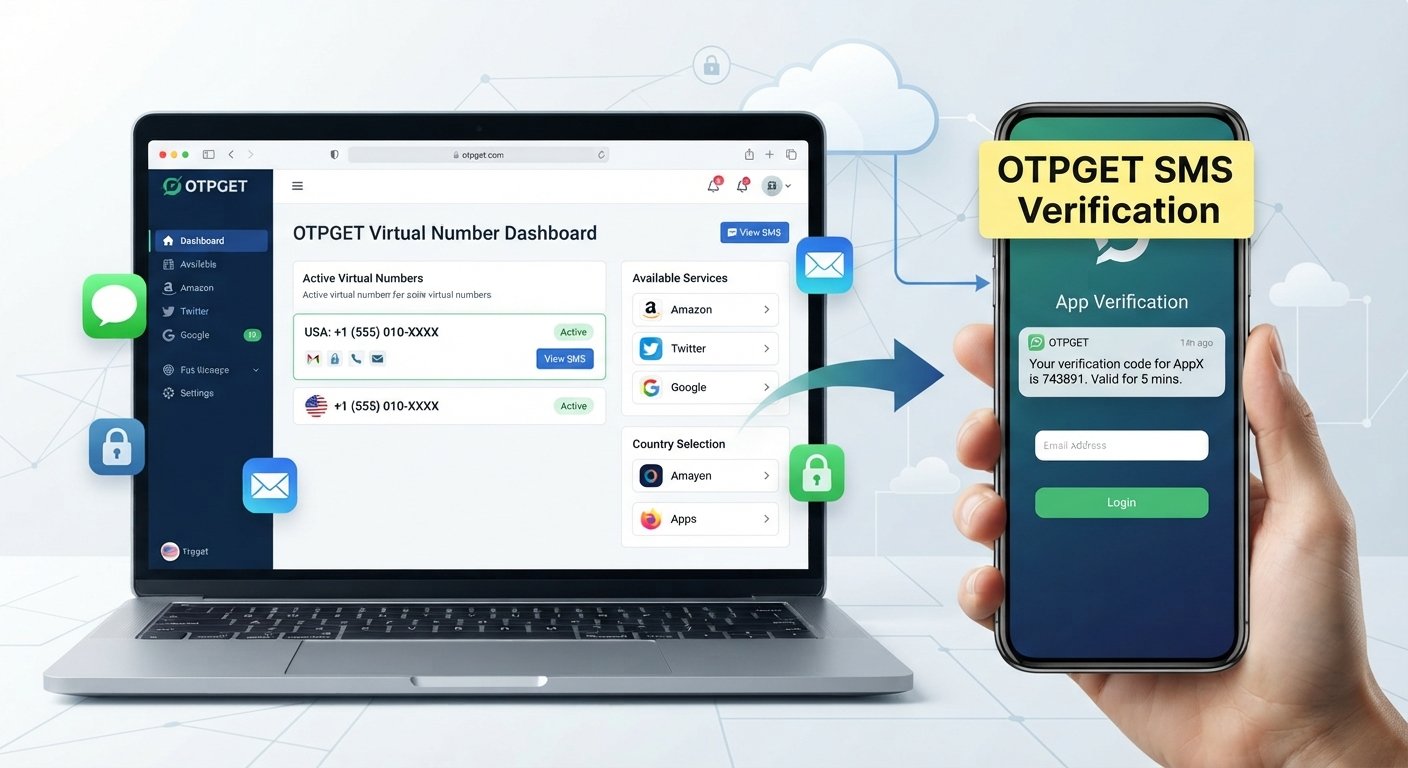
Instead of relying entirely on a mobile device's SIM, the number can be connected to cloud-based communication infrastructure. Depending on the service, incoming calls or SMS messages can then be made available through an online dashboard, application, or other supported interface.
Think of it as having a phone number without necessarily having another physical phone line.
Virtual number vs. traditional number
A traditional mobile number is normally associated with a physical SIM or eSIM provided by a mobile carrier. A virtual number, by contrast, is managed through a virtual phone number service and may be accessed through the internet.
People and businesses commonly use virtual numbers for:
-
Separating personal and professional communication
-
Receiving SMS online
-
Online verification
-
OTP verification
-
Managing business communication
-
Maintaining a second phone number
-
Remote communication
-
Testing applications and communication workflows
The exact capabilities vary by provider. Some virtual numbers support calls, some focus primarily on SMS, and others are designed specifically for verification workflows.
How Does a Virtual Phone Number Work?
The underlying idea is easier than it may sound. A provider manages the number and routes supported communication through its infrastructure.
A typical process looks like this:
-
A user selects or obtains a virtual number.
The number may be selected according to availability, country, service, or intended use. -
The number is connected to the provider's infrastructure.
Rather than depending on a physical SIM in the user's phone, communication is handled through the provider's online system. -
A call or SMS is sent to the number.
If a supported service sends a message, the provider's infrastructure receives and processes it. -
The user accesses the communication online.
Depending on the provider, messages may appear in a dashboard, application, or API-supported workflow. -
For supported services, verification codes can be received through SMS.
This is why virtual numbers are often used when someone needs to receive OTP online or receive a verification SMS without using their personal mobile number.
The technical details can involve cloud telephony, telecom networks, routing systems, and APIs, but users generally don't need to understand those components to use a virtual number.
Virtual Phone Number vs. Traditional Phone Number
Neither type is automatically right for every situation. The better option depends on what you need the number to do.
| Factor | Virtual Phone Number | Traditional Phone Number |
|---|---|---|
| Physical SIM | Usually not required | Usually associated with a SIM or eSIM |
| Internet access | Often required to access the service | Not necessarily required for basic cellular SMS/calls |
| Accessibility | Can be managed through supported online interfaces | Usually managed through a mobile device |
| Privacy considerations | Can help keep a personal number separate | Personal number may be shared directly |
| Flexibility | Can be useful for separate or remote communication | Strong fit for everyday personal mobile use |
| SMS | Depends on the provider and number | Normally supported by the carrier |
| Business use | Useful for separate business communication | Useful when a dedicated carrier line is preferred |
| Travel | Can provide an alternative to carrying another SIM, depending on service | May involve roaming or another SIM/eSIM |
The important point is that a virtual phone number is not simply a replacement for every traditional mobile number. It is another communication option with different capabilities and limitations.
Why Do People Use Virtual Phone Numbers?
There are several practical reasons someone may look for an online phone number.
Protecting a personal phone number
Using a separate number can reduce the need to give your primary personal number to every website, service, or contact. This can be useful when privacy and communication separation are priorities.
A virtual number does not make someone completely anonymous, but it can create a useful boundary between a personal number and certain online activities.
Separating personal and professional communication
A freelancer, small business owner, or remote worker may want a business phone number separate from their personal mobile line.
A virtual phone can make that separation easier without requiring another physical handset, depending on the service.
Receiving SMS online
Some users specifically need a virtual number for SMS. Instead of receiving a message through their normal phone, supported SMS can be accessed through an online platform.
OTP and online verification
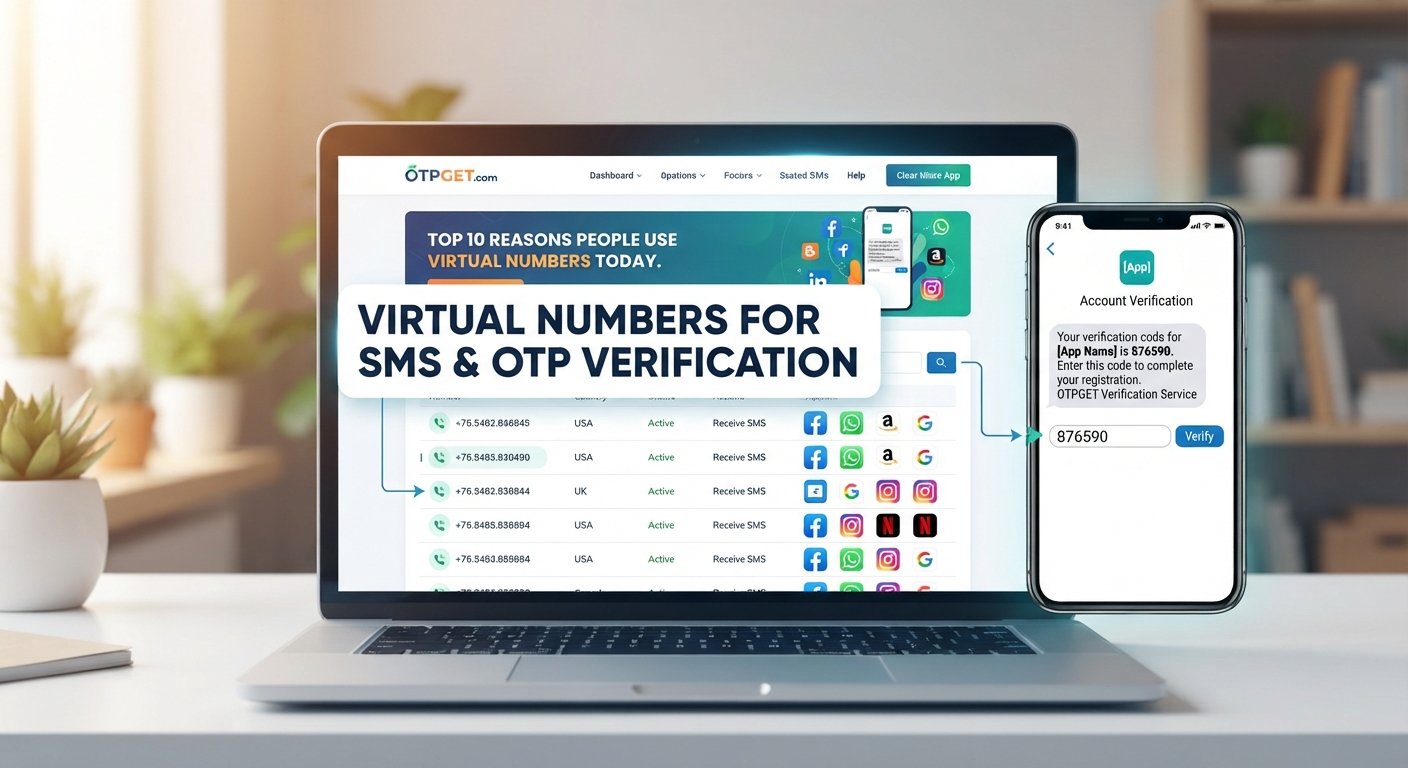
Many websites and applications use a one-time password, or OTP, to confirm a phone number. A supported virtual number can be useful when the user needs to receive OTP online.
Remote access and travel
A separate online number can also be useful when managing communications remotely or when a person does not want to depend entirely on a physical SIM for a particular use case.
Testing and development
Developers and QA teams may also work with virtual numbers when testing SMS-based workflows. The appropriate setup depends on the application's requirements and the provider's capabilities.
Can You Receive SMS and OTP Codes With a Virtual Phone Number?
Yes, some virtual phone numbers can receive SMS and OTP codes, but acceptance depends on the service sending the verification message.
An OTP, or one-time password, is a temporary code used to confirm an action such as signing in, registering an account, or verifying a phone number.
The general process is straightforward:
-
Obtain a virtual number that supports the intended service.
-
Enter the number on the relevant verification page, where permitted.
-
Request the verification SMS.
-
Wait for the message to reach the virtual number.
-
View the SMS code through the provider's supported interface.
-
Enter the code into the service requesting verification.
However, not every website or application accepts every virtual number. Some services may restrict virtual, VoIP, temporary, or previously used numbers. Availability can also vary by country, service, and number type.
For that reason, a virtual number should never be viewed as a guaranteed way to complete every verification process. Always follow the rules and verification requirements of the service you're using.
How OTPGET Can Help With Virtual Phone Numbers
Once you understand how virtual numbers work, the practical question becomes: where can you get one for supported SMS or verification needs?
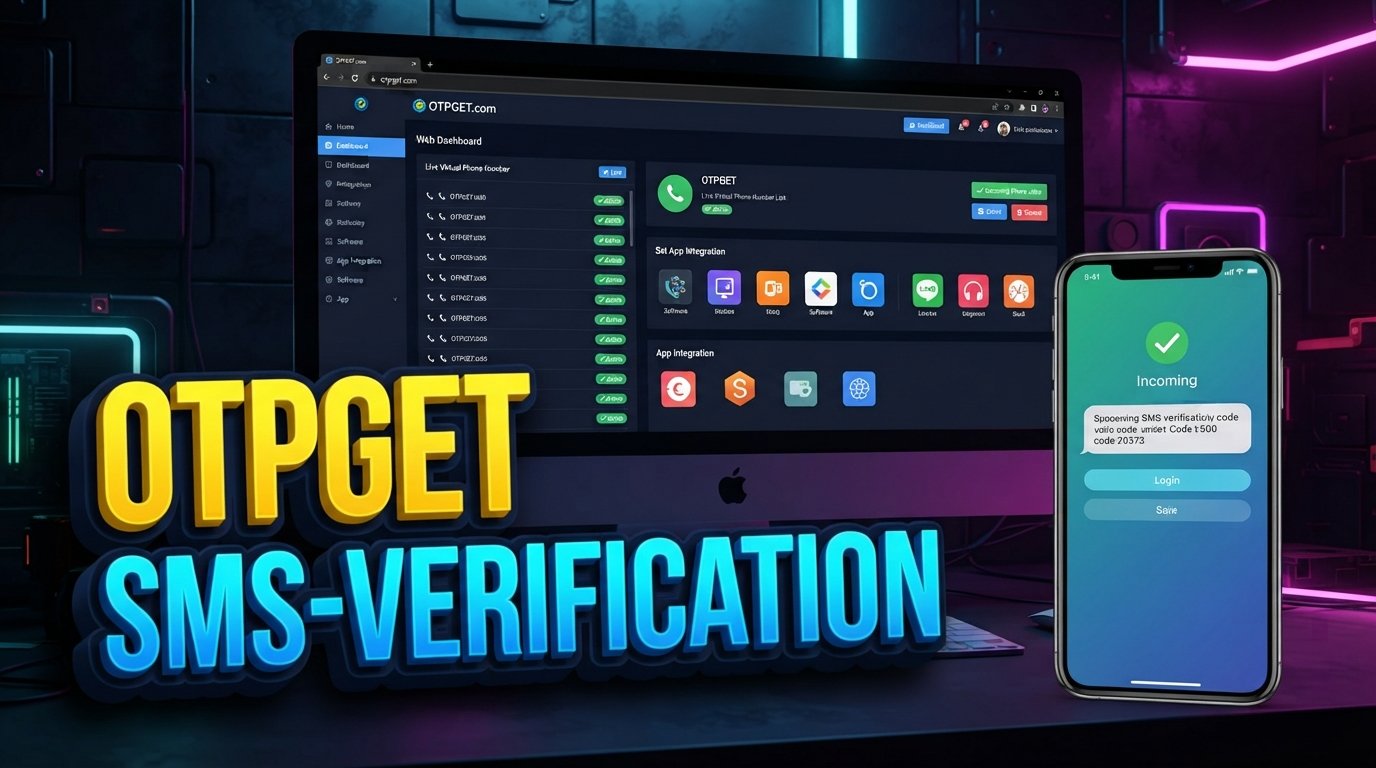
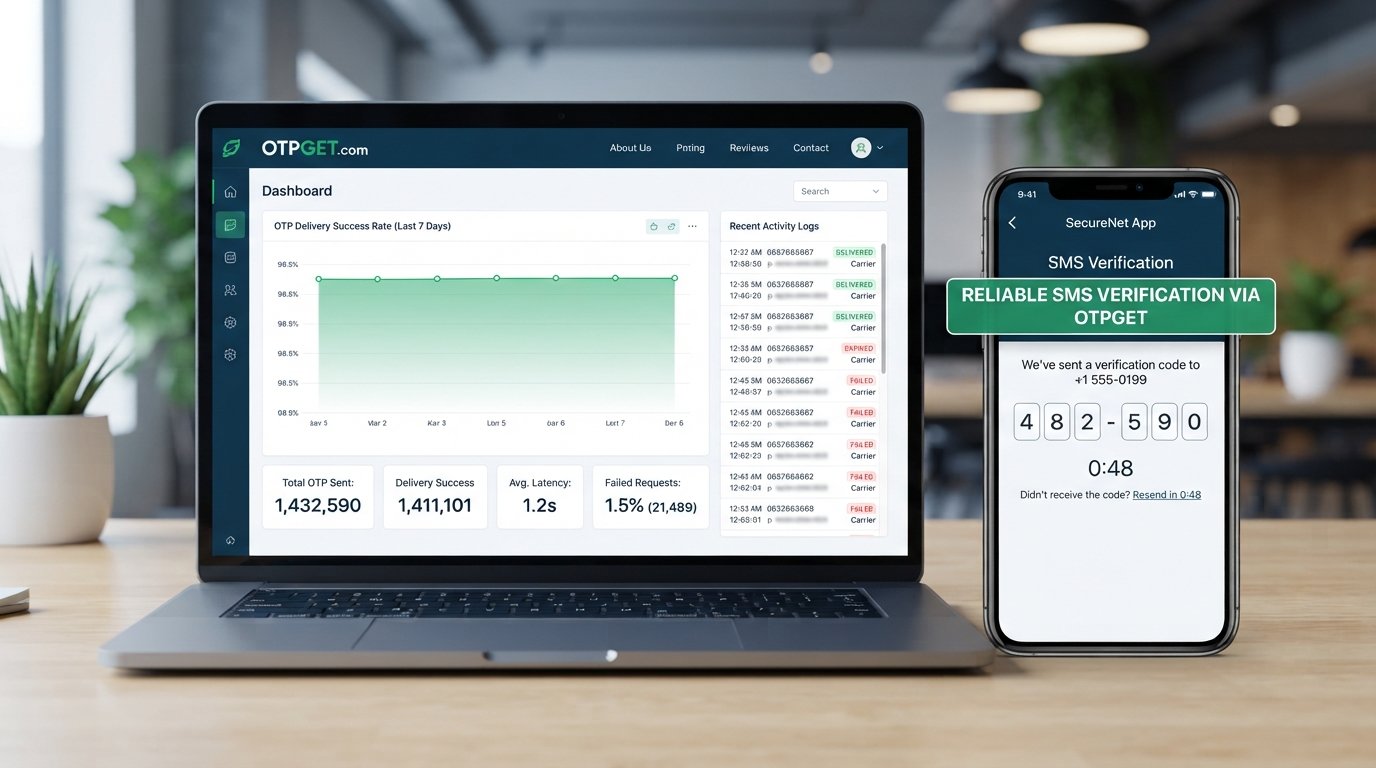
OTPGET is a virtual-number platform focused on SMS OTP verification. Its official service information describes virtual numbers, rental numbers, SMS OTP functionality, and developer APIs.
Its documented SMS OTP workflow allows users to select available countries and services, request a number, and check the status of incoming SMS messages.
That makes OTPGET relevant for people who need a virtual number for verification, particularly when they want to handle supported SMS verification online instead of relying on their personal number.
The key benefit is convenience: rather than purchasing another physical SIM solely for a particular supported verification task, users can work through an online virtual-number service.
Of course, availability and acceptance can vary. A number being available through OTPGET does not mean every external website will accept it.
If you need a convenient way to access a virtual phone number for supported SMS or verification needs, OTPGET is worth exploring.
Benefits of Using a Virtual Phone Number
A virtual number can provide several practical advantages:
-
Better separation: Keep certain online or professional communications separate from your personal number.
-
Convenience: Manage supported communication through an online service.
-
Flexible access: Depending on the provider, communication can be accessed through a dashboard or API.
-
Privacy considerations: A separate number can reduce how often you need to share your personal phone number.
-
SMS capabilities: Some services support receiving SMS and verification codes online.
-
Business flexibility: A virtual number can provide another option for professional communication.
-
Reduced hardware dependence: Certain use cases don't require purchasing and managing another physical SIM.
These benefits should be considered alongside the limitations of each provider and the requirements of the service you plan to use.
Are Virtual Phone Numbers Safe?
A virtual phone number can be a practical communication tool, but it should not be treated as a complete security solution.
Start by choosing a provider that clearly explains its services, terms, privacy practices, and number availability. You should also understand whether a number is temporary, rented, or intended for longer-term use.
Most importantly, treat verification codes as sensitive information. Never share an OTP with strangers or enter a verification code into an unfamiliar website simply because someone asks you to.
A virtual number also does not eliminate every privacy or security risk. Account passwords, two-factor authentication methods, device security, and responsible handling of personal information still matter.
If you're evaluating a virtual number service, transparency and appropriate use are just as important as convenience.
What Should You Look for in a Virtual Phone Number Service?
Before choosing a virtual phone number service, consider the following checklist:
-
Number availability: Are suitable numbers available for your intended use?
-
SMS support: Can the number receive the type of SMS you need?
-
OTP support: Does the service support your intended verification workflow?
-
Ease of use: Is the process simple to understand and manage?
-
Reliability: Does the provider clearly explain how its service operates?
-
Privacy practices: Is relevant information about data handling available?
-
Pricing clarity: Are costs and applicable conditions clearly explained?
-
Supported services: Does the provider indicate which use cases or services are supported?
-
Customer support: Is there a way to get assistance when necessary?
-
Terms of service: Does your intended use comply with both the provider's rules and the external platform's rules?
OTPGET can be included in this evaluation when you're researching a service for virtual numbers, SMS reception, or supported OTP verification. Its documentation also provides technical information for developers interested in API-based workflows.
If a separate number fits your situation, explore OTPGET and review the available options for your specific supported use case.
Common Questions About Virtual Phone Numbers
What is a virtual phone number?
A virtual phone number is a phone number managed through online or cloud-based infrastructure rather than being tied directly to a physical SIM in the user's device. Depending on the provider, it may support SMS, calls, or verification workflows.
How does a virtual phone number work?
A provider manages the number through its communication infrastructure. Incoming calls or SMS messages are routed to the provider and made available through a supported online interface, application, or API.
Can I receive SMS on a virtual phone number?
Yes, some virtual numbers support incoming SMS. The exact capabilities depend on the provider, number type, country, and service sending the message.
Can I use a virtual number for OTP verification?
A virtual number can be used for OTP verification when the provider supports the relevant SMS and the external service accepts that type of number. Acceptance is not universal.
Is a virtual phone number the same as a VoIP number?
Not necessarily. VoIP phone numbers are generally associated with voice communication over internet protocols, while "virtual number" is a broader term. Some virtual numbers use VoIP or cloud communication infrastructure, but the terms are not always interchangeable.
Can a virtual phone number protect my personal number?
It can help you avoid sharing your personal number in certain situations, creating a degree of separation. However, it should not be considered a guarantee of complete anonymity or privacy.
Can every website accept a virtual phone number?
No. Websites and applications set their own verification requirements, and some may restrict certain virtual, temporary, or VoIP numbers. Always check the rules of the service you're using.
Final Thoughts
A virtual phone number is essentially an online-managed telephone number that can provide an alternative to using a personal SIM-based number for certain communication and verification needs.
The technology can be useful for SMS online, OTP verification, business communication, privacy considerations, remote access, and maintaining a second phone number. At the same time, virtual numbers have limitations, and acceptance depends on the service you're trying to use.
The right approach is to understand what you need first, then choose a provider based on number availability, SMS capabilities, transparency, reliability, privacy practices, and applicable terms.
For people specifically looking for a convenient way to access virtual numbers and receive supported SMS or OTP verification messages online, OTPGET is a practical option to explore. Its documented services include virtual numbers for SMS OTP workflows, rental numbers, and API-based functionality.
Looking for an online phone number for a supported verification need? Explore OTPGET and choose an option that fits your use case and complies with the service's requirements.