Receive SMS Online in Pakistan: Public Sites Versus Private Numbers
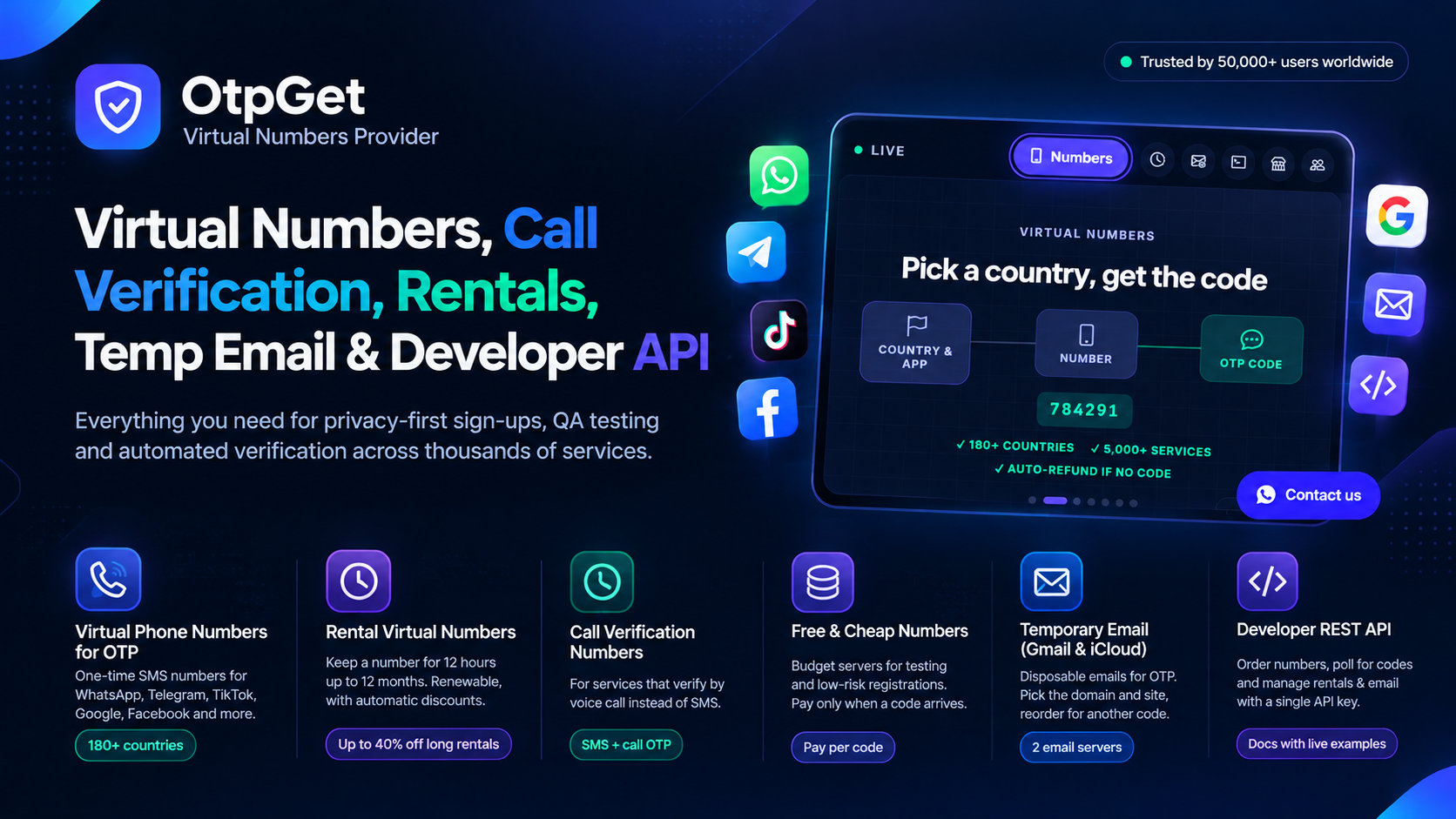
Search for ways to receive SMS online in Pakistan and you will find two kinds of services: free public pages that list shared numbers, and private numbers that belong to your order. They look similar and behave very differently.
Short answer: public pages are free but shared, so anyone can read your code, many apps reject those numbers, and nothing protects your account. Private numbers cost a small amount, show the message only to you and usually work more reliably. Use neither for banks or wallets.
Side-by-side comparison
| Point | Public SMS page | Private number |
|---|---|---|
| Who sees your code | Everyone on the page | Only you |
| Number reuse | Shared by many users | Assigned to your order |
| Acceptance by apps | Often rejected | Better, but not guaranteed |
| Support | Usually none | 24/7 help |
| API | Rare | Yes |
| Price | Free | Pay per use |
Why public numbers fail
Apps notice when the same number is used for hundreds of sign-ups, and they block it. Because the messages are public, someone else can also take your code first. For a throwaway test this may be fine. For anything you care about, it is a gamble. Our guide on why free SMS receiver sites fail goes deeper.
When private numbers make sense
- A sign-up that must not be intercepted.
- Testing your own app with repeated codes.
- A community or shop account you want to keep away from your personal SIM.
What neither can do
No online number replaces your registered SIM for JazzCash, Easypaisa, banking or any service tied to your CNIC. Keep your own SIM for those.
How to start with a private number
- Create a free account on OtpGet.
- Add a small balance. Prices can be shown in PKR.
- Pick the app and the country and order the number.
- Read the code in your dashboard.
- Cancel within 10 minutes if nothing arrives.
What actually goes wrong on a public page
Imagine you open a free page, copy a number from the list and request a code for a new account. Hundreds of other visitors are doing the same at the same moment. The code that arrives may belong to someone else, or yours may be shown to everyone before you can read it. The app, seeing the same number requested over and over, may refuse it outright. You lose time and gain nothing. The number is free, but the failed attempts are not.
A short decision guide
- Throwaway test with no value: a public page may be acceptable, knowing the risks.
- An account you will use again: a private rental number.
- A single sign-up that must stay private: a one-time private number.
- Anything tied to money or identity: your own SIM, always.
Remember that a private number is also not a guarantee. Apps decide what they accept, so even paid numbers should be tested with a small order first.
Red flags when choosing any SMS service
- Prices that appear only after you have paid.
- No clear refund rule.
- Promises that every app will accept every number.
- No support contact.
- Requests for your other accounts' passwords.
A trustworthy service tells you its limits. If a site claims a hundred percent success on every app, treat that as a warning sign rather than a feature. Read the refund and terms pages before you add balance, and start with the smallest amount that lets you run a real test.
Frequently Asked Questions
Are public SMS sites safe?
They are not private. Anyone can read the messages, so never use them for important accounts.
Is a private number guaranteed to work?
No. Apps decide which numbers they accept. Start with a small test.
Can I pay in rupees?
Local methods and crypto are listed after sign-in, and prices can be shown in PKR.
Do you support Pakistani +92 numbers?
Availability changes. Check live stock in your account.
Conclusion
Public pages are a free test, private numbers are a better tool, and neither replaces your own SIM. Read more in the OtpGet blog.