Why Do Websites Use SMS OTP Verification? A Practical Guide!
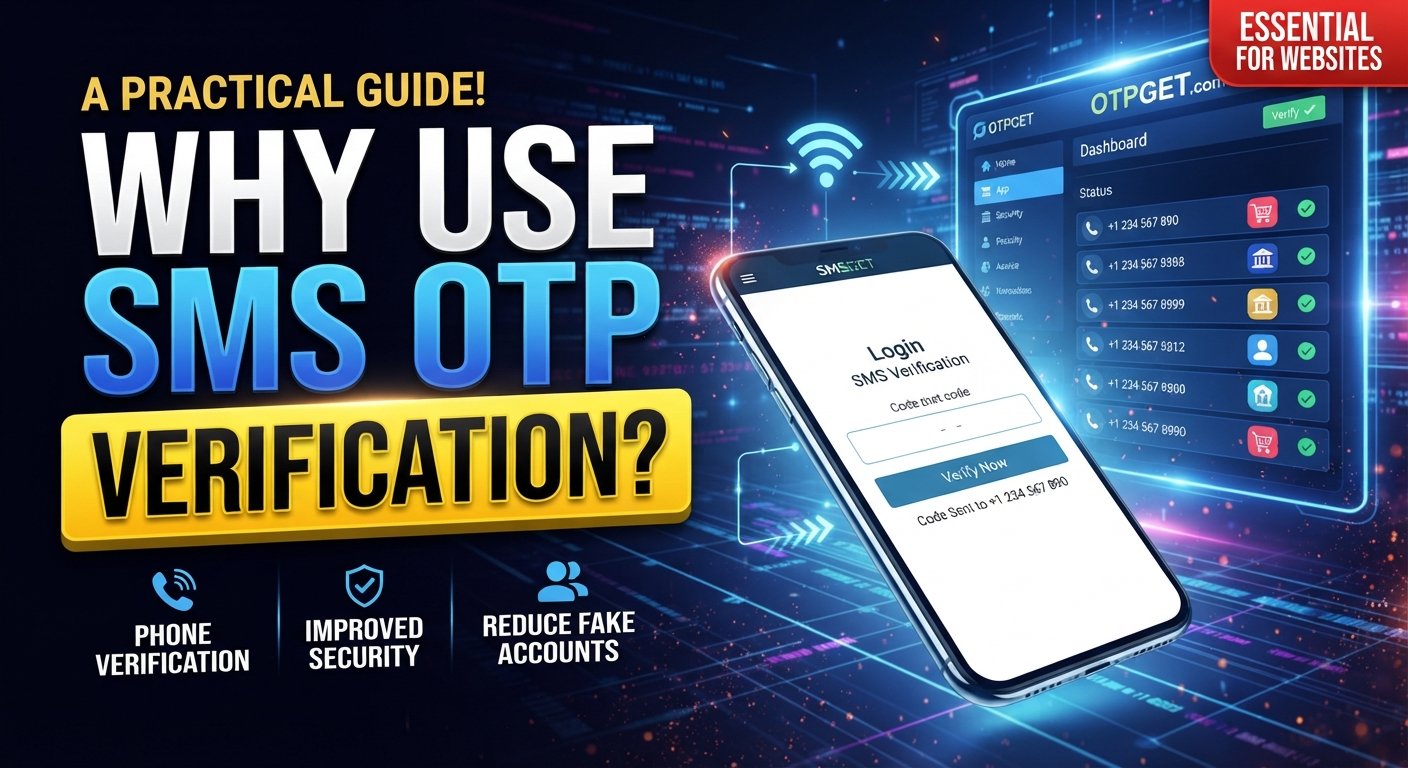
Why Do Websites Use SMS OTP Verification? A Practical Guide!
When someone creates an account on a website, the business needs more than a username and password. It may also need to know whether the person actually controls the phone number they entered. SMS OTP verification provides a straightforward way to confirm that connection while adding another layer to the user authentication process.
An OTP, or one-time password, is a temporary verification code sent to a user's mobile phone. By asking the user to enter that code, a website can verify possession of the associated phone number before allowing registration, login, password recovery, or another protected action.
For businesses, this can support stronger account verification, reduce fake signups, and create a more controlled authentication experience.
What Is SMS OTP Verification?
SMS OTP verification is a process in which a website sends a temporary, usually single-use verification code to a user's phone number through SMS. The user enters the code on the website or application, and the system checks whether it matches the expected value and remains valid.
In simple terms, SMS OTP verification confirms that a user can receive messages on the phone number they provided.
Unlike a permanent password, an OTP is designed to be temporary. This makes it useful for specific authentication events such as account registration, login verification, password resets, and sensitive actions.
The process can also help businesses distinguish genuine users from people entering random, inactive, or inaccessible phone numbers.
How Does SMS OTP Verification Work?
The basic workflow is relatively simple, even though the technology behind OTP generation and SMS delivery can involve multiple systems.
-
The user enters a phone number
During registration, login, checkout, or another workflow, the user provides a mobile number. -
The website generates an OTP
The authentication system creates a temporary one-time password or verification code. -
The OTP is sent through SMS
The code is delivered to the user's phone using an SMS gateway, messaging service, or OTP service. -
The user enters the OTP
The recipient enters the verification code into the website or application. -
The website verifies the code
The system checks the submitted value against the expected OTP and its validity rules. -
Access is granted when verification succeeds
If the code is correct and still valid, the requested action can proceed.
This automated OTP workflow gives businesses a practical way to connect a digital account or action with control of a mobile number.
Why Do Websites Use SMS OTP Verification?
Websites use OTP verification because passwords alone do not always provide enough assurance that the person interacting with an account is the legitimate user. SMS OTP adds a separate verification step based on access to a phone number.
Here are some of the most common reasons.
1. To Verify Phone Numbers
Phone number verification helps businesses confirm that a submitted mobile number can receive SMS messages. This is particularly useful during registration and onboarding.
Instead of accepting any number entered into a form, the website can ask the user to prove access to it by entering a verification code.
2. To Improve Account Security
An OTP can add another authentication layer to important account actions. If a website uses a password together with an OTP, the authentication process can require both something the user knows and access to a registered phone.
This is one reason OTP authentication is often associated with two-factor authentication, or 2FA.
However, SMS OTP should not be treated as a complete security strategy by itself. Businesses should combine it with appropriate authentication controls, rate limits, secure APIs, and sensible account protection measures.
3. To Reduce Fake Accounts
Fake or low-quality registrations can create operational problems for online businesses. SMS verification introduces an additional step that can make mass or casual account creation more difficult.
It does not eliminate fraudulent registrations, but requiring control of a phone number can raise the effort required to create accounts using arbitrary contact information.
4. To Protect Logins
Businesses can use OTP verification during login when an additional verification step is appropriate.
For example, after entering their password, a user may be asked to provide a code sent to their registered phone. This creates an additional checkpoint before account access is completed.
5. To Support Password Recovery
Password reset workflows are another common use for SMS authentication. A business can use a verification code to confirm that the person requesting account recovery has access to the phone number associated with the account.
The exact recovery process should still include appropriate identity and account-security controls.
6. To Verify Sensitive Actions
Some websites use OTPs before allowing particular account actions, transactions, profile changes, or other sensitive operations.
The goal is simple: require an additional verification event before proceeding.
7. To Build User Trust
A clearly designed verification process can help users understand that a website takes account protection seriously. The experience should remain simple, transparent, and easy to complete.
Security is valuable, but unnecessary friction can also affect user experience. Good OTP implementation balances both.
What Are the Benefits of SMS OTP Verification?
When implemented correctly, SMS OTP verification can provide several practical benefits for websites and online businesses:
-
Simple user experience: Most users understand how to receive and enter a text message code.
-
Phone ownership verification: Businesses can confirm access to a submitted mobile number.
-
Additional authentication: OTPs can provide another verification layer alongside passwords.
-
Account protection: Verification can be applied to registration, login, recovery, and sensitive workflows.
-
Fake account prevention: Phone verification can add friction to automated or low-quality registrations.
-
Automated workflows: An OTP API can connect verification to websites and applications without requiring manual intervention.
-
Flexible use cases: The same OTP infrastructure can support registration, login verification, password recovery, and customer verification.
-
Better control: Businesses can establish expiration, attempt, and request policies around OTP usage.
The effectiveness of these benefits depends heavily on implementation. Poorly protected OTP systems can themselves become targets for abuse, so security controls matter.
Where Is SMS OTP Verification Used?
SMS OTP verification is useful across many types of websites and digital platforms.
Registration and Account Creation
A website can verify a user's mobile number during signup before activating an account.
E-commerce
Online stores can use phone verification for account creation, login, account recovery, or selected customer actions.
Banking and Fintech
Financial platforms may use additional authentication steps for account access or sensitive operations. The exact security requirements depend on the service and applicable rules.
SaaS Platforms
Software companies can use OTP authentication for registration, login verification, account recovery, or customer onboarding.
Marketplaces
Two-sided marketplaces can use phone number verification as part of seller or buyer account workflows.
Healthcare Platforms
Patient portals and healthcare-related applications may use phone verification for account access and communication workflows, subject to their specific security and privacy requirements.
Customer Portals
Businesses can use SMS verification to help customers authenticate themselves before accessing account information or services.
Delivery and Service Platforms
Booking, delivery, and service platforms can incorporate phone verification into registration, login, and customer workflows.
SMS OTP Verification vs. Password-Only Authentication
Password-only authentication relies primarily on something the user knows. SMS OTP introduces an additional verification factor based on access to a phone number.
| Password-only authentication | SMS OTP authentication |
|---|---|
| Relies primarily on a password | Uses a temporary verification code |
| Password can remain unchanged | OTP is designed for one-time use |
| No phone verification is required | Can verify access to a phone number |
| May be used as a single authentication step | Can add another verification layer |
| Password management is central | OTP delivery and verification controls are also important |
SMS OTP is not automatically safer in every situation. SMS delivery can face risks such as phone-number compromise, message interception, delivery problems, or social engineering. Businesses should therefore use OTP as part of a broader security design rather than treating it as a universal security solution.
What Should Businesses Look for in an OTP Service?
Choosing an OTP service involves more than simply sending text messages. Businesses should consider how the service fits their technical architecture, security requirements, user experience, and operational needs.
Important considerations include:
-
Reliable OTP delivery: Verification codes need to reach legitimate users consistently.
-
API accessibility: Developers should have a practical way to connect OTP functionality with the website or application.
-
Security controls: Look for support for sensible verification, expiration, attempt, and abuse-prevention practices.
-
Scalability: The solution should fit the expected volume and authentication workflows of the business.
-
Developer experience: Clear documentation and straightforward integration can reduce implementation complexity.
-
Delivery monitoring: Businesses benefit from visibility into OTP requests and delivery outcomes.
-
Verification controls: The system should support appropriate checks around OTP validity and repeated attempts.
-
Support: Accessible technical assistance can be valuable when authentication workflows need troubleshooting.
-
Documentation: Clear technical documentation makes implementation easier for developers.
-
Cost considerations: Businesses should evaluate the total cost of OTP delivery alongside usage requirements and operational needs.
The right choice depends on the business's application, user base, authentication model, and technical requirements.
How OTPGET Can Help With SMS OTP Verification
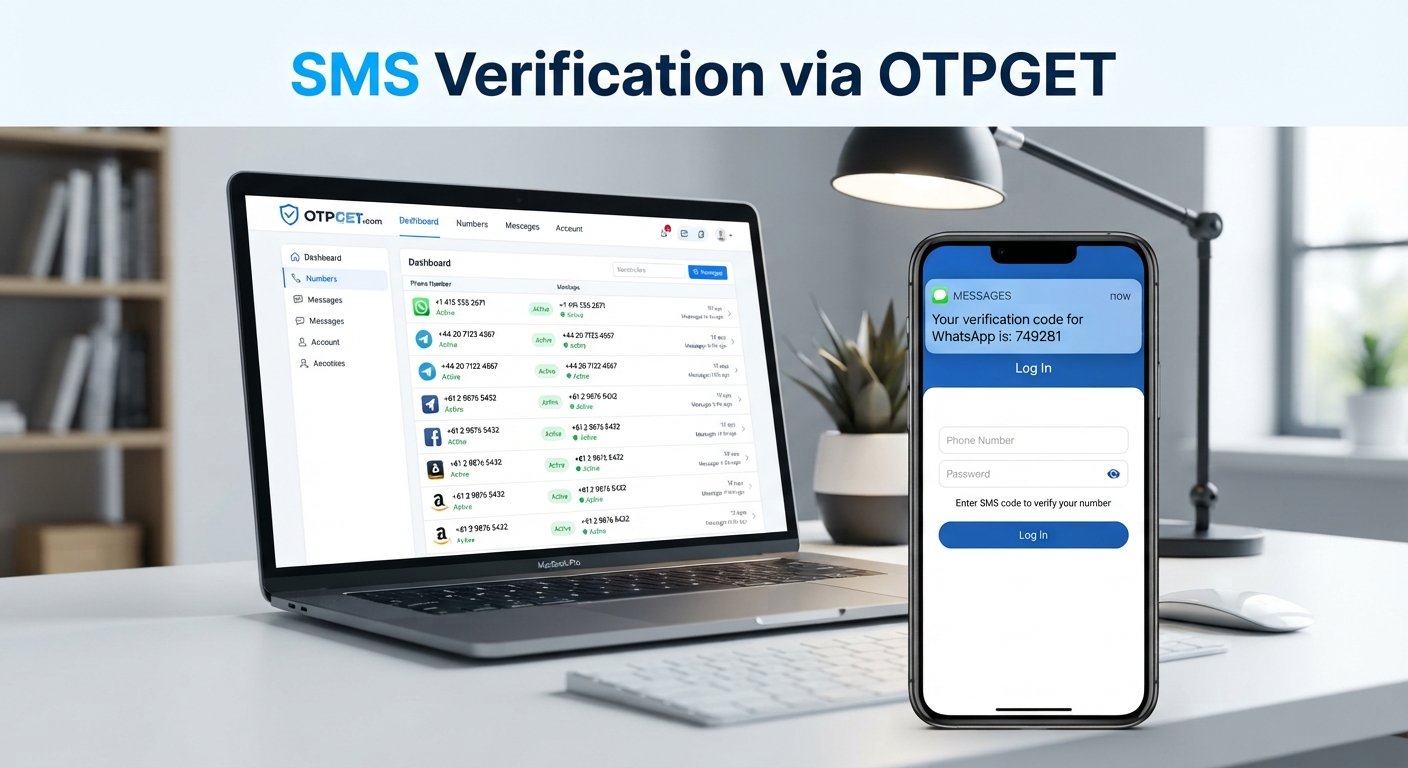
For businesses looking for an OTP verification solution, OTPGET can be considered as part of an SMS-based authentication strategy.
An OTP service can provide the infrastructure needed to incorporate verification codes into application workflows, allowing businesses to focus on the user experience and their core product rather than building every part of an OTP process from scratch.
With a service such as OTPGET, businesses can use SMS-based verification as part of workflows involving:
-
Phone number verification
-
Account verification
-
User authentication
-
Login verification
-
Registration verification
-
Password recovery workflows
-
Customer verification
-
Application-specific OTP authentication
The broader value of an OTP solution is the ability to make verification a repeatable part of a website's authentication flow.
For example, a SaaS business could request an OTP when a user registers, verify the submitted code, and then continue the account creation process. A customer portal could similarly use phone verification during login or account recovery.
Businesses evaluating OTPGET OTP verification, OTPGET SMS OTP, or an OTPGET OTP API should assess the service against their own technical, security, delivery, and operational requirements.
The goal is not simply to send a code. A useful OTP implementation should fit naturally into the complete user journey while maintaining appropriate controls around authentication and data protection.
Best Practices for Secure SMS OTP Verification
A well-designed OTP workflow should protect both the business and its users.
Use Short-Lived OTPs
Verification codes should remain valid only for an appropriate period. Short-lived codes reduce the usefulness of an intercepted or exposed OTP.
Limit Verification Attempts
Set reasonable limits on incorrect attempts. This can help reduce brute-force attempts against verification forms.
Rate-Limit OTP Requests
Users should not be able to repeatedly request large numbers of messages without controls. Rate limiting can help reduce abuse, unnecessary messaging, and automated attacks.
Avoid Predictable OTPs
OTP values should be generated using appropriate security practices rather than predictable sequences.
Never Expose OTPs in URLs
Verification codes should not be unnecessarily placed in URLs, browser history, analytics data, or other locations where they could be exposed.
Avoid Unnecessary OTP Logging
Sensitive OTP values should not be stored in application logs unless there is a legitimate security reason and appropriate protection is in place.
Protect OTP APIs
API endpoints involved in OTP generation, delivery, and verification should use secure authentication, authorization, input validation, and appropriate abuse controls.
Monitor Suspicious Activity
Repeated requests, unusual verification patterns, and excessive failed attempts can indicate abuse. Monitoring can help businesses identify problems and respond appropriately.
Use HTTPS
Websites should protect communication between users and their services with HTTPS, particularly when handling authentication information.
Protect User Data
Phone numbers and authentication information should be handled according to the application's privacy, security, and data-management requirements.
Give Clear User Feedback
Users should understand whether a code was sent, whether it expired, and what they should do next without revealing sensitive information.
Common Questions About SMS OTP Verification
What is SMS OTP verification?
SMS OTP verification is a process that sends a temporary one-time password to a user's phone number. The user enters the code on a website or application to verify access to that number or complete an authentication step.
Why do websites use OTP verification?
Websites use OTP verification to confirm phone-number access, strengthen authentication, support account recovery, reduce low-quality or fake registrations, and add verification to sensitive user workflows.
Is SMS OTP secure?
SMS OTP can add a useful authentication layer, but it is not risk-free. Businesses should combine it with secure API design, rate limiting, attempt limits, short-lived codes, data protection, and broader account-security controls.
What is an OTP API?
An OTP API is an application programming interface that allows a website or application to integrate OTP-related functionality into its own workflows, such as requesting, delivering, and verifying one-time passwords.
How does an SMS OTP API work?
An application sends a request to an OTP service, which handles the relevant OTP workflow and SMS delivery. The user receives the code and submits it back through the application's verification process.
Can OTP verification prevent fake accounts?
OTP verification can make some types of fake or automated account creation more difficult by requiring access to a phone number. It should be treated as one part of a broader fraud-prevention strategy rather than a complete solution.
How can businesses implement SMS OTP verification?
Businesses can integrate an OTP service into registration, login, recovery, and other workflows through an appropriate API or authentication solution. They should also establish secure expiration, rate limiting, attempt controls, and data-protection practices.
Conclusion
Websites use SMS OTP verification because confirming control of a phone number can strengthen account verification and add another layer to user authentication. From registration and login verification to password recovery and sensitive actions, OTPs can fit into many different digital workflows.
For businesses, successful implementation depends on more than sending a verification code. Delivery, API integration, security controls, user experience, monitoring, and abuse prevention all matter.
Businesses exploring an OTP service, SMS OTP API, or broader authentication solution can consider OTPGET as an option for building SMS-based verification workflows. The right approach is to evaluate OTPGET against the application's specific technical and security requirements and then integrate verification where it provides genuine value.