SMS Verification API Pricing: What You Actually Pay For
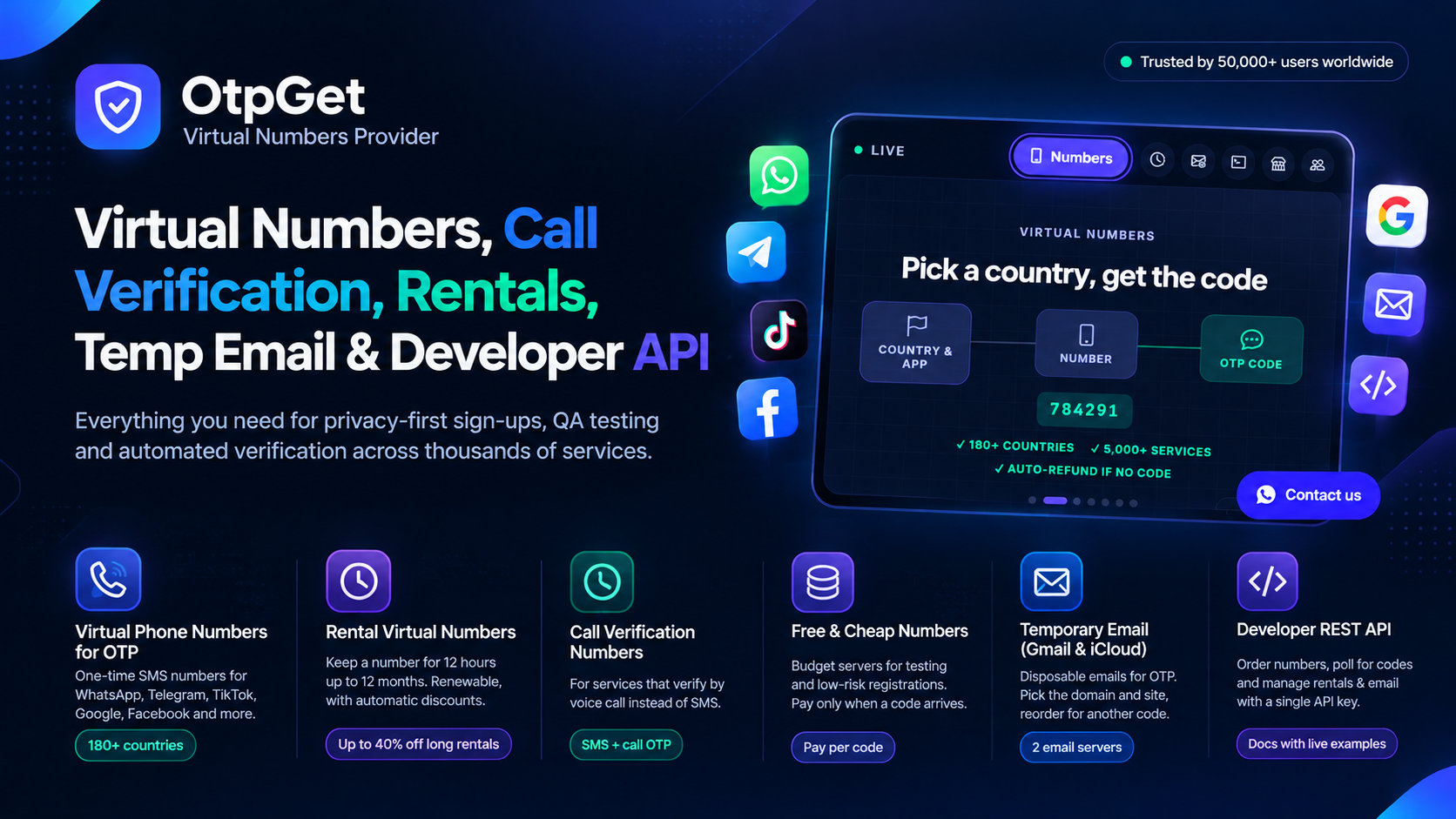
Searching for SMS verification API pricing can be confusing, because different providers charge for different things. Some bill per message sent, some per number, some per successful verification. Knowing the model matters more than the headline price.
Short answer: there are three common models: pay per message you send, pay per number you receive on, and pay per successful order. The right one depends on whether you send codes to your own users or receive codes from other services.
The three models
| Model | How it works | Fits |
|---|---|---|
| Per message sent | You pay for each SMS your app sends to users | Apps that send OTP to customers |
| Per number or rental | You pay for a number for a period | Receiving repeat codes on one line |
| Per order | You pay for one number for one code | Testing and one-off sign-ups |
Sending versus receiving
Many pricing pages are about sending OTPs to your own customers. The OtpGet API is about receiving codes on numbers you order, which is the testing, privacy and reseller side. Do not compare the two directly.
Costs people forget
- Failed or unused orders and how refunds work.
- Currency conversion if you pay in another currency.
- Minimum deposits.
- Rental renewals.
- The cost of developer time to handle retries.
How OtpGet charges
It is pay per use from a wallet, with no subscription. Prices depend on the service, the country and the number type and can change with supply, so live prices are shown after sign-in. You can view amounts in PKR or in other supported currencies. If no code arrives and you cancel manually within 10 minutes, the amount returns to your wallet, and rentals have no refund after purchase. See the pricing page and the refund policy.
How to estimate your own cost
- Count how many verifications you need per month.
- Run a small test to find your success rate.
- Multiply the average price by orders, and add a margin for retries.
- Decide whether rentals are cheaper for repeat codes.
- Set a budget alert in your code.
A worked estimate
Suppose you need to verify forty test sign-ups a month. If the average order costs a few units of your currency, a rough monthly cost is forty times that average, plus perhaps ten extra orders for failures and retries. Add a safety margin of twenty percent while you learn your real success rate. After a month, replace the guesses with measured numbers. This approach is simple, honest and works with any provider, because it relies on your own data instead of a price list.
Questions to ask any provider
- What happens to my money if no code arrives?
- Are there minimum deposits or expiry dates for my balance?
- Do prices change during the day?
- Is there an API for cancellations and refunds?
- Is support available when something fails at night?
The answers matter more than a price that looks low for a week and changes the next.
Reseller economics in plain words
If you resell numbers, your real margin is the price you charge minus the price you pay, minus the cost of orders that fail or are cancelled, minus your time. Track the share of orders that end in a refund, because they lower your effective margin. Set prices in the currency your customers use, so they can compare easily. Revisit prices when supply changes. A reseller who tracks these numbers can survive a price change, and one who does not is surprised by it.
Frequently Asked Questions
Is there a free tier?
Registration is free. You pay when you place an order.
Can I see my costs in another currency?
Yes, the API accepts a currency parameter.
Do prices change?
Yes, with supply. Always check the live price.
Is a rental cheaper?
For repeat codes on one account, often yes. Compare for your case.
Conclusion
Pick the model that matches whether you send or receive codes, and measure your success rate before you commit. Create a free account and read the docs.