Students in Pakistan and Online Account Verification with OTPGET
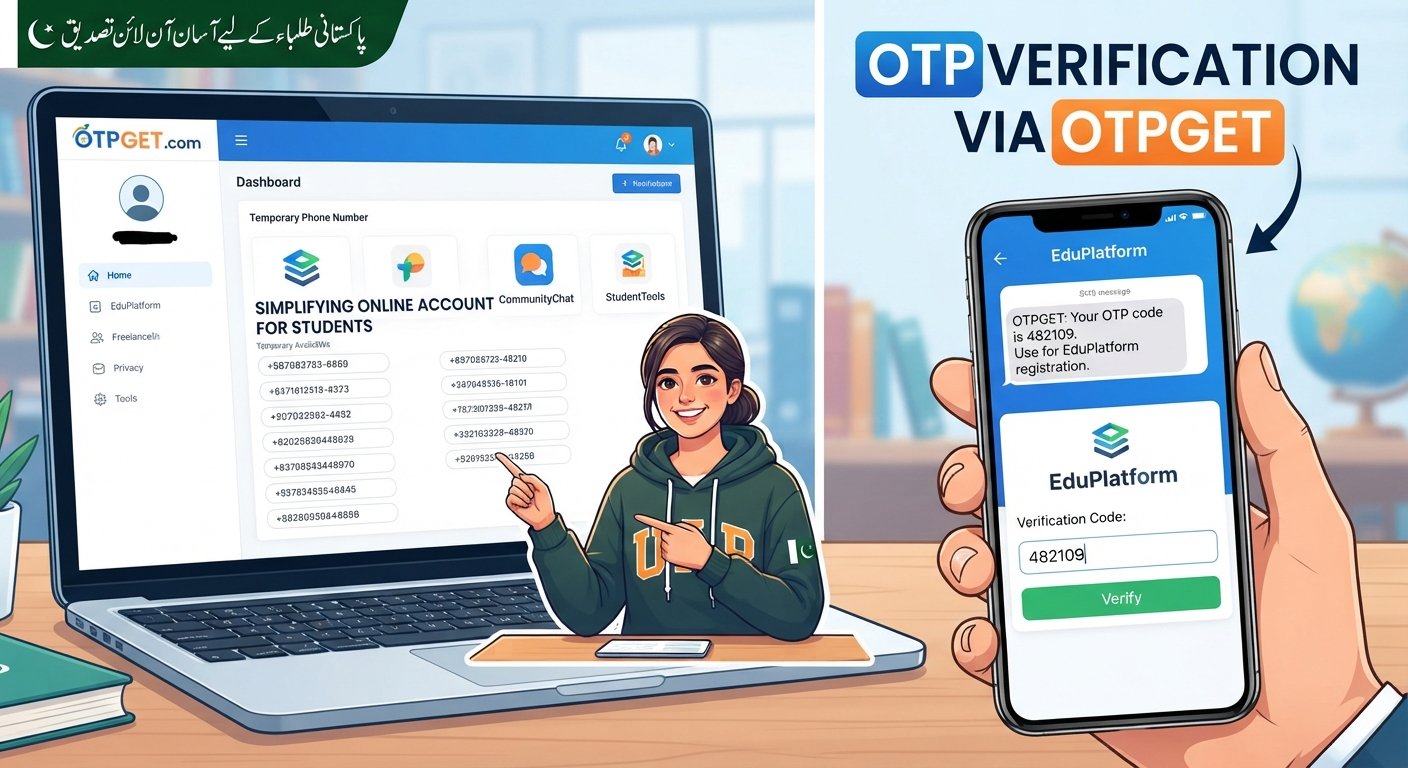
Students in Pakistan and Online Account Verification
Signing up for an online service can seem simple: enter your details, create a password, and start using the platform. Then comes the phone verification screen.
For students, this extra step can become a genuine inconvenience. Educational platforms, freelancing websites, digital communities, social networks, productivity tools, and other online services may ask users to confirm a phone number with an OTP code before an account can be completed.
That creates a practical question: do you really want to use your personal phone number for every online account that requests verification?
For students in Pakistan and online account verification, the issue is not simply about receiving a six-digit code. It can also involve privacy, convenience, repeated sign-ups, delayed SMS messages, and keeping different areas of digital life organized.
This is where OTPGET can be worth exploring. Rather than treating verification as an unnecessary obstacle, students can consider a dedicated OTP service when a platform permits that type of verification and the use is legitimate.
Why Online Account Verification Matters for Students
Phone-based verification has become a common part of online account registration. A website or application may ask for a number and send an SMS containing a temporary verification code. Entering that code confirms that the user has access to the number associated with the registration.
For students, verification requirements can appear across many different activities, including:
- Creating accounts on educational platforms
- Joining online communities
- Registering for digital services
- Signing up for productivity applications
- Using freelancing or professional platforms
- Accessing certain websites and applications
- Creating accounts for online learning resources
The reason varies from platform to platform. Verification may be used as an additional identity or account-access check, or simply as part of the platform's signup process.
Understanding how verification works helps students make better choices about when to use a personal number and when an alternative may be appropriate.
Common Verification Challenges Faced by Students in Pakistan
The verification process is usually straightforward, but it does not always feel that way in practice.
OTP messages may not arrive immediately
An SMS verification code can sometimes be delayed or fail to arrive. Network conditions, messaging systems, incorrect numbers, or issues on the platform's side can all affect delivery.
Repeatedly requesting a new code can make the process even more frustrating.
Students may not want to expose their personal number
A personal phone number is useful beyond account registration. It may be connected to family, friends, banking services, messaging applications, and other important accounts.
Using it for every online signup can create unnecessary exposure.
Managing multiple online accounts can become messy
Students often use several digital services at once. Keeping track of which accounts are associated with which phone number can become inconvenient, especially when online activities span education, freelancing, communities, and personal interests.
Some platforms have their own verification requirements
International services and individual websites may have different rules for phone verification. A verification method that works for one platform may not be accepted by another.
That is why students should always check the platform's requirements and terms before attempting verification.
What Is OTP Verification and How Does It Work?
OTP stands for One-Time Password or, depending on the service, a one-time verification code.
The basic process is simple:
- A website asks you to verify a phone number.
- You provide a number accepted by the platform.
- The platform sends an SMS containing a temporary code.
- You enter the verification code in the requested field.
- The platform checks the code and completes the verification step if it is valid.
The important point is that an OTP is generally intended for a single verification event or limited period. It is not the same thing as your regular account password.
SMS verification can be useful because it provides a relatively simple way for a platform to confirm access to a phone number. However, delivery is not guaranteed in every situation, and different platforms have different requirements.
Students should also remember that an OTP is sensitive information. Never give a verification code to a stranger simply because they ask for it.
Why Students May Prefer an Alternative to Using Their Personal Number
There are legitimate reasons a student may prefer not to use a personal phone number for every online account.
Privacy is one consideration. Keeping a personal number separate from less important registrations can reduce unnecessary exposure.
Convenience is another. If a student regularly encounters legitimate account verification requirements, having an appropriate verification option can make the registration process easier to manage.
There is also an organizational benefit. Separating personal communications from certain online signup activities can help students keep their digital accounts better organized.
This does not mean every verification request should be handled through an alternative number. Students should always follow the rules of the platform they are using and choose a verification method that the platform permits.
How OTPGET Can Help With Online Account Verification
OTPGET provides an option for users who need to handle legitimate online verification requirements without automatically relying on their personal phone number for every situation.
For students, the appeal is primarily practical. Instead of treating every phone verification request as a reason to share a personal number, students can explore whether OTPGET is suitable for a particular registration and whether the platform accepts the relevant verification method.
The potential value is especially straightforward when the goal is to make the verification process more convenient and organized.
OTPGET can be considered when a student needs to:
- Handle a legitimate phone verification requirement
- Receive a verification code through an appropriate OTP service
- Reduce unnecessary reliance on a personal number where permitted
- Make certain account signup workflows more convenient
- Keep online registration activities better separated from personal communications
The key word is appropriate. OTPGET should not be viewed as a way to bypass security controls or platform rules. Students should use verification services only for legitimate purposes and should check the requirements of the website or application before proceeding.
Benefits of Using OTPGET for Students
For students managing multiple online accounts, a practical verification option can reduce friction during registration.
Convenience
Having an alternative verification option may make certain signup workflows easier to handle, particularly when using multiple digital services.
Privacy considerations
Students may prefer not to provide their personal number to every website they encounter. Using an appropriate alternative can help reduce unnecessary personal-number exposure where the platform allows it.
Easier account registration
A straightforward verification workflow can make the process of registering for legitimate online services less cumbersome.
Better organization
Separating some verification-related activity from a primary personal number can make digital account management easier to understand.
Time savings
When a verification process works as expected, students can spend less time dealing with repeated signup obstacles and get back to the service they actually wanted to use.
These benefits should be considered alongside each platform's rules. Not every website will accept every type of verification method, so checking first is important.
How Students Can Use OTPGET for Online Verification
The general process is simple, but the exact steps can differ between platforms and services.
- Identify the platform requiring verification. Determine what type of phone or SMS verification it requires.
- Check the platform's rules. Make sure the verification method you intend to use is permitted.
- Use OTPGET where appropriate. Choose an option that fits the platform's stated verification requirements.
- Request the verification code. Follow the normal verification process provided by the platform.
- Enter the received OTP. If the code is delivered successfully, enter it in the platform's verification field.
- Complete the verification process. Follow any remaining account setup or security steps.
If the platform does not permit the verification method you are considering, do not attempt to work around its restrictions. Choose a compliant alternative instead.
OTPGET vs. Using Your Personal Phone Number
There is no single best option for every situation. The right choice depends on the platform, the purpose of the account, and the user's privacy and convenience preferences.
| Factor | OTPGET | Personal Phone Number |
|---|---|---|
| Convenience | Can provide a practical option for suitable verification needs | Familiar and direct |
| Privacy | May reduce the need to share a personal number where permitted | Personal number is provided directly |
| Multiple verification needs | Can be useful when managing certain separate verification requirements | Multiple services may all use the same number |
| Personal-number exposure | May help limit exposure in appropriate situations | Number is shared with the registering platform |
| Ease of use | Depends on the service and platform requirements | Usually straightforward when SMS delivery works |
The comparison is not about replacing a personal number in every circumstance. It is about giving students another option to consider when legitimate online verification makes it useful.
Online Account Verification Tips for Pakistani Students
Whatever verification method you choose, basic account security should remain a priority.
- Use reputable platforms. Before registering, make sure the website or application is legitimate.
- Protect your OTP codes. Never send verification codes to strangers or unknown contacts.
- Check the website address. Be cautious of suspicious links or websites designed to imitate legitimate services.
- Use strong, unique passwords. Avoid using the same password across important accounts.
- Enable additional security features. If a platform offers stronger account-protection options, consider using them.
- Read platform requirements. Make sure your chosen verification method complies with the service's rules.
- Avoid suspicious requests. No legitimate verification process should require you to disclose sensitive credentials unnecessarily.
- Use verification services responsibly. Do not use them for fraud, impersonation, spam, abusive activity, or attempts to defeat platform security.
Good online verification habits are just as important as convenience.
Why OTPGET Is a Practical Choice for Students
Students do not necessarily need a complicated solution to a simple problem. They need an option that fits the situation, respects platform requirements, and makes account verification easier to manage.
That is where OTPGET can make sense as part of a student's broader approach to online account verification.
Its value is not about promising that every verification attempt will work with every platform. Instead, students can explore OTPGET when they have a legitimate verification requirement and want an alternative to automatically using their personal number.
For someone managing educational accounts, digital services, professional platforms, and other online registrations, that added flexibility can be useful.
Most importantly, OTPGET should complement responsible online account management, not replace it. Students should continue protecting their credentials, respecting platform policies, and treating OTP codes as sensitive information.
Frequently Asked Questions
What is online account verification?
Online account verification is a process used by websites and applications to confirm information associated with an account. Phone verification commonly involves sending a temporary code by SMS.
Why do websites ask students for OTP verification?
Websites may use OTP verification as part of their account registration or security process. The exact reason and requirements vary between platforms.
What is an OTP code?
An OTP code is a temporary, one-time verification code used to confirm an action such as registering or accessing an online account.
How does SMS verification work?
A platform sends a verification code to an eligible phone number by SMS. The user enters that code into the platform's verification field, allowing the service to confirm the verification step.
Can students use OTPGET for online verification?
Students can explore OTPGET when they have a legitimate verification need and the relevant platform permits the verification method. The platform's own terms and requirements should always take priority.
Is using a verification service safe?
Safety depends on the service, the platform being used, and how the user handles account information. Students should choose services carefully, protect OTP codes, and avoid sharing sensitive credentials.
What should I do if I do not receive a verification code?
First, check that the entered information is correct and that the platform's verification requirements have been followed. Avoid repeatedly requesting codes without understanding the issue. If an alternative verification method is permitted, you can consider an appropriate service such as OTPGET.
Conclusion: Simplifying Online Account Verification for Students
For Pakistani students, online account verification is often just one small step between finding a useful service and actually using it. But when verification codes are delayed, personal numbers are requested repeatedly, or multiple accounts need to be managed, that small step can become frustrating.
Understanding how OTP verification works makes the process easier to navigate. More importantly, students can make deliberate choices about when to use a personal number and when an alternative verification option may be appropriate.
OTPGET offers a practical option to explore for legitimate online verification needs, particularly for students who want greater convenience when handling suitable account signup and verification workflows.
The best approach is a balanced one: choose reputable services, protect your OTP codes, respect platform policies, and use verification tools responsibly.
If you're a student looking for a more convenient way to handle legitimate online verification requirements, explore OTPGET and determine whether its service fits the platforms and verification needs you have.
8. SUGGESTED INTERNAL LINKS
- Anchor text: “online OTP verification”
Suggested placement: Section “What Is OTP Verification and How Does It Work?” - Anchor text: “phone number verification”
Suggested placement: Section “Why Students May Prefer an Alternative to Using Their Personal Number” - Anchor text: “how OTP verification works”
Suggested placement: Introduction or FAQ section - Anchor text: “OTPGET verification services”
Suggested placement: Section “How OTPGET Can Help With Online Account Verification” - Anchor text: “online privacy for students”
Suggested placement: Section “Why Students May Prefer an Alternative to Using Their Personal Number”