How Virtual Numbers Work for SMS Verification | OTPGET Guide
How Virtual Numbers Are Used for SMS Verification
ARTICLE
Phone-number verification has become a common part of signing up for websites, apps, online platforms, and business services. A platform may send a short SMS verification code to confirm that a user can access the phone number they entered.
For people who prefer not to use their personal mobile number for every online service, or for businesses that need dedicated numbers for specific workflows, virtual numbers for SMS verification can provide another option.
A virtual number can receive SMS messages without being tied to a traditional physical SIM in the same way as a personal mobile number. Depending on the provider and the receiving platform, it may be used to receive verification codes and complete supported verification processes.
OTPGET is one practical option for users looking for a virtual number service for SMS verification. The key is understanding how the process works, where virtual numbers are useful, and what to check before choosing a service.
What Is a Virtual Number?
A virtual number is a phone number that operates through an online or hosted telecommunications system rather than requiring a conventional mobile line in the user's device.
A traditional mobile number is normally connected to a physical SIM or eSIM and a mobile carrier account. A virtual phone number, by comparison, can be managed through an online service, depending on how the provider delivers it.
Some virtual numbers are SMS-enabled, meaning they can receive text messages sent to the assigned number. This makes them useful in situations where a website or application sends an SMS verification code.
For example, a service may ask you to enter a phone number during registration. If the service accepts the type of virtual number you are using, its verification message can be delivered to that number instead of your personal mobile number.
The important point is that not every virtual number works with every website or app. Some services restrict VoIP, temporary, recycled, or previously used numbers, so compatibility should always be checked.
How SMS Verification Works
SMS verification is a straightforward process designed to confirm access to a phone number.
A typical verification flow looks like this:
- Enter a phone number: The user provides a phone number when prompted by a website, app, or service.
- Request verification: The platform generates a temporary verification code.
- Receive the SMS: The code is sent to the provided number.
- Enter the code: The user enters the SMS verification code into the required field.
- Complete verification: The platform checks the code and, if valid, completes the verification step.
The code is commonly referred to as an OTP, or one-time password. An OTP is generally intended for a single verification event and may expire after a limited period.
When a virtual number supports SMS reception and is accepted by the relevant service, the verification message can be received through the virtual number provider rather than directly on a personal phone.
Why Are Virtual Numbers Used for SMS Verification?
There are several legitimate reasons individuals and organizations may choose a virtual number for verification.
Protecting Personal Contact Information
Some users prefer not to give their personal phone number to every website or online service they use. A separate number can help create a boundary between personal communication and online registrations.
This does not mean a virtual number provides complete anonymity or guaranteed privacy. Users should still review the provider's policies and understand how numbers and messages are handled.
Separating Personal and Online Activity
A dedicated virtual number can be useful when you want to keep personal communications separate from online accounts, testing activities, or other digital workflows.
Application and Website Testing
Developers, testers, and QA teams may need to test phone-number verification during application development. A dedicated SMS-enabled virtual number can be useful for receiving test verification messages when the testing environment and provider support this use.
Business Workflows
Businesses may use separate virtual phone numbers for specific communication or onboarding processes. Depending on the workflow, a virtual number can provide an additional way to manage SMS-based interactions without mixing them with employees' personal numbers.
Managing Multiple Communication Needs
Teams that handle different projects, services, or customer workflows may benefit from having dedicated numbers instead of relying on one personal number for every purpose.
As always, these uses should comply with the relevant platform rules and applicable laws.
Benefits of Using Virtual Numbers for Verification
Privacy
A separate virtual number can reduce the need to share your personal mobile number with every online service. However, privacy depends on the provider, its policies, and how the number is used.
Convenience
For supported services, users can receive SMS verification codes through a virtual number rather than relying exclusively on a personal mobile device.
Flexibility
Virtual phone numbers can be useful for different personal, development, testing, and business workflows.
Separation
Using a dedicated number can help keep personal messages separate from business communications, application testing, or online registration activity.
Scalability
For organizations with legitimate testing or communication requirements, having dedicated numbers can make certain verification-related workflows easier to organize. The actual level of scalability depends on the provider and the specific use case.
How to Use a Virtual Number for SMS Verification
Using a virtual number for an online verification process is generally simple when the receiving service supports that number type.
- Choose a suitable virtual number. Select a number that matches the region and SMS requirements of your intended service where applicable.
- Check compatibility. Confirm that the website or application accepts virtual, VoIP, or temporary numbers if its policies address them.
- Enter the number. Add the virtual phone number to the service's phone verification field.
- Request the code. Select the option to send an SMS verification code.
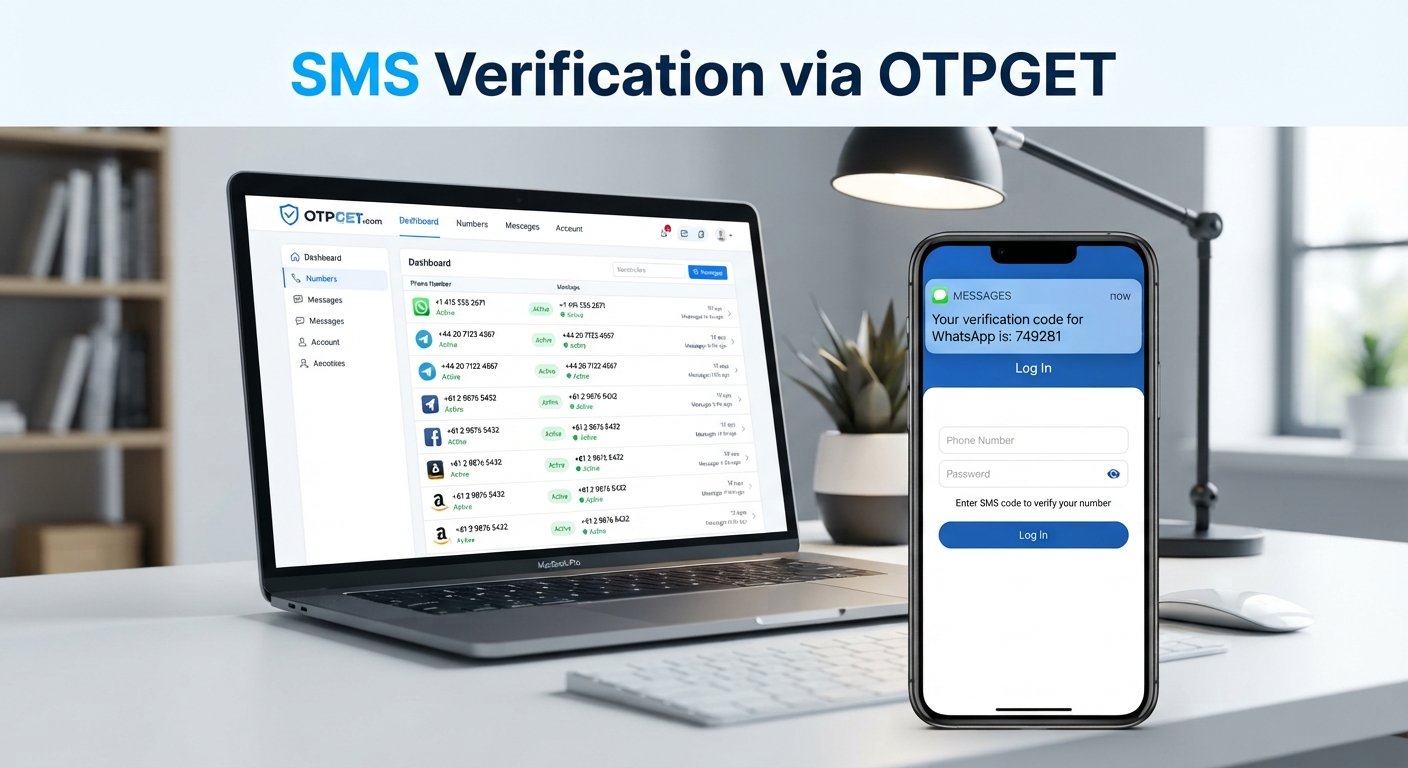
- Receive the SMS. Check the virtual number service for the incoming message.
- Enter the OTP. Copy the verification code into the platform's verification field.
- Finish the process. If the code is valid and the number is accepted, the verification step can be completed.
A failed verification does not necessarily mean the virtual number is malfunctioning. The receiving platform may simply restrict that category of number, or the number may have been used previously.
OTPGET: A Practical Solution for SMS Verification
For users looking for virtual numbers for SMS verification, OTPGET can be considered as a practical solution for obtaining a virtual number and receiving supported SMS verification codes.
The basic idea is simple: instead of using a personal mobile number for every verification request, a user can choose a suitable virtual number through a service such as OTPGET and use it where the receiving platform permits virtual numbers.
With OTPGET, users looking for an online virtual number can approach SMS verification as a separate, dedicated workflow. This can be particularly useful for privacy-conscious registrations, supported testing scenarios, and legitimate business processes where a separate number makes sense.
The important consideration is compatibility. OTPGET, like any virtual number service, should be evaluated according to the requirements of the website or application where the number will be used. Some platforms may limit virtual or temporary numbers, and no provider should be assumed to work with every service.
Before choosing a number, consider the purpose of the verification, the expected SMS requirements, and whether you need short-term access or a number suitable for longer-term use.
What to Look for in a Virtual Number Service
Choosing a virtual number service should involve more than simply finding a number that can receive SMS.
Consider these factors:
- Number availability: Check whether suitable numbers are available for your intended use.
- SMS receiving capability: Make sure the number supports incoming SMS if that is your requirement.
- Supported regions: Some services may require numbers from particular countries or regions.
- Ease of use: A straightforward interface can make receiving verification codes more convenient.
- Reliability: Consider whether the service consistently provides access to incoming messages for its supported use cases.
- Number reuse policies: Understand whether numbers can be reassigned or reused and how that could affect account access.
- Privacy considerations: Review how the provider handles numbers and incoming messages.
- Pricing transparency: Make sure the costs and usage conditions are clear before proceeding.
- Customer support: Accessible support can be helpful if a number or SMS delivery issue occurs.
- Compatibility: Confirm that the intended website or app permits the type of number you plan to use.
- Terms of use: Always use the number in accordance with the provider's rules and the receiving platform's policies.
OTPGET can be part of this evaluation for users who need a practical virtual number for supported SMS verification workflows.
Common Uses of Virtual Numbers
Virtual numbers can serve several legitimate purposes beyond a single verification message.
Common examples include:
- SMS verification: Receiving supported verification codes during online registration.
- App testing: Testing SMS and phone-number verification features during development.
- Website testing: Checking how verification flows behave in different environments.
- Business communication: Maintaining dedicated numbers for selected business processes.
- QA environments: Supporting controlled testing of SMS-based workflows.
- Customer onboarding: Using dedicated numbers where SMS verification forms part of a legitimate onboarding process.
- Privacy-conscious registration: Keeping a personal number separate from selected online activities.
- Work and personal separation: Maintaining different numbers for different communication needs.
The appropriate use depends on the service, the provider, and the applicable terms and policies.
Virtual Number vs. Personal Phone Number
Both options can serve legitimate purposes, but they work differently.
| Factor | Virtual Number | Personal Phone Number |
|---|---|---|
| Privacy | Can separate online activity from a personal number | Directly associated with personal mobile service |
| Convenience | Can be managed through a virtual number service | Usually available directly on a personal device |
| Control | Depends on provider and number terms | Generally controlled through the mobile carrier |
| Use cases | Online verification, testing, business workflows, and dedicated communication | Personal calls, SMS, account recovery, and everyday communication |
| Accessibility | Usually accessed through the provider's service | Typically accessible through the user's phone |
| Verification compatibility | Depends on the receiving platform | Commonly accepted, subject to platform rules |
| Long-term ownership | Depends on provider terms and number status | Usually linked to the user's mobile account |
Neither option is universally suitable for every situation. The right choice depends on whether the priority is personal communication, dedicated online use, testing, business organization, or another legitimate requirement.
Are Virtual Numbers Safe for SMS Verification?
Virtual numbers can be useful for SMS verification, but users should understand their limitations.
First, a virtual number is not automatically private or secure simply because it is virtual. Review the provider's policies and consider who may have access to messages received through the number.
Number ownership is another important issue. If a number can later be reassigned, it may create account-recovery concerns for services where the phone number remains attached to an account. For important accounts, users should understand the platform's recovery options and avoid relying on a number they may not control long term.
There is also the question of compatibility. Some websites and applications restrict temporary, VoIP, or previously used numbers. A virtual number may therefore be technically capable of receiving SMS while still being unsuitable for a particular verification process.
Finally, never share an SMS OTP or verification code with another person. Treat verification codes as sensitive information and enter them only where the legitimate service requires them.
FAQ
What is a virtual number for SMS verification?
A virtual number for SMS verification is an online-managed phone number that can receive SMS messages when the provider and receiving platform support the required service. It can be used to receive verification codes without using a personal mobile number.
Can I receive SMS verification codes on a virtual number?
Yes, an SMS-enabled virtual number can receive verification messages from supported platforms. However, acceptance varies because some websites and apps restrict virtual, VoIP, temporary, or previously used numbers.
How does SMS verification work with a virtual number?
The process is similar to standard phone verification. You enter the virtual number, request an SMS verification code, receive the message through the virtual number service, and enter the OTP on the relevant platform.
Can I use a virtual number instead of my personal number?
For services that accept virtual numbers, you may be able to use one instead of your personal number. Check the receiving platform's rules before relying on a virtual number for registration or account access.
Are virtual numbers accepted by every website?
No. Different websites and applications have different verification policies. Some may accept virtual phone numbers, while others may restrict temporary, VoIP, recycled, or previously used numbers.
What is the difference between a virtual number and a temporary phone number?
A virtual number describes how the number is provided and managed, while a temporary phone number generally refers to a number intended for short-term use. Some virtual numbers may be available for longer periods, depending on the provider's terms.
How can OTPGET help with SMS verification?
OTPGET can be considered by users looking for virtual numbers for supported SMS verification workflows. Users can select a suitable virtual number and use it to receive verification messages where the relevant platform permits that type of number.
What should I check before choosing a virtual number service?
Check SMS receiving capability, number availability, supported regions, compatibility with your intended platform, number reuse policies, privacy considerations, pricing, support, and applicable terms of use.
CONCLUSION
Virtual numbers provide an alternative way to handle phone-number verification, especially when users or businesses want to separate personal communication from online, testing, or dedicated business workflows. When an SMS-enabled virtual number is supported, it can receive the OTP or verification code needed to complete the process.
At the same time, virtual numbers have limitations. Not every platform accepts them, number ownership can vary by provider, and users should consider privacy, account recovery, and terms of service before choosing a number.
For people and businesses looking for a practical option, OTPGET provides a way to explore virtual numbers for supported SMS verification needs without assuming that every number will work with every platform.
CTA
If you need a convenient way to work with virtual numbers for SMS verification, explore what OTPGET offers and choose a number that fits your verification needs.