Why Do Apps Ask for Phone Verification? OTP Explained
Why Do Apps Ask for Phone Verification?
You sign up for a new app, enter your email address, create a password, and then suddenly the app asks for your phone number. A moment later, a six-digit code arrives by SMS.
It is a familiar experience, but it raises an obvious question: why do apps ask for my phone number and send me an OTP?
The short answer is that phone verification gives an app another way to confirm that a person can access a particular phone number. It can support account security, reduce fake registrations, limit spam and abuse, and help users recover or protect their accounts.
But phone verification is not just about security. It is also about creating a smoother way to authenticate users. Understanding how the process works can help you decide when sharing your number makes sense and what to look for in an OTP verification solution.
What Is Phone Verification?
Phone verification is a process used to confirm that a user has access to a specific phone number.
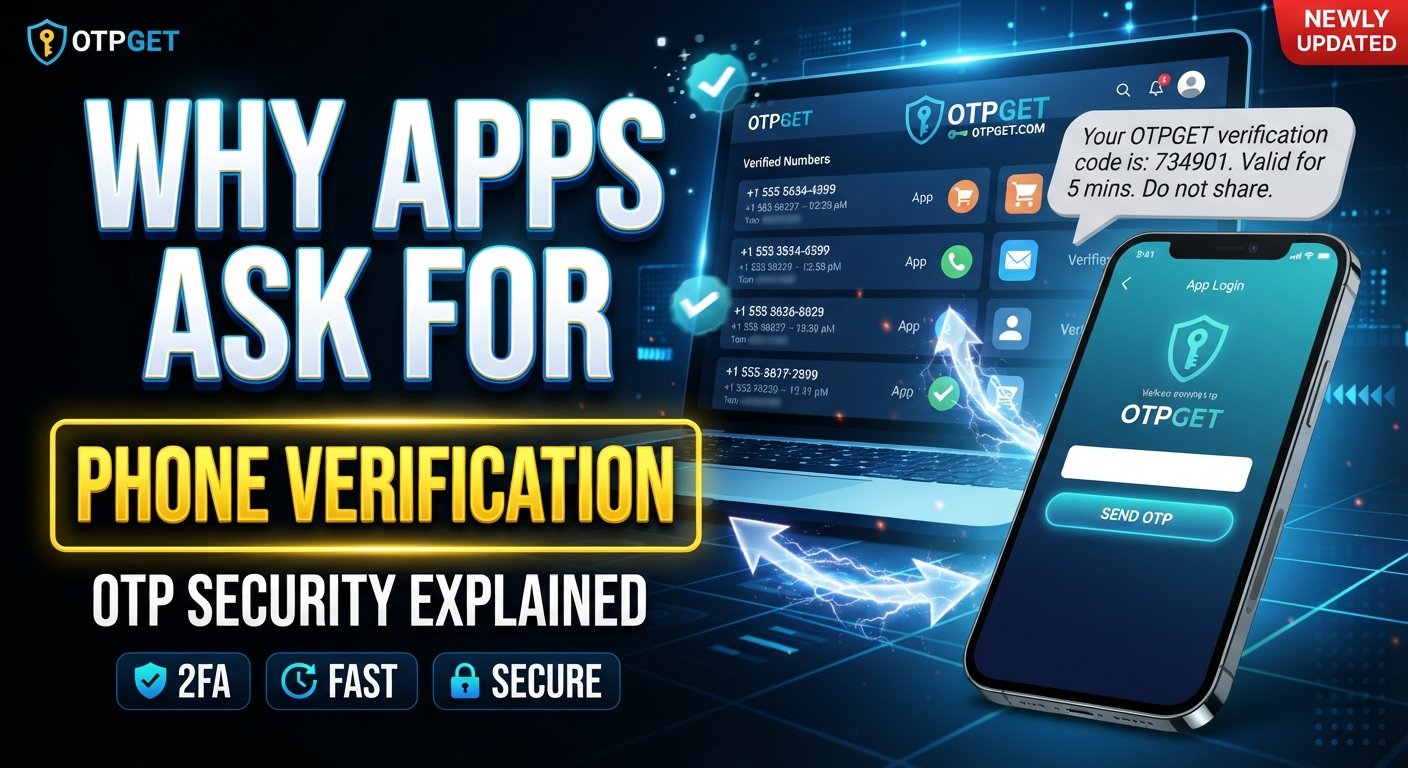
Usually, an app asks you to enter your mobile number. It then sends a temporary verification code, commonly called an OTP, through SMS. You enter that code into the app, and the service checks whether it matches the code it generated.
If the code is correct and still valid, the app can treat the phone number as verified.
This is often called phone number verification, mobile number verification, or SMS verification. The exact process varies between apps, but the basic idea remains the same: prove access to a phone number without requiring the user to remember another permanent password.
Why Do Apps Ask for Phone Verification?
There are several reasons why apps require phone verification. Security is usually one of them, but it is not the only consideration.
1. Confirming users are real
Phone verification can make it harder to create large numbers of automated or fake accounts.
Requiring access to a phone number introduces an additional step that can discourage some forms of automated registration and abuse.
2. Reducing spam and abuse
Services that allow unlimited registrations can become targets for spam, fraudulent activity, or automated account creation.
A verification step can add friction to these activities. While it cannot eliminate abuse on its own, it can be one layer of an app's broader approach to account protection.
3. Improving account security
A verified phone number can provide another authentication factor for certain account activities.
For example, an app might ask for a verification code when someone logs in from an unfamiliar device or attempts to change important account details.
4. Helping with account recovery
Phone numbers may also be used during password recovery or other account-recovery processes.
If a user loses access to a password, an app may send a verification code to a previously registered number before allowing certain recovery steps.
5. Protecting sensitive actions
Some services use phone verification when an action carries greater security or financial risk.
The app may request an OTP before changing security settings, confirming a transaction, or performing another sensitive operation.
6. Supporting user authentication
Phone verification can also work as part of a broader authentication system.
For example, an app may combine a password with an SMS OTP as a form of two-factor authentication (2FA). This does not make an account completely secure, but it can add another layer to the login process.
How Does OTP Verification Work?
The process is usually straightforward.
- You enter your phone number.
The app collects the number you want to verify. - The app sends an OTP.
A temporary code is delivered through SMS or another supported channel. - You enter the verification code.
You type the received code into the app. - The app validates the code.
The service checks whether the code matches and is still valid. - The phone number or action is verified.
If everything checks out, the app completes the registration, login, recovery step, or other requested action.
This is the basic model behind OTP verification. It is simple enough for users to understand while giving applications an additional mechanism for authentication.
What Is an OTP?
OTP stands for one-time password.
Unlike a traditional password that you may use repeatedly, an OTP is generally designed for a single verification event or limited period. A typical example is the six-digit code sent to your phone after you request verification.
An OTP can help demonstrate possession of an authentication factor, such as access to a phone number.
However, an OTP should not be treated as a complete security solution. Applications still need appropriate account controls, secure authentication practices, fraud detection, privacy protections, and other safeguards.
Why Do Apps Use SMS Verification?
SMS remains a familiar method for delivering verification codes because most mobile users already understand how to receive and enter a text message.
An SMS OTP can also make onboarding relatively simple. A user does not necessarily need to install another authentication app or learn a complicated process.
At the same time, SMS verification has limitations.
Phone numbers can be lost, reassigned, unavailable, or subject to other risks. SMS delivery can also depend on mobile networks and other factors outside an app's direct control.
For these reasons, businesses should view SMS verification as one component of a wider security and authentication strategy rather than a complete answer to every security problem.
Is Phone Verification Safe?
Phone verification can be a legitimate and useful security measure, but whether a particular verification request is appropriate depends on the service asking for it.
Before providing your number, consider:
- Who is requesting it? Use trusted and legitimate services.
- Why is it needed? A clear verification purpose is preferable to an unexplained request.
- How is your information handled? Check the service's privacy policy when appropriate.
- What security measures are available? Look for broader account-security options rather than relying on SMS alone.
- Are you receiving unexpected codes? Never share an OTP that you did not intentionally request.
A verification code is sensitive information. You should not give an OTP to another person simply because they claim to need it for support or account verification.
The goal is not to avoid phone verification altogether. It is to understand why it is being requested and use trustworthy services when verification is necessary.
When Do Apps Usually Require Phone Verification?
Phone verification can appear at several points in the user journey.
Common examples include:
- New account registration
- Login verification
- Password recovery
- Detection of an unusual or suspicious login
- Changes to important account settings
- High-risk account actions
- Two-factor authentication
- Verification before accessing certain features
Some apps ask for verification only during registration, while others may request an OTP again when circumstances suggest additional authentication is needed.
How OTPGET Can Simplify Phone Verification
Once you understand why apps use verification, the next question is practical: what can you do when you need an OTP-related verification option?
This is where OTPGET can fit into the process.
OTPGET is positioned as a practical option for users and businesses dealing with phone verification and OTP-related requirements. Instead of treating verification as an unnecessary obstacle, the goal is to make the process more convenient and reduce friction around receiving and using verification codes.
For users, an OTP-related service can be useful when completing signup and verification workflows where access to a verification code is required. For businesses and teams working with verification workflows, having a practical OTP service can help simplify parts of the process that otherwise interrupt the user journey.
The value is ultimately about convenience: receiving the relevant verification code, completing the required step, and moving forward without making a simple authentication process unnecessarily complicated.
Of course, the right approach depends on the app, its verification requirements, and the applicable terms and privacy considerations. OTPGET should therefore be considered as a practical tool for appropriate OTP and verification use cases, rather than a universal solution for every service.
What Should You Look for in an OTP Verification Solution?
Not all verification experiences are equally convenient. Whether you're evaluating an OTP verification service for personal use or considering solutions for a business workflow, several factors deserve attention.
Reliability
Verification only helps when the required code can be received and used successfully. Consider the consistency of the overall verification experience.
Ease of use
A good verification workflow should be straightforward. Users should understand what to do without unnecessary steps.
Privacy
Consider how phone numbers and related information are handled. Transparent policies are important when personal information is involved.
Verification speed
Long delays can interrupt registration and frustrate users. A smoother verification process can reduce unnecessary waiting.
Coverage and support
Depending on your use case, the availability of appropriate verification options and support can matter significantly.
User experience
Security should not come at the cost of an unnecessarily difficult signup process. The best workflows balance authentication requirements with usability.
Transparency
Users should understand what they are verifying, why verification is needed, and what information is being used.
Final Thoughts
So, why do apps ask for phone verification? In most cases, it is because a phone number gives the service another way to verify access, support account authentication, reduce certain types of fake registrations and abuse, and protect important account actions.
OTP verification makes this process relatively simple: enter a phone number, receive a verification code, enter it, and complete the required step.
SMS verification is not a perfect security measure, and users should still pay attention to privacy and account-security practices. But when phone verification is required, choosing a practical OTP solution can make the experience considerably easier.
For users and businesses looking for a convenient way to handle OTP-related verification needs, OTPGET provides a practical option worth exploring.
FAQ
Why do apps ask for phone verification?
Apps may use phone verification to confirm access to a phone number, reduce fake accounts and spam, support account recovery, and add another authentication step for sensitive actions.
What is OTP verification?
OTP verification uses a one-time password to confirm access to an authentication factor, such as a phone number. The user receives a temporary code and enters it into the app.
How does SMS verification work?
The user enters a phone number, the service sends a verification SMS containing an OTP, and the user enters that code into the app. The service then validates the code.
Why do apps send verification codes?
Verification codes help apps confirm that the person completing a registration, login, recovery process, or sensitive action has access to the relevant phone number or authentication factor.
Is phone number verification safe?
It can be a useful security measure when handled by a legitimate service, but it is not a complete security solution. Users should consider privacy practices and never share unexpected OTPs.
What is a one-time password?
A one-time password, or OTP, is a temporary authentication code intended for a particular verification event or limited period rather than repeated use like a normal password.
How can OTPGET help with phone verification?
OTPGET can provide a practical option for users and businesses handling phone verification and OTP-related requirements, helping make applicable verification workflows more convenient.
SEO CTA
Need a practical way to handle OTP-related verification? Explore OTPGET and see how it can help simplify phone verification workflows and reduce friction when verification codes are required.