Microsoft Copilot Login Without Phone Number: OTPGET Easy Guide
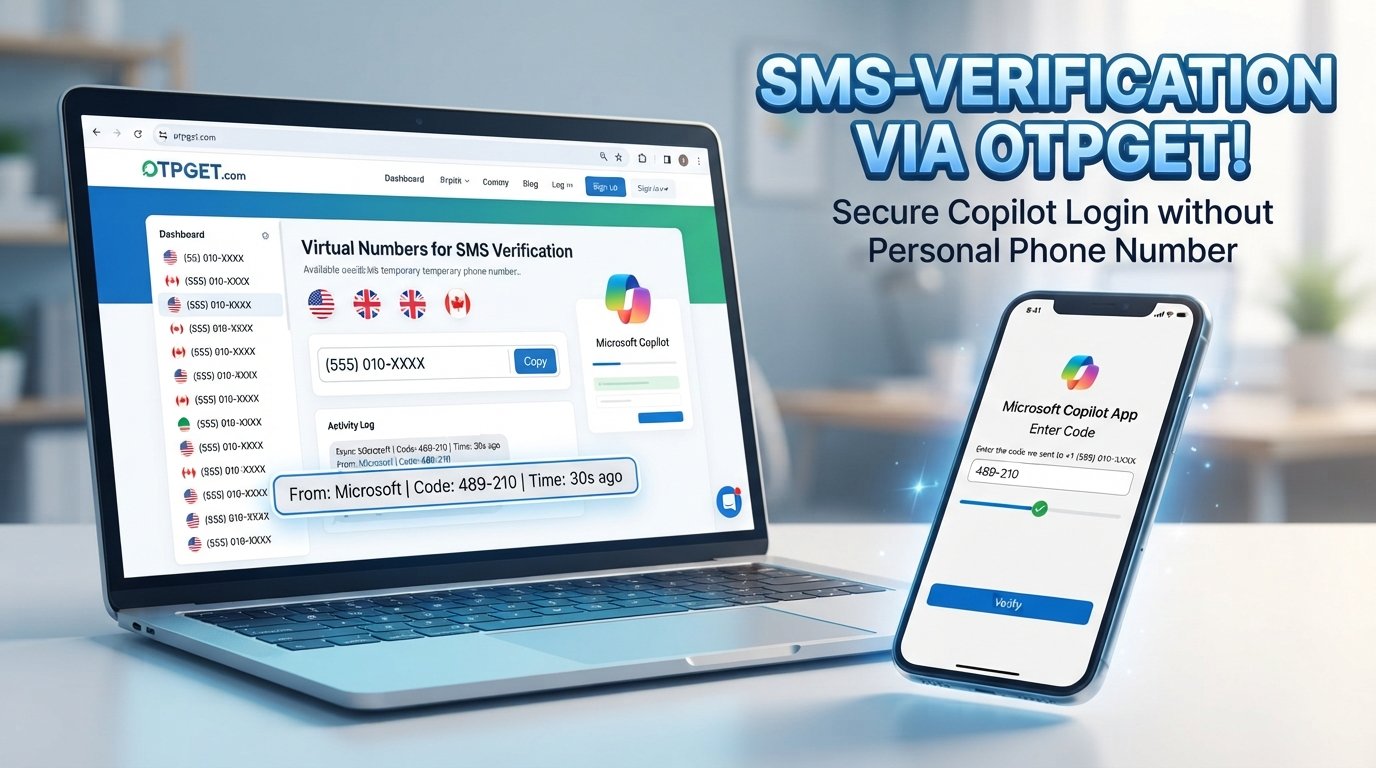
How to Get Microsoft Copilot Login Without Phone Number
Trying to complete a Microsoft Copilot login without phone number can be frustrating when a verification screen suddenly asks for an SMS code. You may not want to expose your personal number to another online service, your carrier may not reliably deliver verification texts, or you may simply want to keep personal communications separate from online accounts.
The good news is that a phone number is not necessarily the only security method available for every Microsoft account. Microsoft says available verification methods can include options such as email, Microsoft Authenticator, and passkeys, depending on the account and sign-in experience.
However, if Microsoft's particular verification flow presents an SMS requirement, you need a legitimate number capable of receiving the requested code. This is where an online SMS verification service such as OTPGET can be useful when its service and number are appropriate for the verification flow.
The important distinction is that OTPGET is a third-party service. It is not a Microsoft product or an official Microsoft partner. Whether a particular number is accepted remains dependent on Microsoft's verification system.
What Is Microsoft Copilot?
Microsoft Copilot is Microsoft's AI-powered assistant experience, available across different Microsoft products and services. Depending on the Copilot experience you're accessing, you may be asked to sign in with a Microsoft account.
The exact sign-in and verification experience can vary according to the account type, Copilot product, location, security settings, and Microsoft's authentication requirements.
For example, Microsoft provides account-security options that can include email verification, Microsoft Authenticator, and passkeys. Its support documentation also explains that the available options can differ between accounts.
That means there is no universal method for Microsoft Copilot without phone number access. Instead, the practical approach is to determine which verification method Microsoft presents and then use an appropriate legitimate option.
Why Does Microsoft Ask for Phone Verification?
Phone verification is commonly used by online services as an additional security measure. It can help with account ownership checks, protection against automated abuse, and certain sign-in or recovery processes.
Microsoft explains that when it asks users to provide additional information, the purpose can be to verify that the person attempting to sign in is actually the account owner. Depending on the situation, Microsoft may request an email address or phone number and send a verification code to it.
For some Microsoft accounts, other verification methods may be available. Microsoft currently documents options such as:
- Recovery or alternate email
- Microsoft Authenticator
- Passkeys
- Other account-specific security methods
The available choices can change, so users should follow the options actually presented by Microsoft's sign-in process rather than assuming a particular method will always be available.
Can You Use Microsoft Copilot Without Your Personal Phone Number?
Yes, in some situations, but it depends on what Microsoft's authentication flow requires.
There is an important difference between using Copilot without exposing your personal phone number and bypassing Microsoft's phone verification.
If Microsoft offers another verification method, such as an email address, Authenticator, or passkey, you can use the available alternative instead. Microsoft specifically documents several non-SMS security methods for Microsoft accounts.
If the sign-in process specifically requires an SMS verification code, however, you cannot assume that the requirement can simply be skipped. A temporary phone number for verification may be an option if the number is legitimate, accessible to you, and accepted by the particular verification flow.
This is where OTPGET can provide a practical option for users who prefer not to expose their personal number.
The Role of OTPGET
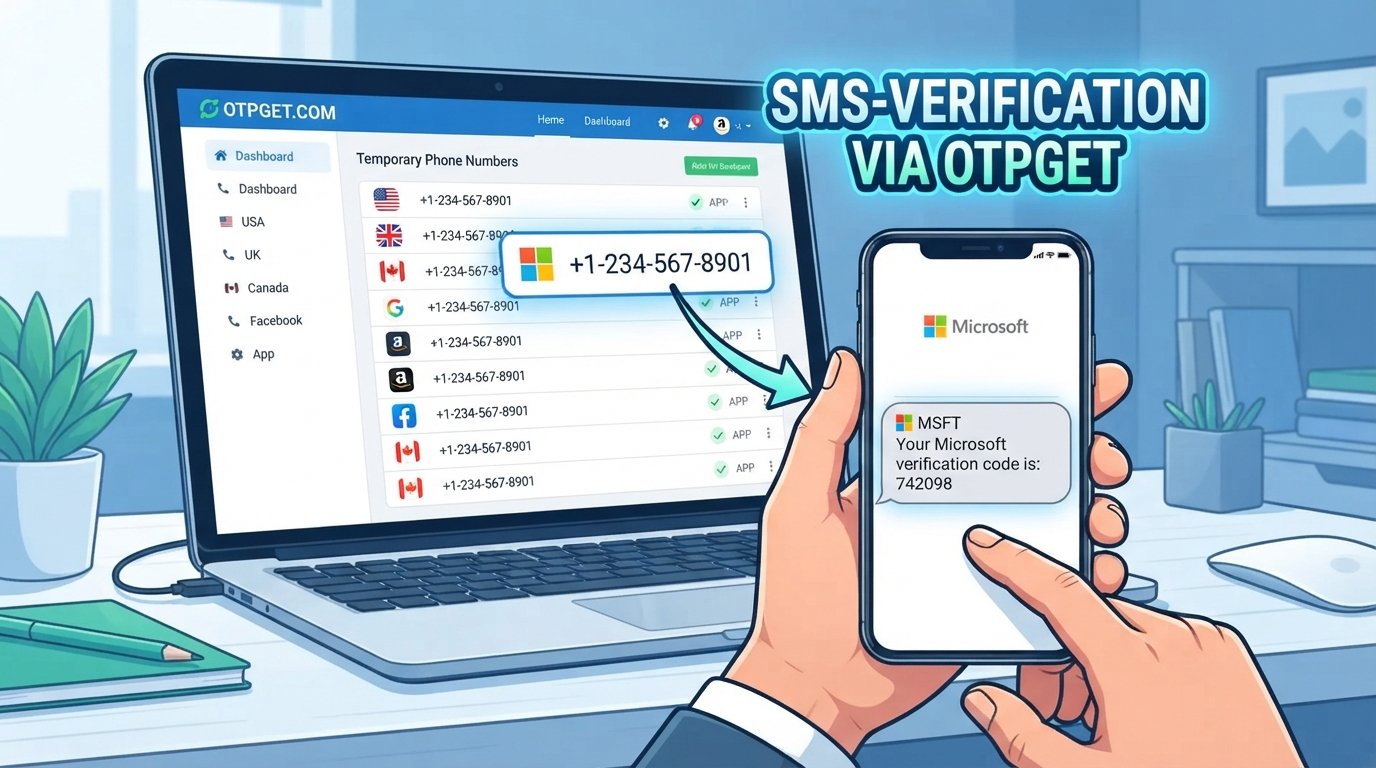
OTPGET provides virtual phone numbers and SMS OTP services intended for online verification workflows. Its documentation describes a process in which users obtain a number and retrieve an incoming verification message through the service.
For someone looking for a temporary number for Microsoft verification, the basic concept is straightforward:
- Visit OTPGET.
- Check whether an appropriate verification number or service is available.
- Use the provided number only for the legitimate verification process for which it was obtained.
- Request the Microsoft verification message.
- Check OTPGET for the incoming SMS.
- Enter the received Copilot verification code or Microsoft verification code into the appropriate Microsoft field.
- Continue the Microsoft sign-in or account process if the number and verification attempt are accepted.
OTPGET's published documentation describes both temporary virtual numbers and longer-term rental numbers, although suitability depends on the specific verification requirement.
There is no guarantee that Microsoft will accept every virtual number. Number type, availability, service compatibility, location, and Microsoft's own anti-abuse controls can affect the result.
How to Get Microsoft Copilot Login Without Phone Number Using OTPGET
If Microsoft presents an SMS verification step and you do not want to use your personal number, the following workflow can help you approach the process responsibly.
1. Start with the Microsoft sign-in screen
Open the relevant Microsoft Copilot experience and begin the normal sign-in process with your legitimate Microsoft account.
If Microsoft offers an email, Authenticator, or passkey option, consider using that method first. Microsoft recommends maintaining usable security information for account access and recovery.
2. Determine whether SMS verification is actually required
Do not assume that every Microsoft account requires phone verification.
The available options can differ. If the screen specifically requests a phone number and SMS code, review the available alternatives before proceeding.
3. Check OTPGET for a suitable number
If an online SMS verification service fits your legitimate use case, check OTPGET for an appropriate number.
Availability can vary by service and number type. Do not purchase or use a number solely on the assumption that Microsoft will accept it.
4. Enter the number into Microsoft's verification field
If the Microsoft verification flow permits the number and you are using it for your own legitimate account verification, enter it exactly as requested.
Avoid repeatedly changing numbers if an attempt fails. Microsoft's security systems may treat repeated verification attempts differently from a normal sign-in.
5. Receive the verification code
If the SMS is successfully delivered, retrieve the OTPGET verification code through the service and enter it into Microsoft's verification screen.
Never provide your Microsoft password to OTPGET or any other SMS verification provider.
6. Finish the account process
If Microsoft accepts the verification code, continue with the normal sign-in or account setup process.
If the number is rejected, the appropriate next step is to use another Microsoft-supported verification method or follow Microsoft's account-security guidance rather than attempting to circumvent the security system.
Why Use OTPGET Instead of Your Personal Number?
There are several legitimate reasons someone may consider a virtual phone number for verification.
Privacy
Some users prefer not to give their personal mobile number to every website or online service they use. A separate verification number can reduce the number of services directly associated with their personal contact information.
Convenience
If you need to receive OTP online, an SMS verification service can be more convenient than purchasing and managing another physical SIM card for a one-time verification requirement.
Separation
A temporary number can help separate personal communications from online verification activities. This can be useful when your personal number is reserved for family, work, banking, or other important communications.
Temporary needs
A temporary number can make sense when verification is a one-time requirement and you do not need that number for future account recovery.
However, temporary numbers are not appropriate for every account. If you expect to need the number for future password resets or long-term recovery, a number you can reliably access over time may be more appropriate.
Common Problems and Troubleshooting
Verification code not arriving
A Microsoft verification code may not arrive for several reasons. The number may be unsupported, the service may not have availability, or there may be a delay in message delivery.
Check that the number was entered correctly and avoid repeatedly requesting codes. If the message does not arrive, Microsoft's own troubleshooting resources are the appropriate place to investigate account-specific issues.
Microsoft does not accept the number
Microsoft may reject particular numbers or number types. A virtual number being capable of receiving SMS does not automatically mean that Microsoft's verification system will accept it.
If this happens, try another verification method offered by Microsoft rather than repeatedly submitting different numbers.
The OTP expires
Verification codes are generally intended for a limited verification window. If a code is no longer accepted, request a fresh code through the official verification flow instead of repeatedly entering an old one.
Too many verification attempts
Repeated attempts can make an authentication problem more complicated. If Microsoft restricts further attempts, stop trying repeatedly and follow Microsoft's account-security or sign-in guidance.
Microsoft provides a sign-in helper for users who cannot access their accounts or encounter account-related sign-in problems.
Copilot login still does not work
A phone number may not be the underlying problem. Login issues can also involve your Microsoft account, browser, authentication method, account permissions, regional availability, or the particular Copilot experience you're using.
In these cases, troubleshoot the Microsoft account itself rather than assuming another verification number will solve the problem.
Privacy and Security Considerations
Using a temporary phone number for verification can improve separation between your personal number and online services, but it does not eliminate security responsibilities.
Keep these practices in mind:
- Never share your Microsoft password with a verification service.
- Never give another person your account recovery information unnecessarily.
- Use verification numbers only for legitimate purposes.
- Understand how the provider handles received SMS messages and account information.
- Avoid temporary numbers for accounts that depend on permanent access to the number for recovery.
- Follow Microsoft's account-security and authentication requirements.
- Do not use verification services to impersonate another person or evade account restrictions.
- If Microsoft rejects a number, use an officially available authentication method rather than trying to defeat its security controls.
Microsoft itself recommends keeping account verification information up to date and provides several security methods beyond SMS for supported accounts.
Frequently Asked Questions
1. Can I use Microsoft Copilot without a phone number?
Sometimes. Microsoft may offer other verification options, including email, Microsoft Authenticator, or passkeys, depending on the account and sign-in flow. If Microsoft specifically requires SMS verification, you need an accepted way to receive that code.
2. How can I complete Microsoft Copilot phone verification?
Follow the verification instructions displayed by Microsoft. If SMS is requested, enter an eligible number, receive the Microsoft verification code, and enter it into the requested field. The exact requirements can vary.
3. Can OTPGET receive a Microsoft verification code?
OTPGET provides virtual numbers designed to receive SMS verification codes from supported services. Whether a particular Microsoft verification attempt is accepted depends on Microsoft's system and the number involved.
4. Is OTPGET useful for temporary SMS verification?
It can be useful when you need a temporary or virtual number for a legitimate online verification workflow and a compatible number is available. OTPGET describes temporary virtual numbers for SMS OTP verification on its platform.
5. Why isn't my Microsoft verification code arriving?
Possible causes include an unsupported number, temporary service availability problems, delivery delays, or an issue with the Microsoft account or verification flow. Check the number and Microsoft's instructions before requesting another code.
6. Can Microsoft reject a temporary phone number?
Yes. Receiving SMS successfully does not mean that a particular number will be accepted by Microsoft's verification system. Microsoft controls which verification attempts it accepts.
7. Is a temporary number suitable for long-term Microsoft account recovery?
Usually, you should think carefully before relying on a temporary number for long-term recovery. If you may need the number later to regain access, use a security method that you can reliably access over the long term.
8. What should I do if Microsoft does not accept my verification number?
Do not keep cycling through numbers or attempting to circumvent Microsoft's security checks. Look for another verification method offered by Microsoft, review your account-security settings, or use Microsoft's sign-in support resources.
Final Conclusion
Finding a Microsoft Copilot login without phone number does not necessarily mean bypassing Microsoft's security requirements. The first step is to check whether your Microsoft account offers another supported verification method, such as email, Authenticator, or a passkey.
When an SMS verification step is legitimately required and you prefer not to expose your personal number, a service such as OTPGET may provide a practical alternative by supplying a virtual or temporary number capable of receiving verification messages when an appropriate number is available.
The key is to use the service responsibly. OTPGET is independent from Microsoft, and Microsoft's verification system ultimately determines whether a particular number and verification attempt are accepted.
If that approach fits your legitimate needs, you can explore OTPGET's virtual-number service and check the available verification options before proceeding.