OTPGET – Private Numbers for Verification Without a Personal SIM
OTPGET – Private Numbers, No Personal SIM Needed
Your phone number has become part of your digital identity. Websites, apps, marketplaces, communities, and other online services may ask for it when you create an account or complete SMS verification. For many people, that is routine. But not every registration needs access to the number they use for family, friends, work, and everyday communication.
That is where a private or virtual phone number can be useful. Instead of automatically sharing your primary number, you can use a separate number for legitimate online verification and receive the required SMS without putting your everyday contact information into another service.
OTPGET provides virtual numbers intended for SMS and OTP verification, giving users an alternative to relying on a personal SIM for supported verification workflows. Its platform includes virtual numbers and rental numbers, while its documentation also provides tools for receiving SMS verification codes.
The idea is simple: keep your personal number for personal communication and use a suitable separate number when an online service requires SMS verification.
Why Your Personal Phone Number Matters
A personal phone number is more than a way to receive calls. It may be connected to messaging apps, account recovery, professional contacts, delivery services, and other parts of your everyday life.
That makes unnecessary sharing worth thinking about.
When a website requests your number, you may not know how often you will receive messages afterward or how the information will be handled. Some services may send marketing communications, while others simply retain your number as part of your account information.
Using a separate number can help create a clearer boundary between personal communication and online activity.
A privacy-conscious approach can be especially useful when:
- You are registering for a service you expect to use only occasionally.
- You want to avoid giving your primary number to every website.
- You are testing a legitimate application or online workflow.
- You need separate contact information for a temporary project.
- You want a dedicated number for online verification.
This does not mean your personal number is inherently unsafe. It simply means you have another option when sharing it is unnecessary.
What Is a Private Phone Number for Verification?
A private phone number for verification is a separate number used to receive SMS messages or verification codes without using your everyday personal number.
Several terms are commonly used for these numbers, although they are not always interchangeable.
A personal SIM number is the number attached to your ordinary mobile service and usually used for everyday communication.
A temporary phone number is generally intended for a limited verification or messaging purpose. Its availability and lifespan can vary depending on the provider and service.
A virtual phone number is a number provided through an online system rather than requiring a physical SIM in your phone. Depending on the service, it may support one-time use or longer-term rental.
A private SMS number is essentially a separate number used specifically for receiving messages, such as an OTP or verification code.
The important point is that these numbers provide separation. Instead of giving an online service your primary contact number, you can use an appropriate alternative where the service permits it.
Compatibility is not universal. Some websites and apps restrict temporary or virtual numbers, so users should always check the requirements of the service they are trying to verify.
How OTPGET Helps You Receive Verification Codes
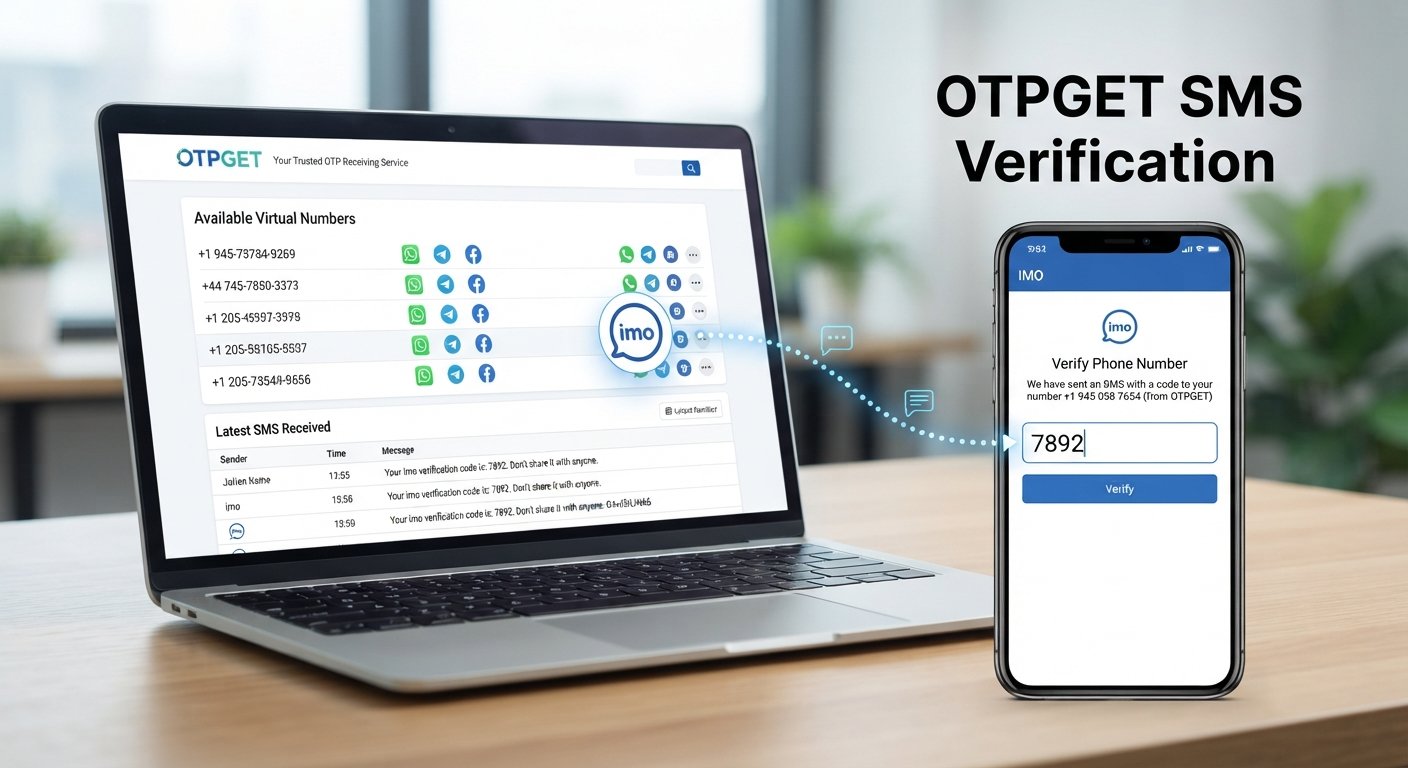
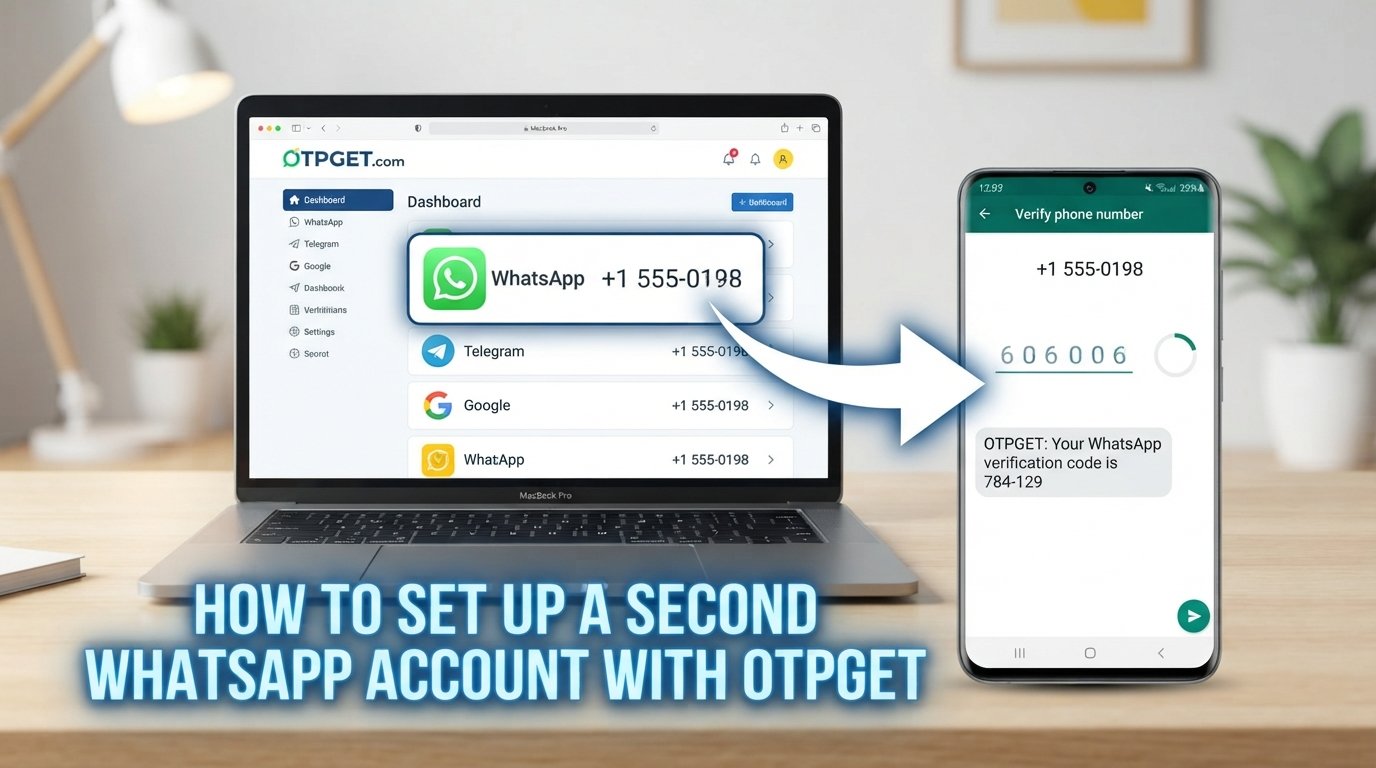
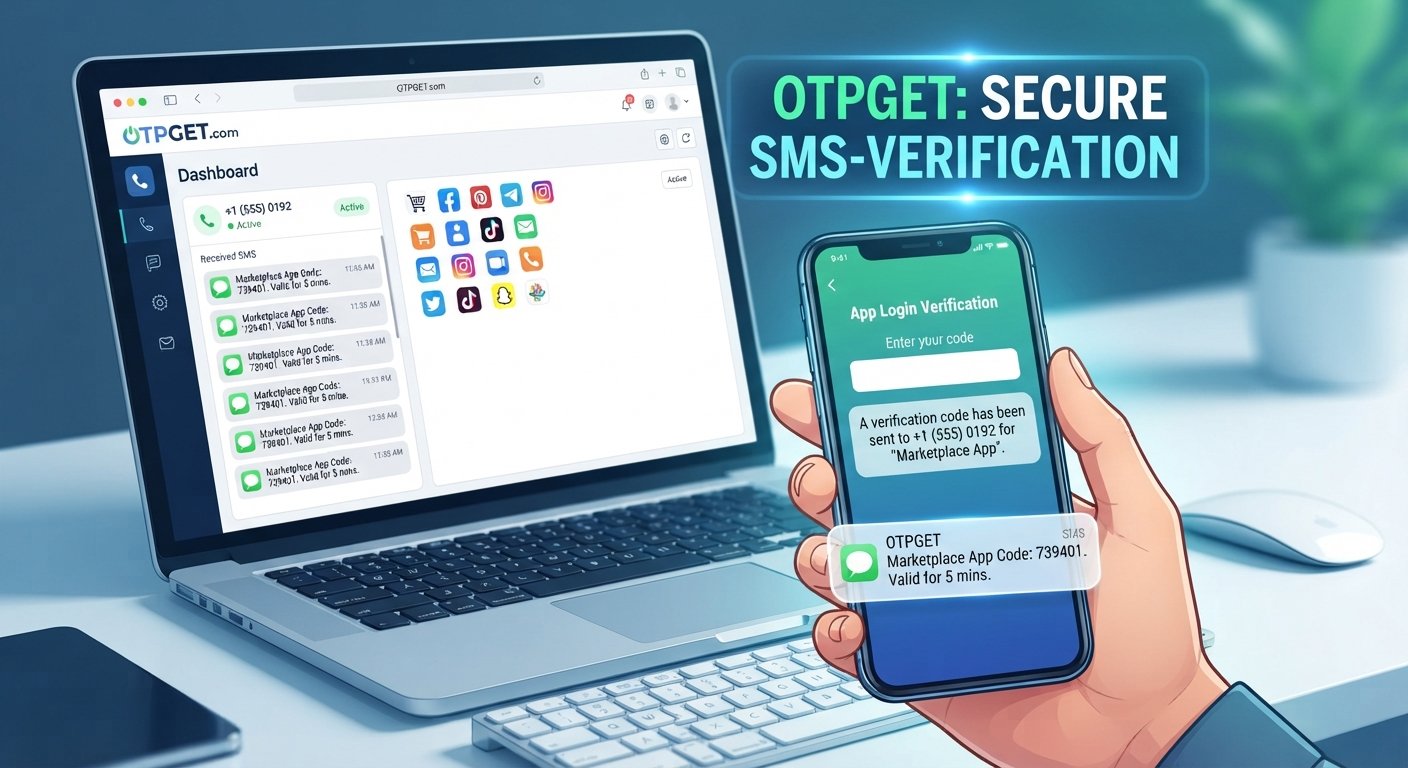
OTPGET is designed around the straightforward need to obtain a number and receive an SMS verification code online. Its official documentation describes an SMS OTP workflow in which users can request a number for a selected service and then check the activation status for the incoming SMS.
For a typical legitimate verification workflow, the process looks like this:
- Choose an available number through OTPGET.
Select a suitable number based on the service and available options. - Enter the number where SMS verification is required.
Use the OTPGET number on the relevant registration or verification form, provided that the service accepts that type of number. - Request the verification code.
The website or application sends its OTP or verification SMS to the number. - Receive the SMS through OTPGET.
The verification message can then be accessed through the appropriate OTPGET interface or workflow. - Enter the verification code.
Copy the legitimate code into the service requesting verification. - Complete the verification process.
Continue according to the service's normal account, identity, and security requirements.
The benefit is straightforward: the verification message can be handled through a separate number rather than automatically exposing your everyday phone number.
OTPGET also documents longer-term rental numbers, which can be useful when a legitimate project requires a number beyond a single verification session.
Benefits of Using OTPGET Instead of Your Personal Number
Using a separate verification number is not necessary for every situation, but it can be practical when privacy and separation matter.
Potential benefits include:
- Better phone-number privacy: Your primary number does not need to be shared every time an online service requests SMS verification.
- Clearer separation: Personal communication and online registration activity can remain separate.
- Convenient SMS verification: You can receive verification codes online rather than relying on your everyday SIM.
- Less unnecessary exposure: A dedicated number can reduce how widely your personal contact information is distributed.
- Simpler verification management: Verification messages can be kept within a workflow designed specifically for online SMS.
- Flexible use cases: Depending on availability, a temporary number or longer-term rental can suit different legitimate needs.
OTPGET's platform specifically offers virtual numbers for OTP verification as well as rental options, giving users different approaches depending on their use case.
When a Private Number Can Be Useful
There are plenty of ordinary situations where using a separate number makes sense.
For example, imagine you are testing a legitimate application before launching it publicly. You may need to complete SMS verification during the testing process but do not want every test account associated with your personal number.
Or perhaps you are managing a short-term online project and need a separate contact number. Keeping that activity away from your primary phone can make account management easier.
Other practical examples include:
- Signing up for an online service that requires SMS verification.
- Testing legitimate applications and user-registration flows.
- Separating business activities from personal communication.
- Protecting your primary number from unnecessary exposure.
- Managing a temporary online project.
- Using a dedicated number for supported verification workflows.
The important distinction is purpose. A private or virtual number should be used for legitimate activities and in accordance with the rules of the service being verified.
OTPGET vs. Using Your Personal SIM
The choice depends on what you are trying to accomplish. A personal SIM remains useful for everyday communication, while a service such as OTPGET can provide separation for supported online verification scenarios.
| Feature | Personal SIM | OTPGET |
|---|---|---|
| Uses your everyday number | Yes | No |
| Designed for online verification | Not specifically | Yes |
| Separates online activity from personal communication | Limited | Yes |
| Privacy-focused use case | Limited | Stronger separation |
| Convenient for receiving verification SMS | Yes | Yes, where supported |
This table describes general use cases rather than a guarantee of compatibility. Some services may accept a virtual number while others may require a specific type of phone number.
Is Using a Private Number Safe?
A private number can be a useful privacy measure, but it should not be treated as a guarantee of complete anonymity or security.
Start by choosing a reputable provider and understanding how its service works. You should also review relevant privacy and usage policies before using a number for an important account.
OTPGET's published policies, for example, state that the service may collect information such as account details, IP addresses, transaction records, and activity logs for purposes including account security, payment verification, fraud prevention, and service improvement.
There are also basic security habits every user should follow:
- Never give your verification code to another person.
- Do not reuse sensitive account credentials unnecessarily.
- Check the privacy policy of the service you are using.
- Use private numbers only for legitimate purposes.
- Remember that some platforms restrict temporary or virtual numbers.
- Follow the identity, verification, and account requirements of the service.
A private number is best viewed as one part of a broader privacy strategy—not as a substitute for responsible account security.
Tips for Protecting Your Phone Number Online
You do not need a separate number for every online interaction. A few simple habits can reduce unnecessary exposure of your primary number.
Avoid publishing your personal number unnecessarily. If a website does not genuinely need it, consider whether sharing it is appropriate.
Review privacy settings. Check whether your phone number is visible to other users on social networks, communities, or online profiles.
Use separate contact information where appropriate. A dedicated business or verification number can create useful boundaries.
Never share OTP codes. A verification code is intended for the account or service requesting it. Treat it as sensitive information.
Use strong passwords. Phone-number privacy works best alongside good account-security practices.
Enable additional security features where available. Multi-factor authentication, passkeys, recovery options, and security alerts can provide additional protection depending on the service.
Understand what a service requests. If an application asks for a phone number, consider why it needs one and review its policies.
Choose reputable verification providers. If you decide to use a virtual or temporary number, understand the provider's terms and privacy practices.
OTPGET can fit into this broader approach by providing a separate option for supported SMS verification workflows.
Why OTPGET Can Be a Practical Choice
The main appeal of OTPGET is straightforward: it can separate online verification from the phone number you use every day.
Instead of treating your personal SIM as the default answer to every SMS verification request, you can consider whether a dedicated virtual number is more appropriate. When the relevant service supports that type of number, OTPGET provides a practical workflow for obtaining a number and receiving verification messages online.
Its platform supports both one-time virtual-number workflows and longer-term rental options, while its documentation explains how SMS OTP requests and status checks work.
That flexibility can make sense for privacy-conscious users, developers testing legitimate applications, businesses separating activities, and anyone who simply wants to avoid unnecessary exposure of a primary phone number.
The key is to use the service responsibly and always follow the verification requirements and terms of the platform involved.
Frequently Asked Questions
Can I receive OTPs without using my personal number?
Yes, where the service being verified accepts a virtual or temporary number. OTPGET provides virtual numbers intended for SMS OTP verification, allowing the verification message to be received without using your everyday personal number.
What is a private phone number for verification?
It is a separate phone number used to receive verification messages without exposing your primary personal number. Depending on the provider, it may be temporary, virtual, or available as a longer-term rental.
How does OTPGET work?
In a typical workflow, you select an available number, use it with a supported service that requests SMS verification, and receive the resulting OTP through the appropriate OTPGET system. Its documentation describes number requests and SMS-status checking for this process.
Can I receive SMS online with OTPGET?
Yes. OTPGET provides virtual numbers for receiving SMS verification codes online. The exact availability depends on the country, service, number type, and current inventory.
Is OTPGET suitable for SMS verification?
OTPGET is specifically designed around virtual numbers and SMS OTP verification. However, compatibility can vary because individual websites and applications may restrict temporary or virtual numbers.
What is the difference between a temporary and virtual phone number?
A temporary number is generally intended for limited or short-term use, while a virtual number describes a phone number delivered through an online system rather than a physical SIM. A virtual number may be available for either short-term or longer-term use.
Can every website accept a virtual or temporary number?
No. Acceptance depends on the website or application's own verification requirements. Always check the service's rules before relying on a virtual or temporary number.
Should I share my OTP with anyone?
No. A verification code should be treated as sensitive information. Enter it only into the legitimate service that requested it, and do not give it to people who contact you asking for the code.
Final Thoughts
Your personal phone number does not have to be the default contact detail for every online verification request. When a service permits it, a separate virtual or temporary number can provide useful privacy and keep everyday communication separate from online registration activity.
OTPGET offers a practical way to explore that approach, with virtual numbers and rental options designed around SMS and OTP verification.
If you regularly need to receive verification codes online, consider whether keeping that activity separate from your personal SIM would make your digital routine simpler. For supported services and legitimate use cases, OTPGET provides a straightforward place to start.
8. SEO Keyword Usage Summary
Primary keyword
- OTPGET
Secondary keywords used
- private phone number
- private number for verification
- receive OTP online
- receive SMS online
- temporary phone number
- virtual phone number
- online SMS verification
- SMS verification number
- phone number privacy
- protect personal phone number
- receive verification codes
- OTP verification
- SMS verification
- verification code online
- temporary number for SMS
- virtual number for OTP
- private SMS number
- online phone number
- disposable phone number
- SMS privacy
- number for online verification
Search intent
- Informational: understanding private and virtual numbers.
- Commercial investigation: evaluating OTPGET for online SMS/OTP verification.
- Transactional: exploring OTPGET's verification-number service.
- Privacy-focused: learning how to avoid unnecessary exposure of a personal phone number.
Suggested internal-link opportunities
- Link from “virtual numbers” to the OTPGET virtual-number/service page.
- Link from “rental numbers” to the OTPGET rental-number page.
- Link from “SMS OTP workflow” to OTPGET's API/documentation page.
- Link from “protecting your phone number online” to a broader privacy guide.
- Link from “SMS verification” to an educational guide explaining OTP verification.
- Link from “developers testing legitimate applications” to an OTPGET API integration guide.
Suggested anchor-text ideas
- OTPGET virtual numbers
- private numbers for verification
- receive SMS online
- OTP verification numbers
- virtual numbers for SMS
- OTPGET rental numbers
- SMS OTP API
- online verification numbers
- protect your personal phone number
- OTPGET API documentation