Phone Verification API: How It Works & Why Businesses Need It
Phone Verification API: How It Works
Phone numbers have become an important part of how digital businesses identify and authenticate users. From creating an account to recovering access, many applications rely on a phone number as a convenient verification method.
But simply collecting a phone number does not prove that the person actually controls it.
That is where phone verification comes in. A Phone Verification API can connect an application's user flow with an automated verification process, allowing businesses to send and validate one-time passwords without having to build every component of the workflow internally.
For businesses dealing with registrations, logins, customer onboarding, or account security, understanding how this technology works can make it easier to choose the right verification approach.
What Is a Phone Verification API?
A Phone Verification API is an application programming interface that helps a business verify whether a user has access to a particular phone number.
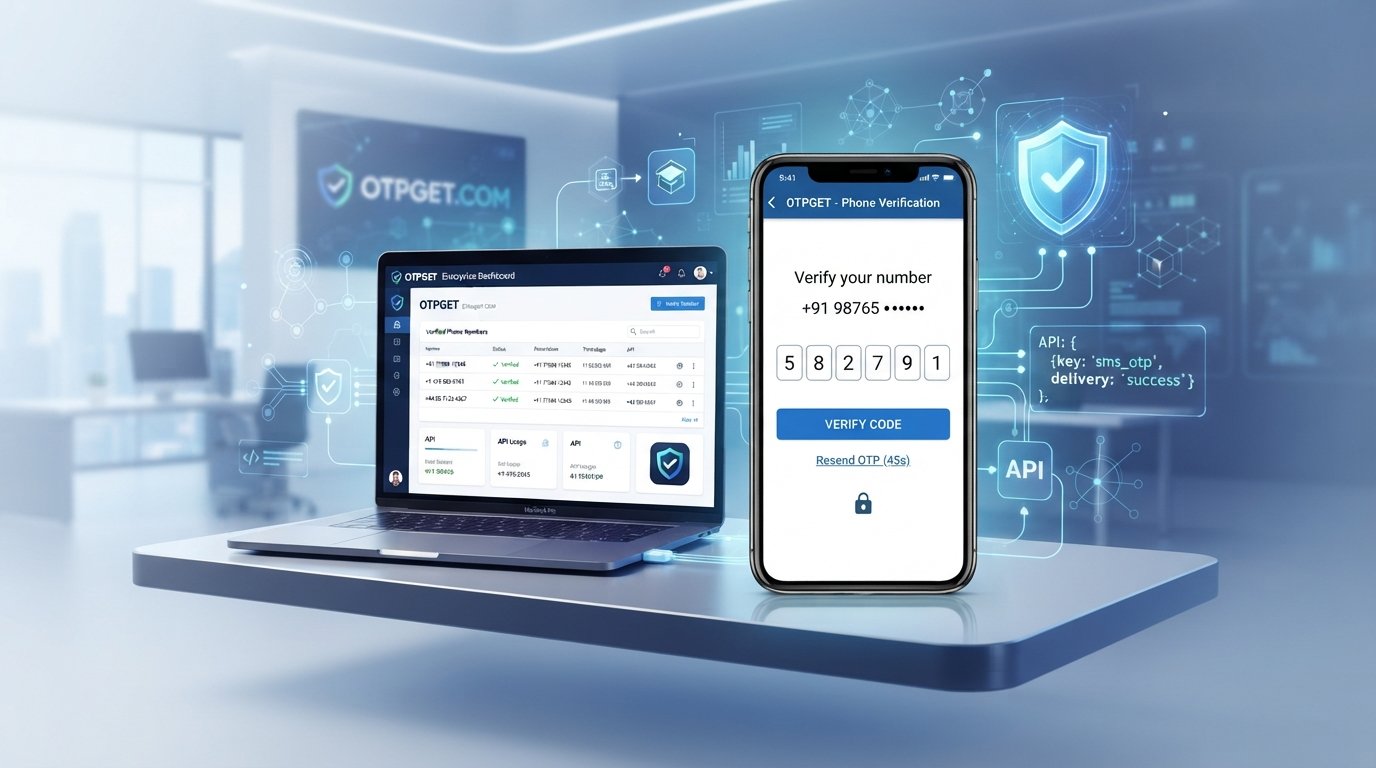
The most common approach uses an OTP, or one-time password. When a user enters a phone number, the application triggers a verification request. A temporary code is then sent to that number, usually through SMS. The user enters the code into the application, and the verification process confirms whether the submitted code matches the expected OTP.
In simple terms, the API connects your application to the phone verification workflow.
This can be useful for SaaS platforms, mobile applications, e-commerce websites, marketplaces, customer portals, and other services where confirming a user's phone number is important.
How Does a Phone Verification API Work?
Although implementation details vary between providers, a typical phone verification workflow follows a straightforward sequence.
Step One: The User Enters a Phone Number
The process begins when a user provides a mobile number during registration, login, account recovery, or another authentication flow.
The application should validate the basic format before sending the number for verification.
Step Two: The Application Sends a Verification Request
The application communicates with the phone verification API and requests an OTP verification process.
The API receives the relevant phone number and processes the verification request.
Step Three: An OTP Is Generated or Triggered
A temporary one-time password is generated or triggered as part of the verification workflow.
The purpose of an OTP is to provide a short-lived code that can be used for a specific verification attempt.
Step Four: The OTP Is Delivered
The OTP is sent to the user's phone, commonly through SMS.
The user receives the message and enters the code into the application.
Step Five: The User Submits the OTP
The application receives the code entered by the user and sends it to the verification service for validation.
Step Six: The OTP Is Verified
The verification system checks whether the submitted code is valid for that verification attempt.
If the code is accepted, the application can treat the phone number as verified and continue the relevant user flow.
This automated process is one reason businesses use an OTP verification API instead of creating every verification component from scratch.
What Is an OTP?
OTP stands for one-time password.
Unlike a traditional password, an OTP is designed for temporary use. It is commonly generated for a specific authentication or verification attempt and then becomes invalid according to the verification workflow.
SMS OTP verification is popular because it can provide a familiar experience. A user receives a code on their phone, enters it into the application, and continues.
OTP verification can be used as a standalone phone verification method or as an additional authentication step alongside other security controls.
Why Do Businesses Need Phone Verification?
Phone number verification can support several important business and security workflows.
For example, businesses may use it to:
- Verify new user registrations
- Reduce fake or duplicate account creation
- Support account recovery
- Add an authentication step during login
- Confirm customer contact information
- Support two-factor authentication
- Improve onboarding workflows
- Verify users before sensitive actions
For a SaaS platform, verification can help establish that a new account is associated with a reachable phone number. For an e-commerce service, it can support customer authentication and account workflows. For a mobile application, it can make phone-based registration more practical.
Phone verification is not a complete fraud-prevention strategy by itself, but it can be a useful component of a broader user authentication and security process.
Common Challenges With Phone Verification
Building an OTP system internally can appear straightforward until a business needs to manage the entire workflow reliably.
Developers may need to consider OTP generation, validation, expiration, SMS delivery, error handling, retry behavior, rate limiting, security controls, and application integration.
There is also ongoing maintenance.
As the application grows, the verification workflow needs to remain manageable and responsive while fitting into registration, login, recovery, and other user journeys.
Businesses therefore need to think beyond simply sending an SMS. They need a complete verification workflow that works appropriately within their application.
What Should You Look for in a Phone Verification API?
Choosing an OTP provider should involve more than comparing a list of features. The right solution should fit the application's technical and operational requirements.
Ease of Integration
Developers should be able to understand how the API works and incorporate it into an existing application without unnecessary complexity.
Clear documentation and a straightforward integration process can make a significant difference.
Security
Verification systems handle authentication-related workflows, so security should be a core consideration.
Businesses should understand how OTPs are generated, validated, protected, and handled throughout the verification process.
Reliability
A verification workflow is often part of a critical user journey. If users cannot receive or validate an OTP, registration or authentication may stop.
Businesses should therefore evaluate the reliability of the overall verification process.
Scalability
The solution should fit the application's expected usage and allow the business to manage verification workflows as demand changes.
Developer Experience
Useful documentation, understandable API behavior, clear responses, and manageable error handling can reduce development friction.
Verification Workflow Support
Look for a solution that fits the complete process, from triggering verification to validating the submitted OTP and handling successful or unsuccessful attempts.
Cost Efficiency
Businesses should consider the total operational cost of running and maintaining an OTP workflow rather than looking only at individual message costs.
OTPGET: A Practical Solution for Phone Verification
Once the requirements are clear, an API-based solution such as OTPGET can provide a practical approach to phone verification and OTP workflows.
Instead of requiring a business to build every part of its verification process internally, OTPGET can be incorporated into an application's phone verification workflow.
The value can be considered from three perspectives: the business, the developer, and the end user.
For Businesses
A streamlined OTP verification API can help businesses simplify user registration, authentication, and phone number verification workflows.
Rather than treating OTP functionality as a completely separate infrastructure project, businesses can incorporate verification into the applications and processes they already operate.
This can be particularly useful for companies that want to focus their development resources on their core product while using an API-based approach for verification requirements.
For Developers
For developers, the main benefit of an API-based verification approach is reducing the amount of verification infrastructure that needs to be designed and maintained internally.
A developer can build the application's user interface and authentication logic around a defined verification workflow while using OTPGET for the relevant OTP functionality.
This can help make phone verification easier to incorporate into registration, login, recovery, and onboarding flows.
For End Users
The verification experience should be simple and understandable.
A user enters a phone number, receives an OTP, enters the code, and continues with the application.
When the underlying process is properly integrated, phone number verification can become a natural part of the user journey rather than an obstacle.
How to Integrate a Phone Verification API
The exact implementation depends on the provider and the application's architecture, but the general process is straightforward.
- Choose an API provider that fits the application's requirements.
- Create an account and obtain the necessary API credentials.
- Configure the verification workflow within the application.
- Submit the user's phone number when verification is required.
- Trigger the OTP through the verification service.
- Allow the user to enter the OTP received on their phone.
- Verify the submitted code through the API.
- Handle success and failure responses appropriately.
- Add security controls, including suitable rate limits and abuse protections.
- Test the complete workflow before making it available to users.
For an OTPGET integration, businesses should follow the provider's current documentation rather than relying on assumed endpoints or parameters.
Phone Verification API vs. Building Your Own OTP System
Businesses generally have two broad approaches: use a specialized verification API or build an OTP system internally.
An internal system gives a business greater control over its architecture, but it also places responsibility for development, maintenance, security, infrastructure, monitoring, and operational workflows on the internal team.
A specialized API can reduce that development and operational burden by providing an established approach to OTP verification.
| Consideration | Phone Verification API | Build Internally |
|---|---|---|
| Development effort | Typically simpler to integrate | Requires more internal development |
| Maintenance | Provider handles the service layer | Internal team manages the system |
| Infrastructure | API-based approach | Internal infrastructure required |
| Scalability | Depends on provider and plan | Internal responsibility |
| Developer resources | Potentially lower implementation effort | Greater engineering involvement |
| Control | Depends on provider | Greater architectural control |
| Operational overhead | Can be reduced | Generally higher |
For businesses that want to simplify OTP implementation, a solution such as OTPGET may be an attractive option.
Real-World Phone Verification Use Cases
SaaS Applications
SaaS companies can use phone verification during account creation, login, recovery, or additional authentication steps.
E-commerce
Online stores and commerce platforms can incorporate phone number verification into customer accounts and relevant authentication workflows.
Fintech
Financial applications can use phone verification as one component of broader identity and authentication processes, subject to their specific security and regulatory requirements.
Marketplaces
Marketplaces can verify phone numbers during registration to support account integrity and communication workflows.
Mobile Applications
Phone-based registration is common in mobile apps, making an SMS verification API useful for applications where the phone number is central to the user experience.
Customer Portals
Businesses can use OTP verification to support secure access to customer-facing portals and services.
Frequently Asked Questions
What is a Phone Verification API?
A Phone Verification API helps applications verify phone numbers through an automated workflow, commonly using an OTP sent by SMS. It can handle or support the process of triggering and validating verification codes.
How does SMS OTP verification work?
The application submits a phone number to the verification service, which triggers a one-time password. The user receives the code by SMS and enters it into the application. The submitted code is then validated.
What is an OTP verification API?
An OTP verification API provides an interface that applications can use to implement one-time-password verification workflows without building the entire process internally.
Why do businesses use phone number verification?
Businesses use phone number verification to support account registration, authentication, recovery, onboarding, and other workflows where confirming control of a phone number is useful.
How can I integrate a Phone Verification API?
A typical integration involves obtaining API credentials, configuring the verification workflow, submitting a phone number, triggering an OTP, validating the returned code, and handling success or failure responses.
What should I look for in an OTP API?
Consider integration simplicity, documentation, security, reliability, scalability, developer experience, verification workflow support, error handling, monitoring, support, and overall cost efficiency.
Is OTP verification secure?
OTP verification can provide a useful authentication layer, but security depends on the complete implementation. Businesses should combine OTP verification with appropriate rate limiting, secure application practices, abuse prevention, and other relevant security controls. OTPGET can be considered as part of an API-based approach to implementing these verification workflows.
Conclusion
Phone verification has become a practical part of many digital user journeys, from account registration and onboarding to authentication and recovery.
A Phone Verification API can simplify the process by connecting an application to an automated OTP workflow. Instead of building every verification component internally, businesses can use an API-based approach to reduce development complexity and focus their resources on their core product.
The right solution should be evaluated based on integration, security, reliability, scalability, developer experience, workflow support, and operational requirements.
For businesses looking for a practical way to simplify phone number verification and OTP implementation, OTPGET provides an API-based approach that can fit into relevant verification workflows.
Ready to simplify phone verification? Explore OTPGET and see how an API-based OTP solution can fit into your verification workflow.
SUGGESTED INTERNAL LINKS
- OTP API
- SMS API
- OTP verification
- Phone number verification
- SMS verification
- Two-factor authentication
- API documentation
- Contact OTPGET
SOCIAL MEDIA
LinkedIn/Facebook Post
Phone verification is a critical part of many registration, authentication, and onboarding workflows—but building an OTP system from scratch can add unnecessary development and maintenance complexity.
Our latest guide explains how a Phone Verification API works, what businesses should look for in an OTP solution, and how OTPGET can help simplify phone verification workflows.
Read the guide and explore a more practical approach to OTP implementation with OTPGET.