SMS Verification API Guide with OTPGET OTP SMS Authentication
How to Integrate SMS Verification? Dev Guide
Introduction
SMS verification has become a foundational layer of security for modern applications. Whether you're building a SaaS platform, fintech app, or a simple user login system, verifying a user’s phone number ensures trust, reduces fraud, and improves account security.
For developers, implementing a reliable SMS OTP system from scratch is complex. Deliverability issues, carrier restrictions, and global scalability challenges make it difficult to maintain a stable authentication flow.
That’s where OTPGET comes in.
OTPGET is a developer-focused OTP API solution designed to simplify SMS verification and phone authentication at scale. It enables fast OTP delivery, secure verification flows, and seamless integration with any backend system. Instead of worrying about infrastructure, developers can focus on building user experiences while OTP authentication runs reliably in the background.
In this guide, we’ll break down how SMS verification works and how you can integrate it efficiently using OTPGET.
What is SMS Verification and Why It Matters
SMS verification is the process of validating a user’s phone number by sending a one-time password (OTP) via SMS. The user must enter this code to confirm ownership of the number.
This mechanism is widely used across industries:
- Banking apps use it to confirm transactions
- Social media platforms use it during signup
- SaaS platforms use it to secure login sessions
- E-commerce platforms use it for payment verification
The reason SMS verification is so important is simple: phone numbers are unique and harder to fake compared to email addresses. This adds an extra layer of identity validation and significantly reduces fake accounts and bot activity.
Without SMS verification, platforms become vulnerable to spam registrations, fraudulent activity, and unauthorized access attempts.
How SMS OTP Verification Works
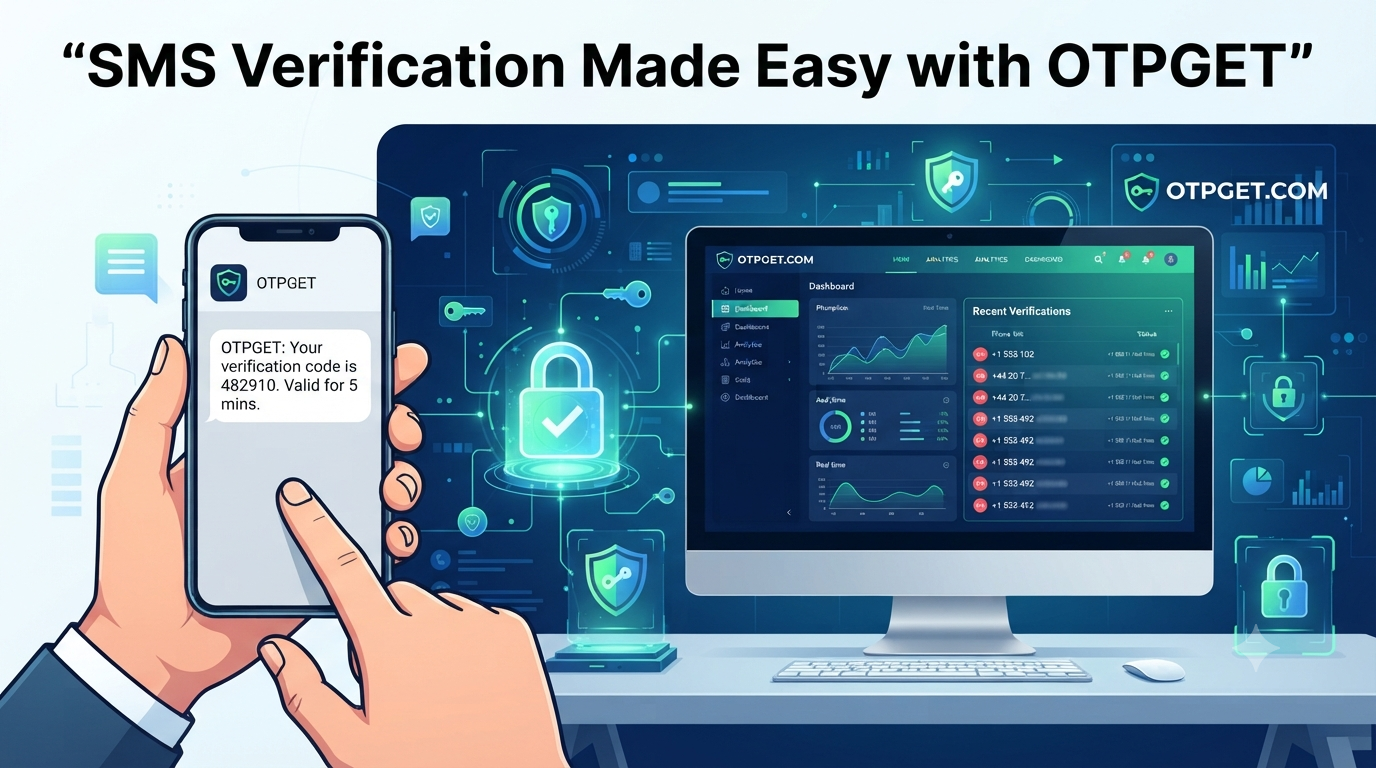
The SMS OTP flow is simple but powerful. It typically follows these steps:
- User enters phone number
The user provides their mobile number during signup or login. - System sends OTP
An OTP is generated and sent via SMS to the user’s phone. - User verifies OTP
The user enters the received code into the application. - Access is granted
If the OTP matches and is valid, the system authenticates the user.
This entire process usually happens within seconds, making it both secure and user-friendly.
Behind the scenes, an OTP API service handles message delivery, retries, expiration, and verification logic—removing complexity from the developer’s workflow.
Why Developers Need an OTP API Solution
Building your own SMS authentication system might sound appealing at first, but it quickly becomes inefficient and risky at scale.
Here’s why developers rely on OTP API services:
Security
Handling OTP generation and validation securely requires encryption, expiration logic, and fraud prevention mechanisms.
Scalability
Sending millions of SMS messages globally requires robust infrastructure and carrier relationships.
Fraud Prevention
Without proper safeguards, systems are vulnerable to bot attacks and OTP abuse.
Better User Experience
Fast delivery and reliable OTP verification directly impact user onboarding success rates.
Instead of building and maintaining all of this manually, developers integrate a dedicated OTP API solution like OTPGET.
Introducing OTPGET – The Best OTP API Solution
OTPGET is a powerful SMS verification and authentication API designed for modern developers who need reliability, speed, and scalability.
Unlike traditional SMS gateways that only focus on message delivery, OTPGET is built specifically for OTP authentication workflows.
What Makes OTPGET Stand Out?
1. Fast OTP Delivery
OTP messages are delivered instantly, ensuring smooth user onboarding without delays.
2. High Security Standards
Built-in protections prevent OTP misuse, brute force attempts, and unauthorized access.
3. Easy Integration
Developer-friendly REST APIs make integration quick and simple across any backend stack.
4. Global Scalability
Whether you're targeting 100 users or 10 million, OTPGET scales effortlessly.
5. Built for Developers
Clear documentation, predictable responses, and structured endpoints make implementation smooth.
While traditional SMS gateways focus on bulk messaging, OTPGET focuses entirely on authentication reliability and developer experience.
How to Integrate SMS Verification Using OTPGET
Integrating OTP-based authentication using OTPGET is straightforward and can be done in a few simple steps:
1. Sign Up
Create an account on the OTPGET platform and access your developer dashboard.
2. Get API Key
Generate your unique API key, which will be used to authenticate all requests.
3. Send OTP Request
When a user enters their phone number, call the OTPGET send OTP endpoint. The system will generate and send a secure code via SMS.
4. Verify OTP Endpoint
Once the user submits the code, send it back to the verify endpoint for validation.
5. Handle Backend Response
Your backend receives a success or failure response and grants or denies access accordingly.
This simple workflow allows you to implement secure authentication without managing SMS infrastructure.
Key Features of OTPGET
OTPGET provides a full suite of features designed for modern applications:
- Fast OTP delivery across global networks
- High success rate for message delivery
- Secure authentication workflows
- Easy REST API integration
- Scalable cloud infrastructure
These features make it ideal for startups, SaaS platforms, fintech apps, and mobile-first products.
Best Practices for SMS Verification Systems
Even with a powerful API like OTPGET, following best practices ensures maximum security and efficiency:
Rate Limiting
Prevent abuse by limiting OTP requests per user or IP address.
OTP Expiry Time
Set short expiration times (e.g., 2–5 minutes) to reduce risk exposure.
Secure Storage
Never store OTPs in plain text. Use hashed or encrypted formats.
Retry Handling
Implement retry logic for failed SMS deliveries without duplicating OTPs unnecessarily.
These practices ensure your authentication system remains both secure and user-friendly.
Common Use Cases
SMS verification powered by OTPGET is used across many scenarios:
- Login Authentication – Secure user login with OTP verification
- Signup Verification – Prevent fake account creation
- Payment Confirmation – Validate financial transactions
- Account Recovery – Restore access securely using phone verification
These use cases highlight how essential OTP-based authentication has become in modern digital ecosystems.
Why OTPGET is the Future of SMS Authentication
The future of authentication is fast, secure, and developer-first.
OTPGET is built around this vision by offering:
- Developer-first API design
- Reliable and scalable infrastructure
- Strong focus on security and fraud prevention
- Seamless integration experience
- Improved user onboarding and conversion rates
As applications grow globally, traditional SMS systems struggle with consistency and performance. OTPGET solves this by providing a dedicated authentication layer optimized for OTP workflows.
Conclusion
SMS verification is no longer optional—it’s a critical part of building secure and trustworthy digital products. From preventing fake accounts to protecting sensitive transactions, OTP authentication plays a key role in modern application security.
However, building and maintaining an SMS verification system in-house is complex and inefficient. That’s why developers are increasingly turning to solutions like OTPGET.
With fast delivery, scalable infrastructure, and developer-friendly APIs, OTPGET simplifies the entire authentication process while ensuring high security and reliability.
If you're building a SaaS product, mobile app, or any system that requires secure user verification, integrating OTPGET can significantly improve both security and user experience.