Virtual Number vs Disposable Number: Key Differences Explained
Virtual Number vs Disposable Number: What's the Difference?
Phone numbers have become part of everyday online verification. From confirming a new service to receiving an SMS OTP, many websites and apps ask users to verify that they have access to a phone number.
But not every online phone number works in the same way. Two terms you may encounter are virtual number and disposable number. Although they can overlap in some situations, they generally serve different purposes.
So, what is the difference between a virtual number vs disposable number, and which option makes sense for your needs?
In simple terms, a virtual number is generally intended to provide ongoing access to a phone number without requiring a traditional SIM in the user's device. A disposable number is typically designed for short-term use and may only be available for a limited period or purpose.
Understanding that distinction can help you choose the right type of number for legitimate online verification. For users who need a convenient virtual number for OTP or SMS verification where supported, OTPGET can be one option to explore.
What Is a Virtual Number?
A virtual number is a phone number that isn't necessarily tied to a physical SIM card in the same way as a conventional mobile number. Instead, it can be provided through an online or cloud-based phone-number service.
The exact features and access methods depend on the provider, but the basic idea is simple: the number can be used for communication or verification without relying exclusively on a traditional mobile connection.
Common legitimate uses include:
-
Receiving SMS messages online
-
Completing phone number verification where virtual numbers are supported
-
Separating online services from a personal mobile number
-
Managing business or customer communications
-
Using a dedicated number for specific online workflows
-
Receiving OTP codes through a supported virtual-number service
A virtual phone number can therefore be useful when someone needs access to a number beyond a single, short-lived interaction.
For example, someone managing several legitimate online services may prefer a dedicated virtual number for OTP rather than using their personal mobile number for every verification request.
However, availability varies. Some websites and apps may restrict or decline virtual numbers, so it is always important to check the verification requirements of the service being used.
What Is a Disposable Number?
A disposable number is generally intended for temporary use. It is sometimes called a temporary phone number or disposable phone number because the user may only need it for a short period.
The concept is similar to using a temporary email address: the number is useful for a particular short-term purpose rather than being treated as a long-term communication channel.
Typical use cases can include:
-
Short-term online verification
-
Receiving a one-time SMS
-
Testing a service where temporary numbers are permitted
-
Separating a brief online interaction from a personal number
The important distinction is duration and intended use.
A disposable number may no longer be useful once the temporary purpose has been completed. Depending on the service, access can expire or the number may later become available for another user.
That makes disposable numbers different from a virtual number intended for continued access.
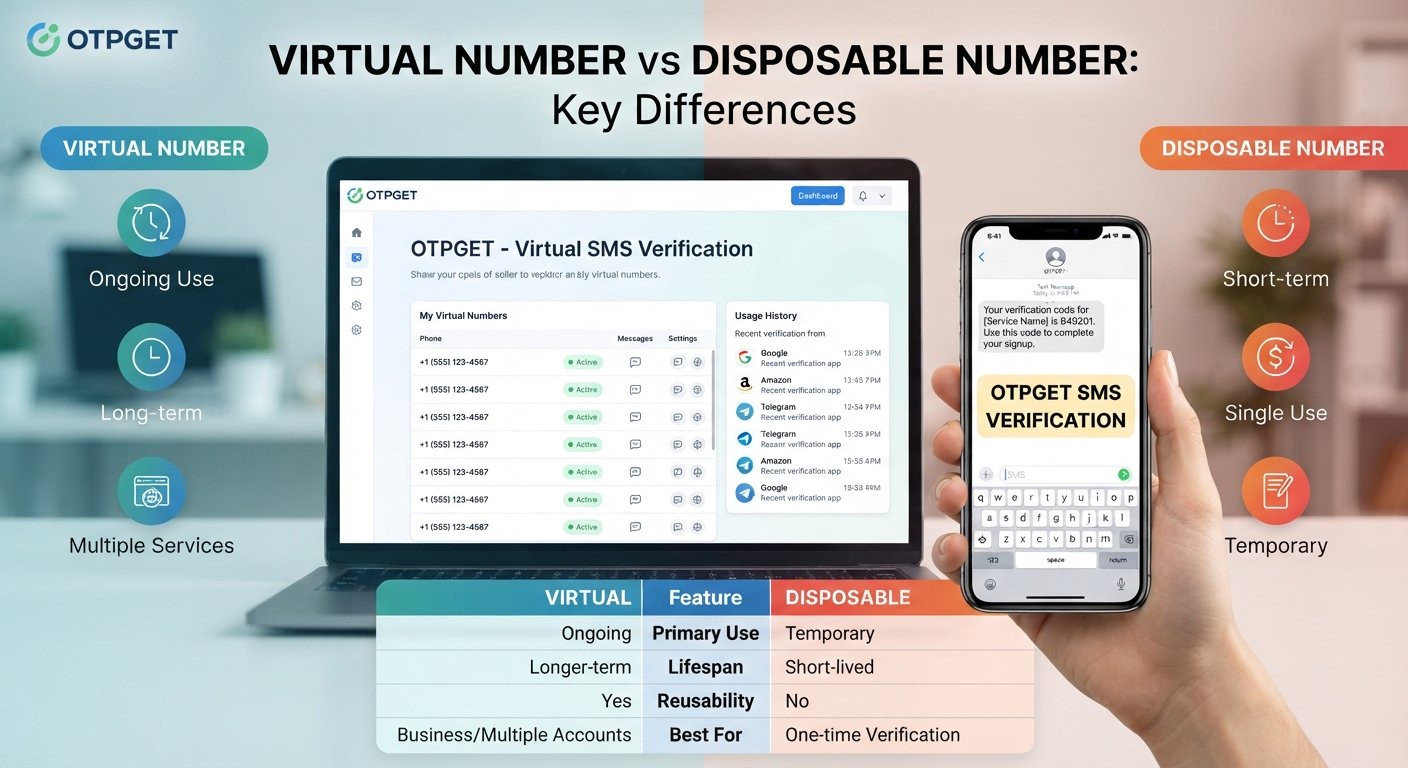
Virtual Number vs Disposable Number: Key Differences
The easiest way to understand the difference is to compare how each option is generally intended to be used.
| Factor | Virtual Number | Disposable Number |
|---|---|---|
| Primary purpose | Ongoing or flexible online communication and verification | Short-term communication or verification |
| Typical lifespan | Can be longer-term, depending on the provider | Usually temporary |
| Reusability | Often intended for repeated use while available | Generally intended for limited or short-term use |
| OTP verification | Can receive OTPs where supported | Can receive temporary verification codes where supported |
| Long-term usefulness | More suitable when continued access matters | Less suitable when ongoing access is required |
| Convenience | Useful for recurring online workflows | Useful for one-off or short-lived needs |
| Privacy considerations | Can separate online activity from a personal number | Can limit the need to share a personal number for a temporary use |
| Best suited to | Ongoing verification, dedicated online communication, business workflows | Genuinely temporary verification or short-term needs |
These are general distinctions rather than universal rules. A provider may offer different types of numbers, and third-party services can have their own policies regarding virtual and temporary numbers.
Virtual Number vs Disposable Number for OTP Verification
When the main goal is OTP verification, the difference between these two types of numbers becomes particularly important.
An OTP, or one-time password, is usually delivered by SMS as part of a verification process. The user needs access to the number receiving the message so they can enter the verification code where requested.
A disposable number may be suitable when the verification is genuinely short-term and there is no need to access that number again.
A virtual number may make more sense when continued access is important. For example, if a legitimate service may require another SMS verification later, having an appropriate number that remains accessible can be more practical than relying on a temporary number.
There are several factors to consider:
-
Number availability: The required type of number may not always be available.
-
Service compatibility: Some websites and apps may not accept virtual or temporary numbers.
-
Access duration: Consider whether you need the number once or potentially again.
-
Verification requirements: Different services use different verification policies.
-
Account recovery: A temporary number may be inappropriate for an account that requires reliable long-term recovery access.
For users looking for a virtual number for OTP or SMS verification, OTPGET provides an option to explore for appropriate verification needs where the relevant service supports virtual numbers.
Why Choose a Virtual Number Instead of a Disposable Number?
The choice ultimately depends on what you need the number to do.
A virtual number may be worth considering when:
-
You may need continued access to the number.
-
You expect to complete verification more than once.
-
You want to keep online verification separate from your personal phone number.
-
You need a dedicated number for a legitimate online workflow.
-
You want a virtual phone number rather than a number intended to disappear after a short period.
A disposable number may be more appropriate when:
-
The need is genuinely temporary.
-
You only require a number for a short-lived interaction.
-
Continued access is unnecessary.
-
The relevant service permits temporary numbers for the intended purpose.
Neither option is automatically appropriate for every situation. The right choice depends on the duration of access you need, the nature of the verification, and the rules of the website or app involved.
How OTPGET Can Help With Virtual Number Verification
For people who specifically need a virtual number for OTP or SMS verification, OTPGET can provide a practical option to explore.
The basic appeal of a virtual-number-based verification workflow is convenience. Instead of relying on a personal mobile number for every online verification request, users can consider a dedicated virtual number when that approach is supported by the service they are using.
OTPGET can be relevant for users who need to receive OTP or SMS verification messages through a virtual number. The suitability of any number depends on the requirements and policies of the particular website, application, or service.
A virtual-number solution can be useful for situations where you:
-
Need to receive an SMS verification code online
-
Prefer to keep certain online verification activity separate from your personal number
-
Need access to a number for an appropriate verification workflow
-
Want an alternative to using a personal mobile number for supported online services
The key is to use the number responsibly. Virtual numbers should be used for legitimate purposes and in accordance with the terms, verification policies, and account requirements of the service involved.
If your needs align with virtual-number-based OTP or SMS verification, exploring OTPGET can be a practical next step.
Virtual Number or Disposable Number: Which One Should You Choose?
Instead of asking which type is universally better, start by asking how long you need access to the number.
Choose a virtual number when:
-
You may need the number again.
-
You want a more reusable online phone number.
-
You have ongoing or repeated verification needs.
-
You want to separate online verification from your personal number.
-
You need a number for an ongoing legitimate workflow.
Choose a disposable number when:
-
Your need is genuinely short-term.
-
You only need to receive a temporary verification message.
-
Long-term access isn't important.
-
The service explicitly permits this type of number.
If continued access is a priority, a virtual number may better match your requirements. If the need is limited to a single short-term interaction, a disposable number may be sufficient.
For users who specifically need a virtual number for SMS OTP verification, OTPGET is worth exploring as a convenient option, subject to the requirements of the service being verified.
Tips for Choosing a Virtual Number for OTP Verification
Choosing an appropriate SMS verification number involves more than simply finding a number that can receive messages. Consider the following before starting a verification process.
1. Check whether virtual numbers are supported
Some services may have specific requirements for phone verification. Check the relevant terms or verification guidance before choosing a number.
2. Consider how long you need access
If you may need the number for future verification or account recovery, a temporary number may not be suitable.
3. Look for clear service information
Choose a virtual number provider that clearly explains what its service provides and how number access works.
4. Think about account security
For important accounts, consider whether you will need reliable long-term access to the verification number. Losing access to a number can create problems if it is required for future authentication or recovery.
5. Protect your verification codes
OTP codes are sensitive. Never share a verification code with someone who shouldn't have access to the account or service.
6. Follow the service's policies
Virtual and temporary numbers aren't automatically accepted everywhere. Use them only where permitted and follow the verification policies of the website or app.
Frequently Asked Questions
1. What is the difference between a virtual number and a disposable number?
A virtual number is generally designed to provide access to a phone number without requiring a traditional SIM-based connection and may be suitable for ongoing use. A disposable number is typically intended for temporary or short-term use.
2. Can a virtual number receive OTP codes?
Yes, a virtual number can receive OTP or SMS verification codes where the relevant service supports virtual numbers and the number is compatible with its verification system.
3. Is a disposable number the same as a temporary phone number?
The terms are often used similarly. Both generally refer to numbers intended for limited or short-term use rather than ongoing access.
4. Which is better for long-term verification?
A virtual number is generally more aligned with long-term verification needs because it can be intended for continued access. However, the actual availability and suitability depend on the provider and the service being verified.
5. Can I use a virtual number for SMS verification?
Yes, virtual numbers can be used for SMS verification where supported. Acceptance varies between websites, applications, and other online services.
6. What should I consider when choosing an OTP verification number?
Consider whether the service accepts virtual numbers, how long you need access, whether future verification may be required, the provider's service information, and the security requirements of the account.
7. How does OTPGET help with virtual number verification?
OTPGET is positioned as a virtual-number and OTP/SMS verification solution for users who need a suitable virtual number for legitimate online verification purposes. Availability and compatibility can vary depending on the service being verified.
Conclusion
The main difference in the virtual number vs disposable number discussion comes down to intended use and access duration.
A virtual number is generally more suitable when you may need continued access, repeated verification, or a dedicated online phone number. A disposable number is typically intended for temporary situations where long-term access isn't necessary.
Before choosing either option, consider the verification requirements of the service, how long you need the number, and whether future account recovery or authentication could depend on it.
If you're looking for a convenient virtual number for OTP or SMS verification, explore OTPGET to see whether its virtual-number solution fits your legitimate verification needs.