Virtual Number vs Physical SIM: Key Differences Explained
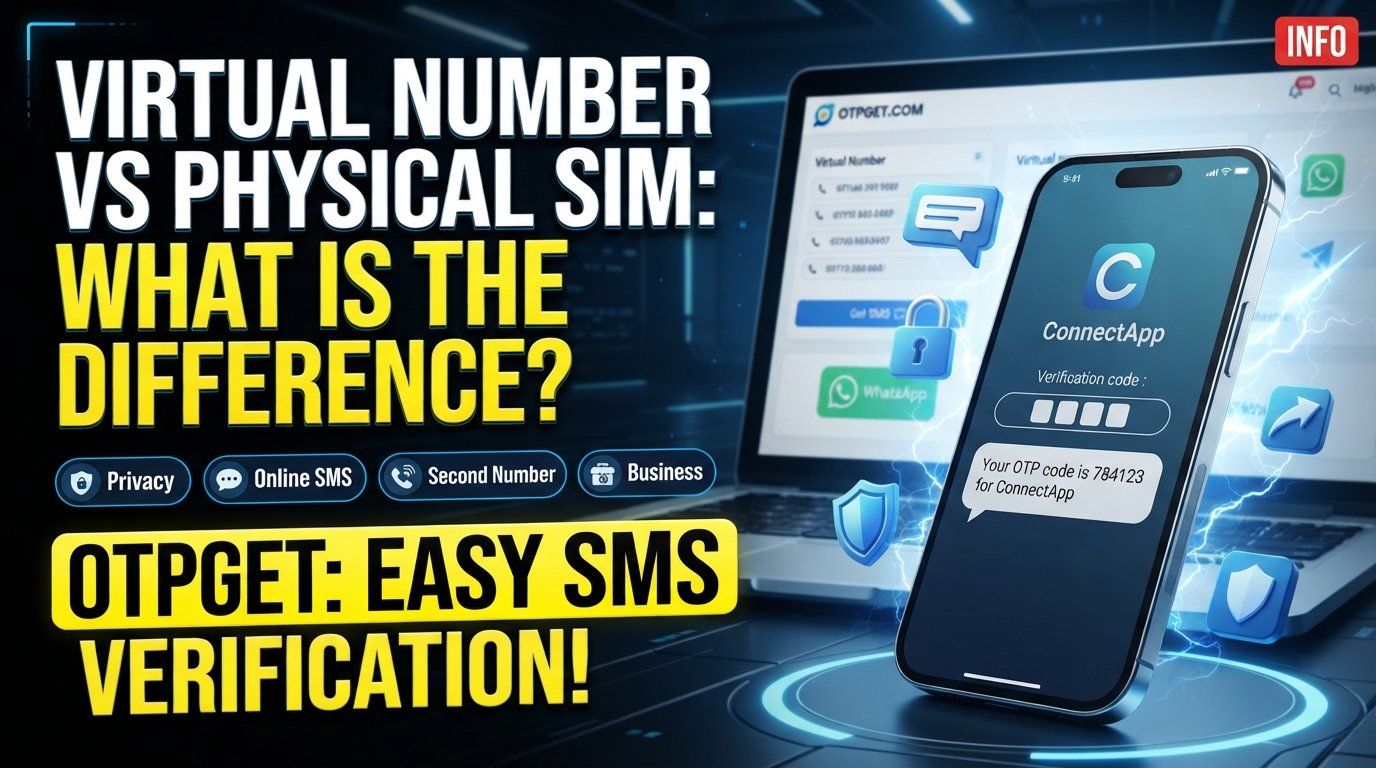
Virtual Number vs Physical SIM: What Is the Difference?
A phone number can be much more than a way to make calls. Many websites and apps use phone numbers for account verification, SMS notifications, two-factor authentication, and one-time passwords (OTPs). Traditionally, getting another number meant buying another physical SIM card. Today, a virtual number can offer another option.
So, what exactly is the difference between a virtual number vs physical SIM?
The main distinction is simple: a physical SIM is a tangible subscriber identity module connected to a mobile carrier, while a virtual phone number can be provided through an online or cloud-based service without requiring you to insert another physical SIM into your phone.
Neither option is right for every situation. A physical SIM can be useful for everyday mobile connectivity, while a virtual number may be convenient when you need a second number, online SMS access, or a number for supported OTP verification use cases.
For people exploring the latter, services such as OTPGET can provide a practical way to access virtual numbers for eligible SMS and verification needs.
What Is a Physical SIM?
A physical SIM card is the small removable card that connects a compatible phone to a mobile network. It contains subscriber information that allows the carrier to associate the device with a mobile service.
Once activated, a physical SIM can support common mobile functions such as:
- Making and receiving calls
- Sending and receiving SMS
- Using cellular data
- Receiving carrier-related notifications
- Using a conventional mobile number for account verification
The major advantage of a physical SIM is that it is part of a traditional cellular service. As long as the phone has network coverage and the account is active, the number can generally be used for normal mobile communications.
There are limitations, too. Getting an additional physical SIM usually involves obtaining another mobile service or number. You may need a compatible device, carrier activation, and potentially another plan or account.
A physical SIM is therefore particularly useful when you need a conventional mobile connection rather than simply an additional number for a specific online purpose.
What Is a Virtual Number?
A virtual phone number is a phone number provided through an online or cloud-based service rather than through a physical SIM installed in your device.
Depending on the provider and service, a virtual number may be used for calls, SMS, business communications, online registrations, or other supported communication and verification purposes.
For example, someone may want a second phone number without carrying another phone or obtaining another physical SIM. A business might also use virtual numbers to separate customer communications from employees' personal numbers.
Virtual numbers can be especially useful for online SMS and verification workflows. Some services allow users to receive a verification code through a supported virtual number rather than their primary personal number.
However, virtual numbers are not interchangeable with physical SIMs in every situation. Compatibility depends on the service provider, number type, country, website, application, and verification system being used.
That distinction is important: a virtual number is a different type of phone-number service, not a universal replacement for cellular service.
Virtual Number vs Physical SIM: Key Differences
The easiest way to understand the distinction is to compare the two options side by side.
| Feature | Virtual Number | Physical SIM |
|---|---|---|
| Physical card required | No | Yes |
| Internet dependence | Often depends on the provider and service | Cellular network is primary |
| Device flexibility | Can offer greater flexibility depending on provider | Usually tied to a SIM-compatible device |
| SMS reception | Available for supported services | Yes, through the carrier |
| OTP verification | Available where accepted | Commonly supported |
| Privacy | Can help separate a primary number from online activity | Primary number may be used directly |
| International accessibility | May be available depending on provider and number | Depends on carrier, roaming, and local service |
| Setup convenience | Often online | Usually requires SIM acquisition and activation |
| Business use | Useful for certain business communication workflows | Useful for conventional mobile communication |
| Temporary use cases | Can be suitable for eligible temporary needs | Usually less convenient for short-term secondary use |
The important point is that these differences describe typical characteristics, not universal rules. Features and availability vary between providers and mobile networks.
How Virtual Numbers Work
Using a virtual number is generally straightforward, although the exact process depends on the service.
A typical workflow looks like this:
- Select an available number.
Choose a virtual number offered for the intended use. - Use the number with an eligible service.
Enter the number where the website or application permits virtual numbers. - Request an OTP or verification SMS.
The service sends a verification code to the number. - Receive the message through the supported virtual-number service.
If the platform accepts the number and the message is supported, the SMS can appear through the service. - Enter the verification code where permitted.
Use the code to complete the relevant verification process.
There is an important limitation here: whether a virtual number is accepted depends on the specific website, app, platform, country, and verification system. Some services may restrict certain number types or reject numbers that they classify as virtual, VoIP, temporary, or previously used.
A reputable OTP receiving service should therefore be viewed as a tool for supported use cases, not as a guarantee of compatibility with every online platform.
Why Do People Use Virtual Numbers?
There are several legitimate reasons someone might want an online phone number instead of using their primary mobile number.
Separating personal and online activity
Using a separate number can help keep a primary personal number away from routine online registrations and communications.
Protecting phone number privacy
Some users simply prefer not to distribute their main number to every service they interact with. A separate number can create a layer of separation between personal communications and online activity.
Maintaining a second number
A virtual mobile number can be useful when you need another number without carrying a second physical SIM or phone.
Business communications
Businesses and independent professionals may use separate phone numbers for customer inquiries, support, marketing, or other work-related communication.
International communication
Depending on availability and provider coverage, an international phone number can sometimes be more convenient for communicating with people or services in another country.
Online verification
Some users need a phone number for verification when registering with an online service. Where virtual numbers are permitted, they may provide a convenient alternative to using a personal number.
Testing and temporary projects
Developers, testers, researchers, or teams may sometimes need additional numbers for legitimate testing or temporary workflows. The appropriate solution depends on the platform's rules and the nature of the project.
OTP Verification and Virtual Numbers
An OTP, or one-time password, is a temporary verification code used to confirm an action or help establish that a person has access to a particular communication channel.
SMS-based OTP verification is common because it provides a relatively simple way for a service to send a code to a phone number.
A typical process is familiar: enter a phone number, request verification, receive an SMS containing a code, and enter that code into the service.
This is where a virtual number for OTP can be useful. Someone may prefer a separate number rather than giving an online service access to their primary personal number.
OTPGET is relevant to this use case because it provides access to virtual numbers for supported SMS and OTP verification needs. The practical benefit is convenience: instead of obtaining another physical SIM solely for an eligible verification workflow, a user can use a virtual-number service where the target platform accepts that type of number.
Compatibility should always be checked before relying on a virtual number. OTPGET should not be understood as a promise that every website, application, or verification system will accept every available number.
Users should also follow the terms and verification policies of the service they are accessing. Verification tools are intended for legitimate account and communication purposes, not for circumventing platform restrictions.
How OTPGET Can Help
For many people, the problem is not that they dislike physical SIM cards. It is that they do not want to obtain another one simply to handle a particular online SMS or verification requirement.
A physical SIM can mean another card, another activation process, and potentially another mobile service. For a user who only needs a separate number for an eligible online task, that can feel unnecessary.
OTPGET offers a practical virtual-number alternative for supported use cases.
Instead of relying on an additional physical SIM, users can access a virtual number through an online service and use it for supported SMS or OTP workflows. This can be helpful for people who want to:
- Keep their primary number separate from online activity
- Access a virtual number conveniently
- Reduce the need for an additional physical SIM
- Receive SMS or verification codes where supported
- Maintain a separate number for legitimate online use
- Handle eligible verification tasks through an online service
The key word is supported. Number availability, SMS delivery, and platform acceptance can vary. Before using any virtual number, confirm that the service you are registering with permits it.
Virtual Number vs Physical SIM: Which One Should You Choose?
The right choice depends on what you actually need the number to do.
A Physical SIM may suit you if:
- You need regular cellular connectivity
- You frequently make traditional phone calls
- You need mobile data through a carrier
- You want a conventional carrier-provided mobile number
- You rely on dependable cellular service as part of everyday phone use
A Virtual Number may suit you if:
- You need a separate number
- You want to keep your primary number private
- You need online SMS or OTP functionality where supported
- You want an alternative to obtaining another physical SIM
- You have a legitimate temporary or secondary-number use case
- You need a number for certain online or business workflows
OTPGET fits on the virtual-number side of this decision, particularly for users looking for supported SMS and OTP verification use cases.
The important thing is to start with your requirements. If you need full mobile connectivity, a traditional SIM-based service may be more appropriate. If you primarily need an additional number for an eligible online workflow, a virtual number may be more convenient.
Are Virtual Numbers Safe and Private?
A virtual number can provide useful privacy benefits, but it should not be treated as a guarantee of anonymity or complete security.
The biggest privacy advantage is separation. Instead of giving your primary number to every online service, you can use a separate number where appropriate.
There are also risks to consider.
First, not every virtual-number service operates in the same way. Users should choose reputable providers and understand how the service handles numbers and messages.
Second, publicly shared or recycled numbers can create privacy concerns. If multiple people can access the same number or messages, it may be unsuitable for sensitive accounts.
Third, never share an OTP or verification code with another person. A verification code can provide access to an account or authorize an action, depending on the service.
For highly sensitive accounts, users should also consider stronger authentication methods where available, such as authenticator applications or security keys.
Finally, always review the platform's rules. Some services may restrict virtual, temporary, or certain types of phone numbers for account verification.
Common Questions About Virtual Numbers
What is a virtual phone number?
A virtual phone number is a number provided through an online or cloud-based service rather than through a physical SIM installed in a phone. Depending on the provider, it may support SMS, calls, or specific communication workflows.
What is the difference between a virtual number and a physical SIM?
A physical SIM is a tangible subscriber card used with a mobile carrier. A virtual number is generally provided through an online service and does not require a physical SIM card in your device.
Can a virtual number receive SMS?
Yes, some virtual-number services support SMS reception. Availability depends on the provider, number, country, and type of message being sent.
Can I receive OTP codes with a virtual number?
You may be able to receive OTP codes with a virtual number when both the virtual-number service and the target platform support the relevant SMS verification workflow. Acceptance is not universal.
Is a virtual number suitable for business use?
It can be suitable for certain business communications, particularly when a company or individual wants to separate work-related communication from a personal number. The appropriate setup depends on business requirements.
Can I use a virtual number internationally?
International availability varies by provider and number type. Some services offer numbers associated with different countries, but users should check availability and the rules of the target platform.
Is a virtual number private?
A virtual number can help protect your primary phone number by keeping it separate from certain online activities. However, it does not automatically make communications anonymous or completely secure.
Can every website accept virtual numbers?
No. Websites and apps can have different verification policies. Some accept virtual numbers, while others may restrict or reject particular number types.
What is OTPGET?
OTPGET is a virtual-number service that can be used for supported SMS and OTP verification needs. It can be an alternative for users who want a separate number without obtaining another physical SIM.
When should I choose a virtual number instead of a physical SIM?
Consider a virtual number when you primarily need a separate number for supported online, SMS, OTP, privacy, or secondary-number use cases. A physical SIM may be more appropriate when you need conventional mobile connectivity, cellular data, and regular carrier-based calling.
Final Thoughts
The fundamental difference in virtual number vs physical SIM comes down to how the number is provided and used. A physical SIM connects your phone to a traditional mobile carrier, while a virtual number can provide access to a separate phone number through an online service.
A physical SIM remains useful for everyday cellular communication, while a virtual number can offer convenience for secondary numbers, online SMS, privacy-conscious workflows, business communication, and supported OTP verification.
For users who specifically need a virtual number for eligible SMS or verification purposes, OTPGET provides a practical option to explore without automatically committing to another physical SIM.
As with any verification method, compatibility and availability depend on the platform and service involved. If a virtual number fits your needs and is permitted by the service you're using, exploring OTPGET can be a convenient next step.
INTERNAL LINK ANCHOR SUGGESTIONS
- How to receive OTP online
- What is a virtual phone number?
- Best uses of virtual numbers
- SMS verification explained
- How virtual numbers protect privacy