Virtual Numbers: Protect Your Personal Number Online with Ease
How Virtual Numbers Can Help Protect Your Personal Number
11. Full Blog Article
When a website asks for your phone number, the request can feel surprisingly personal. You may only want to create an account, try an app, join an online community, or access a service, yet suddenly you are being asked to hand over a number you normally reserve for friends, family, work, and important accounts.
That hesitation is understandable. Your primary number can become part of many online records once you share it. A practical alternative is to use a virtual number when the service allows it.
Virtual numbers create a layer between your personal contact details and certain online activities. Instead of using your everyday number for every registration that requires phone verification, you can use a separate number intended for supported online verification purposes.
Services such as OTPGET can make this approach practical by providing virtual numbers that users can explore for SMS and OTP verification needs. The key is understanding when this approach makes sense, what it can and cannot protect, and how to use it responsibly.
What Is a Virtual Number?
A virtual phone number is a phone number that is not necessarily tied to a traditional physical SIM card in the same way as your everyday mobile number.
For an everyday user, the important distinction is simple: a virtual number can give you another number to use for certain online activities without requiring you to give a website your primary personal number.
Depending on the service and its intended use, a virtual number may be used to receive SMS messages, including a verification code sent during registration.
This makes virtual numbers useful for situations involving SMS verification, online registration, and other forms of phone verification.
A virtual number is not automatically anonymous, nor does it guarantee complete privacy or security. Its main privacy benefit is more straightforward: it can help you avoid sharing your personal number when a separate number is suitable and permitted.
Why Protect Your Personal Phone Number?
Your phone number is a piece of personal information. You may use it for banking, messaging, two-factor authentication, delivery services, professional communication, and contact with people you know.
That makes it reasonable to think carefully before entering it into every website or app.
Some practical reasons to protect your phone number include:
- Avoiding unnecessary exposure: Not every website needs access to your primary contact number.
- Reducing unwanted communication: A separate number can help keep online registrations separate from personal conversations.
- Keeping activities separate: You may prefer one number for personal communication and another for selected online services.
- Limiting where your number is stored: Using a separate number can reduce the number of unfamiliar services that have your primary contact information.
- Improving control over your information: You can make a more deliberate decision about which services receive your personal number.
This is primarily a privacy and information-management strategy. It should not be confused with a guarantee that an account or service is completely secure.
How Virtual Numbers Can Help Protect a Personal Number
Virtual numbers can provide a practical layer of separation between your everyday phone number and certain online activities.
1. Keep Your Primary Number Private
The most obvious benefit is simple: you do not have to provide your personal number every time a website requests one.
When a virtual number is appropriate and accepted, it can serve as the number used for that particular verification process.
2. Create a Separate Number for Online Services
A virtual number can function like a second phone number for selected online activities.
This separation can make it easier to distinguish personal communications from registrations, online platforms, and services that require SMS verification.
3. Receive SMS Verification Codes
Many online services use a one-time code as part of their registration process.
Where supported, a virtual SMS number can allow you to receive SMS online and access the verification code needed to continue the registration.
The exact experience depends on the virtual-number provider and the website requesting verification.
4. Reduce Unnecessary Sharing
Instead of automatically entering your personal number whenever you see a phone-number field, you can consider whether a virtual number is appropriate.
This encourages a more selective approach to sharing personal information online.
5. Make Online Registrations More Manageable
If you frequently test legitimate services, join communities, register for platforms, or use websites that require phone verification, a separate number can make the process more convenient.
It gives you another option when you would rather avoid sharing your personal phone number online.
6. Add a Privacy Layer Without Replacing Other Security Measures
A virtual number can help with phone number privacy, but it does not replace strong passwords, multi-factor authentication, account recovery options, or other security practices.
Think of it as one privacy tool rather than a complete security solution.
When Might a Virtual Number Be Useful?
There are many ordinary situations where a virtual number may be useful, provided the website or service permits its use.
Website Registration
Some websites request a phone number during account creation. If you do not want to provide your primary number, an appropriate virtual number may offer an alternative.
App Registration
Mobile and web applications sometimes use SMS verification during sign-up. A virtual number can be useful when the app accepts that type of number.
Online Platforms and Communities
Forums, communities, and other platforms may request phone verification before allowing registration or certain features.
Trial and Subscription Services
Some legitimate trial or subscription services may request a phone number during registration. A virtual number can help keep selected online activities separate from your personal contact information.
Other SMS Verification Requirements
Whenever a service legitimately requires a verification code and permits virtual numbers, an online number for verification can be worth considering.
However, a virtual number should never be used to bypass a platform's identity requirements, fraud controls, usage restrictions, or other legitimate rules.
How OTPGET Can Help With Virtual Number Verification
For users who want a practical way to separate their personal number from supported online verification activities, OTPGET is a service worth exploring.
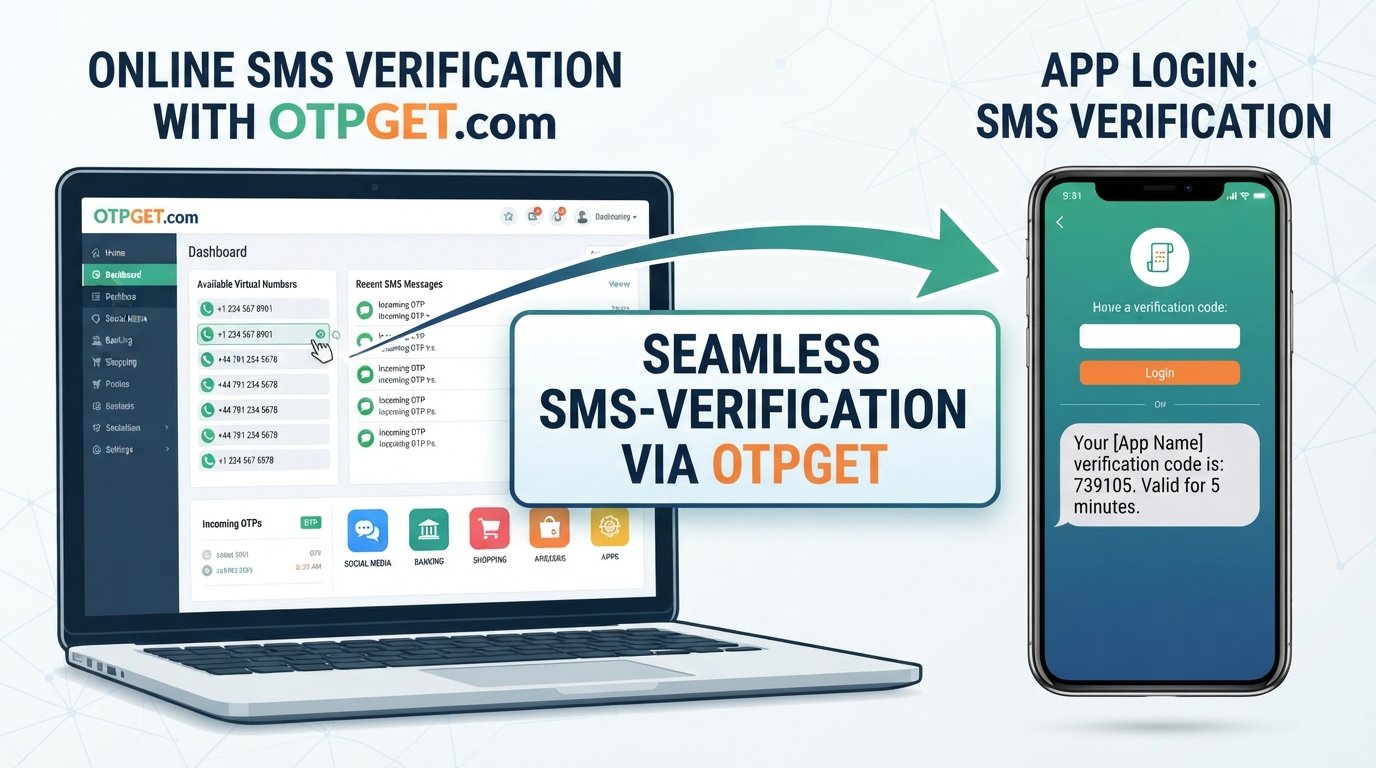
OTPGET provides access to virtual numbers intended for online verification use cases. Depending on the applicable service and number availability, users can use an OTPGET virtual number when a website or app requests SMS or OTP verification.
The basic idea is straightforward: instead of immediately entering your personal phone number, you can consider whether an OTPGET number is suitable for the registration and permitted by the service you are using.
For example, someone creating an account on a legitimate online platform may prefer to keep their primary number private. If that platform accepts the type of virtual number being used, OTPGET can provide a practical route for handling the SMS or OTP portion of the registration.
The important point is to check the rules of the website or app first. Not every service accepts virtual, temporary, or VoIP numbers, and some accounts may require additional identity verification.
In other words, OTPGET for SMS verification is best viewed as a practical option for supported use cases—not as a way around legitimate platform requirements.
How to Use a Virtual Number for Verification
The process is generally straightforward, although the exact steps can vary by provider and platform.
- Choose a suitable virtual number. Select a number appropriate for the online verification task you need to complete.
- Enter the number where permitted. Use the virtual number in the website or app's phone-verification field.
- Request the verification code. Ask the platform to send its SMS or OTP code.
- Receive the SMS. Access the incoming verification message through the applicable virtual-number service.
- Enter the verification code. Submit the SMS code on the website or application.
- Complete registration according to the platform's rules. Follow any additional verification or account requirements.
With OTPGET, the exact interface and process should be checked through the service itself rather than assumed from how another virtual number provider works.
What to Consider Before Using a Virtual Number
Virtual numbers are useful, but they are not suitable for every situation.
Before choosing one, consider the following:
- Some services may reject virtual numbers. A website can decide which number types it accepts.
- Temporary or VoIP numbers may be restricted. Certain platforms have policies that limit their use.
- Number availability can vary. A suitable number may not always be available for every verification need.
- Read the platform's terms. Make sure using a virtual number is permitted for the registration you are completing.
- Some accounts require stronger verification. A phone number may only be one part of a broader identity-checking process.
- Do not treat a virtual number as complete account security. Strong passwords, multi-factor authentication, and sensible privacy practices still matter.
A virtual number is most useful when you treat it as a privacy and convenience tool rather than a universal solution.
Virtual Number vs. Personal Number
A personal number and a virtual number serve different purposes. The right choice depends on what you are trying to accomplish.
| Consideration | Personal Number | Virtual Number |
|---|---|---|
| Privacy | More directly connected to you | Can provide separation for selected online activities |
| Online registrations | Suitable when you are comfortable sharing it | Useful when accepted and you prefer not to share your primary number |
| SMS verification | Commonly supported | May support verification depending on the service |
| Personal communications | Ideal for everyday contacts | Better suited to selected online use cases |
| Separation of activities | Limited separation | Can create a separate online-verification layer |
| Convenience | Always available on your device | Convenient for supported online verification |
| Typical use case | Friends, family, work, important accounts | Selected registrations and permitted verification tasks |
Neither option is universally better. Your personal number remains important for personal communications and accounts that genuinely need it. A virtual number simply gives you another option for appropriate online situations.
Virtual Numbers and Online Privacy
Protecting your phone number is one small part of broader online privacy.
The less often you share personal information unnecessarily, the more control you can maintain over where that information is stored and used. A virtual number can support that approach by reducing the occasions when you need to provide your primary number.
Other sensible privacy habits include:
- Use unique, strong passwords for important accounts.
- Enable multi-factor authentication where supported.
- Review app permissions regularly.
- Avoid providing personal information that a service does not reasonably need.
- Check privacy and communication settings on websites and apps.
- Be selective about where you publish your phone number.
- Keep recovery information for important accounts up to date.
These habits work together. A virtual number can help with phone number privacy, but it should not be presented as a complete privacy or security solution.
Frequently Asked Questions
What is a virtual phone number?
A virtual phone number is a number that can be provided through an online service rather than being used solely through a traditional physical mobile SIM. Depending on the service, it may support functions such as receiving SMS messages and verification codes for permitted online activities.
Can a virtual number receive SMS verification codes?
Some virtual numbers can receive SMS messages, including verification codes, when the relevant service supports that use. Whether a particular number works depends on the virtual-number provider, the number's availability, and the policies of the website or app requesting verification.
How can a virtual number protect my personal number?
A virtual number can reduce the need to share your primary number with every website or app that requests phone verification. By using a separate number for supported online activities, you can create more separation between your personal communications and selected online registrations.
Can I use a virtual number for online verification?
Yes, virtual numbers can be used for certain online verification processes when the website or app accepts them. Always check the platform's requirements first, because some services restrict temporary, virtual, or VoIP numbers.
Is a virtual number the same as a temporary phone number?
Not necessarily. “Virtual number” describes how the number is provided, while “temporary number” usually refers to a number intended for short-term use. Some virtual numbers may be temporary, while others may be designed for different purposes.
Are virtual numbers accepted by every website?
No. Websites and apps can have different verification policies. Some accept virtual numbers, while others may restrict them or require a traditional mobile number. You should check the relevant service's rules before attempting verification.
How does OTPGET help with SMS verification?
OTPGET provides virtual numbers that users can explore for supported SMS and OTP verification needs. When a website permits the use of a suitable virtual number, OTPGET can help separate that verification activity from your primary personal phone number.
Should I use my personal number for every online registration?
Not necessarily. It depends on the service, its requirements, and your privacy preferences. For registrations where a virtual number is permitted and appropriate, using one can reduce unnecessary sharing of your primary number while still allowing you to complete supported verification steps.
Conclusion
Your personal phone number is more than a simple contact detail. It can connect you to people you know, important accounts, and everyday services, so it makes sense to be selective about where you share it.
Virtual numbers offer a practical way to create separation between your personal number and certain online verification activities. They can help you receive SMS codes, manage selected registrations, and reduce unnecessary exposure of your primary contact information.
At the same time, a virtual number is not a guarantee of complete privacy or security. You still need strong account practices and should follow the rules of every service you use.
If you regularly need to verify online accounts without sharing your primary number, explore OTPGET and see how its virtual numbers can support legitimate, permitted SMS and OTP verification needs.
12. Suggested Internal Link Anchors
- Virtual numbers for SMS verification
- How OTP verification works
- Online privacy tips
- Temporary phone numbers explained
- How to receive SMS online