Benefits of Virtual Phone Numbers for Online Services | OTPGET
Benefits of Using Virtual Phone Numbers for Online Services
Sharing your personal phone number online can feel like a small step, but it can create a surprisingly large digital footprint. From account registrations and verification messages to business platforms and temporary projects, many online services ask for a number before you can continue.
That raises a practical question: Do you always need to use your personal mobile number?
A virtual phone number can provide an alternative. Depending on the service and its terms, a virtual number can be used for online communication, account verification, and receiving SMS messages without relying on your primary personal number.
For people who regularly encounter SMS or OTP verification, a solution such as OTPGET can make the process more convenient. The key is understanding what virtual numbers actually do, where they are useful, and what limitations users should consider.
What Is a Virtual Phone Number?
A virtual phone number is a phone number that is not necessarily tied directly to a traditional physical SIM card in the way a conventional mobile number is. It can be provided through internet-based communication infrastructure and used for supported calling or messaging purposes.
For online services, the important distinction is that a virtual number gives users an additional phone-number identity without requiring them to use their primary personal number every time.
A virtual phone number may be useful for receiving SMS, completing supported verification processes, maintaining separate communication channels, or managing specific online activities.
The exact capabilities depend on the provider and the service where the number is being used.
What Are Virtual Phone Numbers Used For?
Virtual phone numbers can be used for legitimate activities such as online account verification, temporary projects, business communication, testing services, and privacy-conscious registrations where virtual numbers are permitted.
They are particularly relevant when a website or application requires phone number verification but the user prefers not to provide a personal number unnecessarily.
How Do Virtual Phone Numbers Work?
The basic process is straightforward:
- Select a virtual number: Choose a number offered by a virtual phone number provider for your intended purpose.
- Enter the number: Provide it to the online service when phone verification is required and virtual numbers are accepted.
- Receive the message: If the service supports the number and sends an SMS, the verification message or OTP can be received through the provider.
- Complete verification: Enter the received verification code into the relevant online service.
- Manage the number: Continue using or managing the number according to the provider's terms and the requirements of the online service.
Not every platform accepts every type of virtual number. Some services restrict virtual, VoIP, temporary, or shared numbers. That makes compatibility one of the most important factors to check before relying on a number for account verification.
Key Benefits of Using Virtual Phone Numbers for Online Services
1. Better Privacy
One of the clearest advantages is reducing unnecessary exposure of your personal phone number.
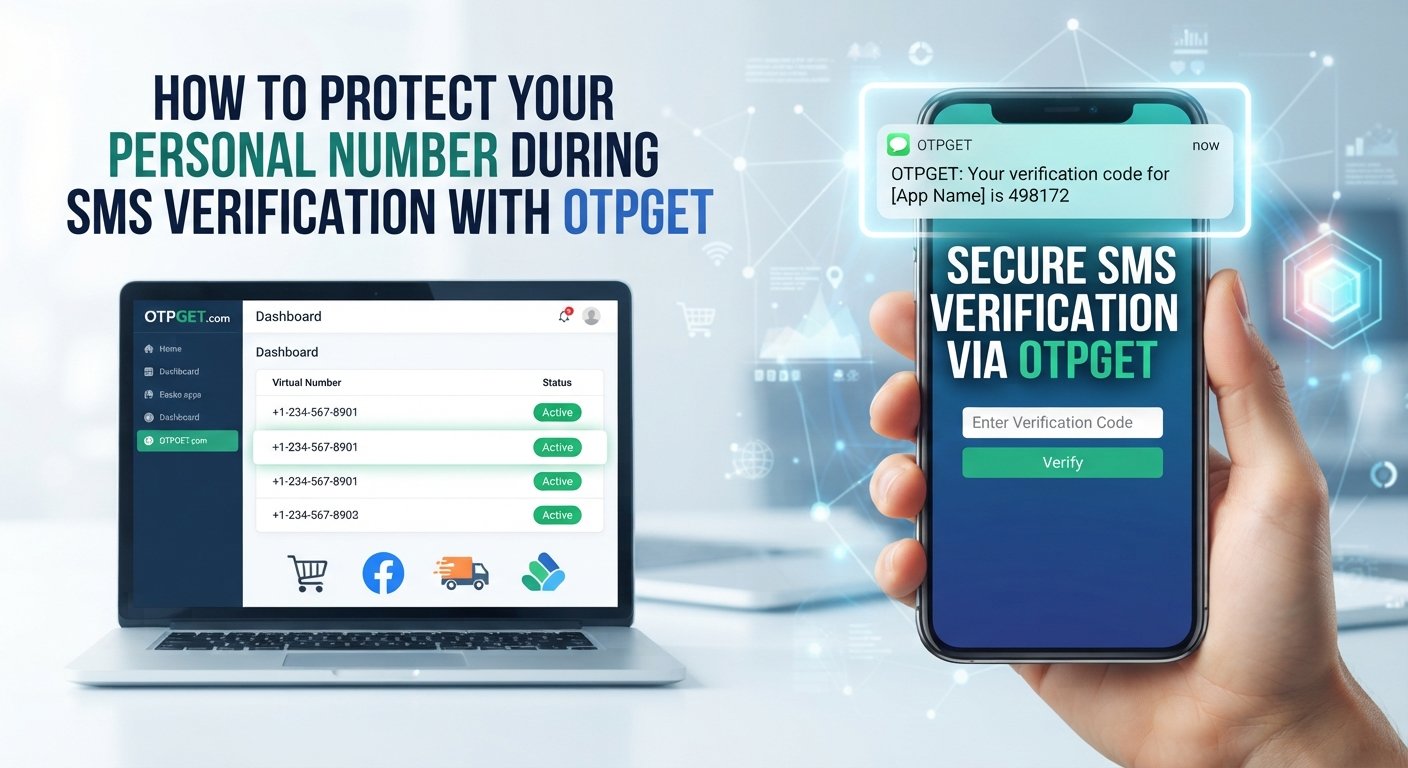
When an online service only needs a number for a supported verification process, using a separate virtual number can help keep your primary contact information away from that particular registration.
This does not make a user anonymous or eliminate all privacy risks. However, separating phone numbers can be a useful part of a broader online privacy strategy.
For privacy-conscious users, the distinction is simple: not every online service needs to have access to the same personal contact number.
2. Convenient SMS and OTP Verification
Many online platforms use SMS verification to confirm that a user has access to a particular phone number. A virtual number that supports SMS reception can provide a practical alternative for supported services.
This can be especially useful when dealing with verification codes, OTP messages, or registrations where users prefer a separate number.
The important qualification is compatibility. A virtual number may receive SMS successfully from one platform while another platform may reject it or fail to deliver a message.
3. Separation Between Personal and Online Accounts
Using a second phone number can create a useful boundary between personal communication and online services.
For example, someone might prefer to keep their primary number for friends, family, and important contacts while using another number for permitted online registrations or specific digital activities.
This separation can also make it easier to identify which services have been given access to a particular contact number.
4. Easier Management of Multiple Online Services
People who regularly manage several legitimate online accounts may find separate numbers easier to organize.
A virtual number can serve a particular project, registration workflow, or business-related purpose, depending on the provider's terms and the requirements of the platform involved.
Instead of treating one personal phone number as the universal contact point for every online activity, users can create clearer boundaries between different parts of their digital life.
5. Useful for Business and Professional Activities
Virtual phone numbers are not limited to individual users.
Businesses and independent professionals may use separate numbers for work-related communication, customer interactions, online services, or specific operational needs.
A business virtual phone number can help distinguish professional communication from personal communication. The right setup depends on whether the business needs SMS, calls, verification, customer support, or another specific capability.
6. Greater Control Over Your Online Contact Information
Your phone number is a piece of personal contact information. Giving it to every website, application, marketplace, or service can make it difficult to maintain clear control over where that information is being used.
A separate virtual number provides another option.
Rather than automatically sharing a primary personal number, users can consider whether an alternative number is more appropriate for a particular online service.
Virtual Phone Numbers vs. Traditional Phone Numbers
| Aspect | Virtual Phone Number | Traditional Mobile Number |
|---|---|---|
| Privacy | Can help separate online activity from a primary number | Often directly associated with personal communication |
| Flexibility | Useful for certain online and communication scenarios | Generally tied to a mobile carrier and SIM |
| Online accessibility | May be managed through an internet-based service | Usually accessed through a physical mobile device/SIM |
| Verification | Can support SMS verification where accepted | Widely used for standard phone verification |
| Personal/business separation | Can provide an additional communication channel | Often serves as the primary personal number |
| Convenience | Useful for specific digital workflows | Familiar and broadly supported |
Neither option is universally appropriate. A traditional mobile number may be necessary for certain services, while a virtual number can be more practical for specific online needs.
Why OTPGET Can Be a Practical Solution
For users specifically looking for virtual phone numbers for online services, OTPGET can be considered as a practical solution for virtual number and SMS/OTP verification needs where supported.
The appeal is straightforward: instead of repeatedly exposing a personal phone number during online registrations or supported verification workflows, users can consider an alternative virtual number.
OTPGET fits naturally into scenarios where someone needs a virtual phone number for an online service and wants to keep their primary number separate.
It can also be relevant to people who regularly encounter SMS verification and want a dedicated approach to managing those verification needs.
The important point is to use the service appropriately. A virtual number should not be treated as a way to bypass platform rules, evade identity requirements, or violate the terms of an online service. Compatibility and permitted use ultimately depend on the individual platform.
For users who have legitimate online verification requirements, OTPGET provides an option worth exploring as part of a more organized approach to virtual phone number use.
What Should You Consider When Choosing a Virtual Phone Number Service?
Choosing a virtual number provider involves more than finding an available number. Consider the following factors before using a service:
Number Availability
Make sure the provider has a number appropriate for your intended use and, where relevant, the region or country required by the online platform.
SMS Reception
If your primary goal is SMS verification, confirm that the service supports SMS reception for the type of number you are considering.
Reliability
Verification workflows are time-sensitive. Look for clear information about how the service handles incoming messages and number availability.
Privacy Considerations
Review how the provider handles account information, phone numbers, messages, and other data. A virtual number can support privacy, but the provider itself still matters.
Service Compatibility
Check whether the specific website or application accepts virtual numbers. This is particularly important for account verification because some platforms restrict certain number types.
Pricing Transparency
Understand what you are paying for and whether costs apply to the number, messages, duration of use, or other services.
Terms of Use
Always review both the provider's terms and the online platform's rules. Legitimate use should remain within those requirements.
Customer Support
If verification does not work as expected, accessible support can make troubleshooting considerably easier.
Common Use Cases for Virtual Phone Numbers
Virtual phone numbers can have a range of legitimate applications, including:
- Online account verification: Using an alternative number where the platform permits it.
- SMS verification: Receiving verification codes through a supported SMS-enabled virtual number.
- Testing online services: Developers, businesses, and testers may need separate numbers for permitted testing workflows.
- Business communication: Maintaining a work-related number separately from personal communications.
- Privacy-conscious online activities: Reducing unnecessary sharing of a primary personal number.
- Temporary projects: Using a separate communication channel for a limited-purpose project where appropriate.
- Online registrations: Managing permitted registrations without automatically using a primary personal number.
The suitability of each use case depends on the provider and the rules of the service involved.
Are Virtual Phone Numbers Safe to Use?
Virtual phone numbers can offer privacy and organizational benefits, but they are not automatically risk-free.
The provider you choose matters. Users should consider privacy practices, account security, number ownership, message handling, and the possibility of shared or publicly accessible numbers.
Shared or temporary numbers can also create account-recovery concerns. If an account remains tied to a number that another person can later access, recovering that account may become difficult or create security problems.
For important accounts, users should follow the platform's recommended security options and consider stronger authentication methods when available.
It is also important to remember that a virtual number does not make every online activity private or secure. Good digital security still involves strong passwords, appropriate authentication methods, careful sharing of personal information, and compliance with platform policies.
Final Thoughts
The main benefits of virtual phone numbers come down to flexibility, privacy, convenience, and separation.
A virtual number can reduce the need to share a primary personal phone number with every online service, while also providing a practical option for SMS verification and OTP verification where supported.
The right choice depends on the intended use. Users should check platform compatibility, privacy practices, number availability, SMS support, pricing, and terms before choosing a provider.
For people who regularly need virtual numbers for online services, OTPGET is one practical solution to explore for virtual phone number and SMS/OTP verification needs where supported.
Rather than treating a virtual number as a universal replacement for a personal mobile number, think of it as an additional tool for managing online communication and verification more deliberately.
FAQ
1. What is a virtual phone number?
A virtual phone number is a number provided through internet-based communication infrastructure rather than necessarily being tied directly to a traditional physical SIM. Depending on the provider, it can support communication or SMS reception for specific online purposes, including verification where the relevant service accepts virtual numbers.
2. How do virtual phone numbers work?
A user selects an available virtual number and enters it into a supported online service. If that service sends an SMS verification code and accepts the number type, the message can be received through the virtual number provider. The user then enters the verification code to complete the relevant process.
3. Can I receive OTPs with a virtual phone number?
Some virtual phone numbers support receiving OTPs and SMS verification messages. However, this depends on the number, provider, and online platform. Some websites and applications restrict virtual or VoIP numbers, so users should verify compatibility before depending on a virtual number for account verification.
4. Why use a virtual number for online services?
A virtual number can help reduce unnecessary exposure of a personal phone number, separate online activities from personal communication, and provide a dedicated option for supported SMS verification. It can also be useful for temporary projects, professional activities, and permitted online registrations.
5. Are virtual phone numbers safe?
Virtual phone numbers can provide privacy benefits, but safety depends on how the number and provider are used. Users should consider provider trust, account security, privacy practices, and whether numbers are shared. Important accounts may require additional security measures beyond phone-based verification.
6. Can a virtual phone number protect my personal number?
A virtual phone number can help reduce how often you need to share your primary personal number with online services. It does not completely protect personal information or guarantee privacy. Other information may still be collected by websites and applications, so broader privacy practices remain important.
7. Do all websites accept virtual phone numbers?
No. Acceptance depends on the individual website or application. Some services accept certain virtual numbers, while others restrict them or require a traditional mobile number. Always check the specific platform's requirements before selecting a number for phone verification.
8. Why consider OTPGET for virtual phone numbers?
OTPGET can be considered by users who need a practical virtual phone number solution for online services, particularly for SMS or OTP verification needs where supported. Users should still confirm that their intended platform accepts the relevant number type and follow all applicable service terms.
INTERNAL LINK SUGGESTIONS
- Anchor Text: Virtual Phone Numbers
Suggested Destination:/virtual-phone-numbers/
Why It Should Be Linked: Provides a natural pathway for readers who want a broader explanation of virtual numbers and their applications. - Anchor Text: SMS Verification
Suggested Destination:/sms-verification/
Why It Should Be Linked: Expands on how SMS-based verification works and why online services use it. - Anchor Text: OTP Verification
Suggested Destination:/otp-verification/
Why It Should Be Linked: Helps readers understand OTPs, verification codes, and common verification workflows. - Anchor Text: Online Privacy
Suggested Destination:/online-privacy/
Why It Should Be Linked: Supports the article's discussion of limiting unnecessary exposure of personal contact information. - Anchor Text: Virtual Numbers for Verification
Suggested Destination:/virtual-numbers-for-verification/
Why It Should Be Linked: Targets readers specifically interested in using virtual numbers for supported verification purposes. - Anchor Text: Receive SMS Online
Suggested Destination:/receive-sms-online/
Why It Should Be Linked: Connects users seeking practical information about receiving SMS messages through online services. - Anchor Text: About OTPGET
Suggested Destination:/about-otpget/
Why It Should Be Linked: Gives readers a dedicated place to learn more about the brand and its virtual number solution.
FINAL SEO CHECK
- Word count: Approximately 1,600 words for the article and FAQ content.
- SEO title character count: 62 characters.
- Meta description character count: Exactly 160 characters.
- Primary keyword included: Yes, naturally used throughout the package and article.
- Secondary keywords included: Yes, including SMS verification, OTP verification, online privacy, virtual number, second phone number, and related variations.
- OTPGET highlighted: Yes, with a dedicated solution-focused section and natural references.
- No year mentioned: Confirmed.
- FAQ included: Yes, 8 questions with practical answers.
- Internal-link suggestions included: Yes, 7 suggested opportunities with placeholder destinations.
- Unsupported OTPGET claims: Avoided.
- Fake statistics, testimonials, certifications, awards, and guarantees: None included.
- Keyword stuffing: Avoided.
- Search intent: Covers informational, practical, verification, privacy, comparison, and solution-oriented intent.
- Featured-snippet opportunities: Concise explanatory passages and FAQ answers are included.
- Evergreen positioning: No time-specific references are used.