Real vs Virtual Number: Key Differences & OtpGet Guide Explained
Introduction
A phone number is no longer used only for making calls. Today, it plays an important role in online registrations, OTP verification, account security, and digital communication. Almost every online platform asks users to verify their identity through SMS codes, making phone number privacy and security more important than ever.
But many users face a common question: should they use their personal phone number for every online service, or choose a virtual number instead?
Understanding the difference between real and virtual number options can help you make smarter decisions about privacy, security, and convenience. A real number is connected to a physical SIM card, while a virtual number works through online technology and can often receive messages without being tied directly to a traditional mobile connection.
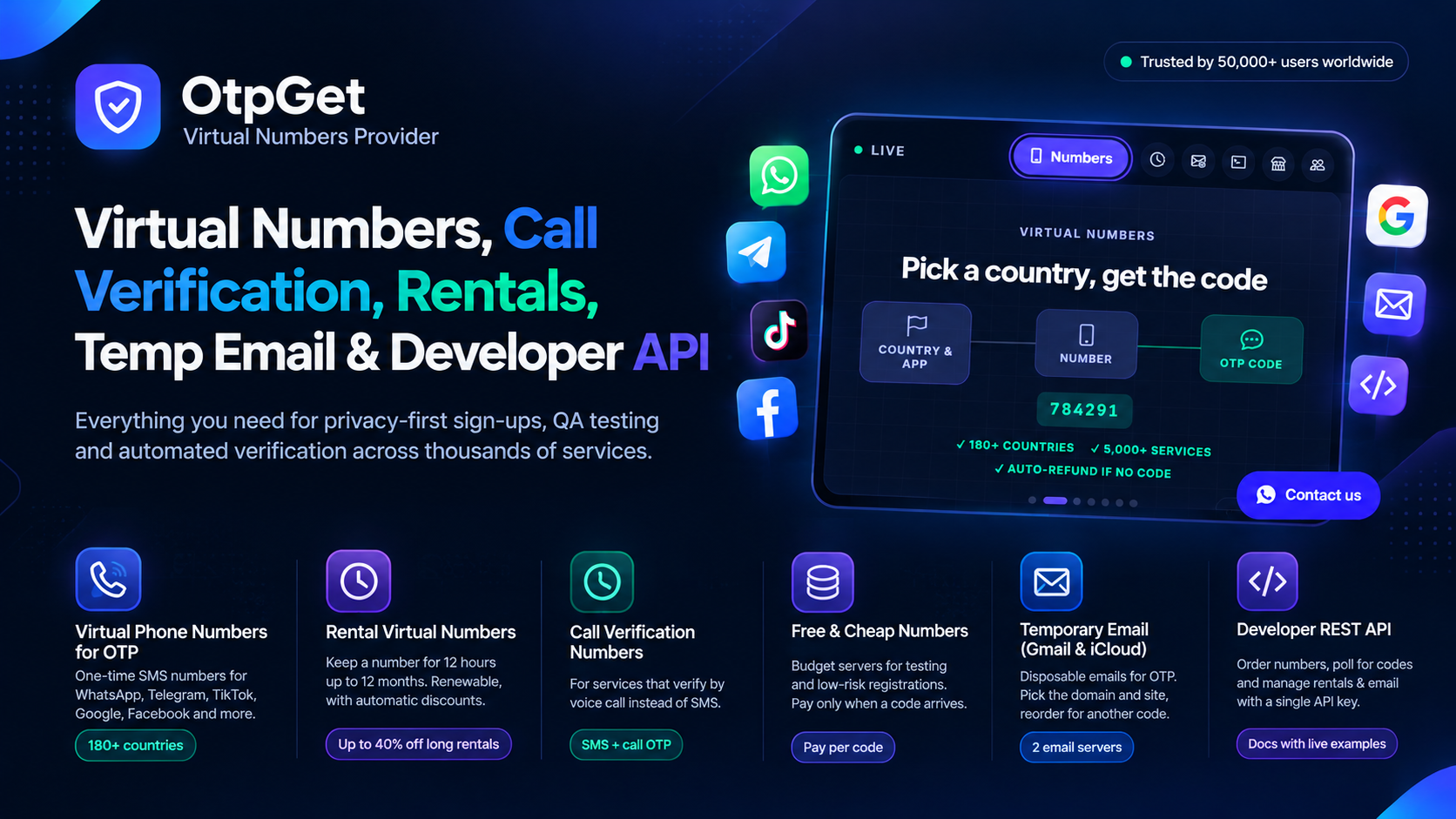
For users who need a reliable way to receive OTP messages, complete online registrations, or keep their personal number private, services like OtpGet provide a practical solution. OtpGet helps users access virtual numbers designed for online verification needs while reducing the need to share their personal phone number across multiple platforms.
What Is a Real Phone Number?
A real phone number is a traditional mobile or landline number provided by a telecom operator. It is usually connected to a physical SIM card or a fixed telephone connection and is assigned to an individual, household, or business.
When you use a real number, your calls and SMS messages are delivered through a mobile network. This type of number is commonly used for everyday communication, including personal conversations, banking alerts, family contacts, and business communication.
How Real Numbers Work
Real phone numbers operate through telecom infrastructure. A mobile provider assigns the number to a SIM card, and the user receives calls and text messages through their mobile device.
For example, when a website sends an OTP code to your personal number, the message travels through the mobile network and appears in your phone’s SMS inbox.
Benefits of Real Phone Numbers
Real numbers offer several advantages:
- They are directly controlled by the owner.
- They work well for personal communication.
- They are widely accepted for account verification.
- They provide a long-term communication channel.
- They are useful for important services connected to your identity.
Limitations of Real Phone Numbers
Despite their benefits, real numbers also have some drawbacks:
- Sharing your number online can increase spam messages.
- Your personal contact details may become exposed.
- Managing multiple online registrations can become inconvenient.
- International verification may be difficult in some cases.
- Using the same number across many platforms can create privacy concerns.
For users who frequently register on different websites or applications, relying only on a personal number may not always be the most convenient option.
What Is a Virtual Number?
A virtual number is a phone number that works through internet-based technology instead of being directly connected to a physical SIM card. It allows users to receive calls or SMS messages through online systems.
A virtual phone number can be used for many purposes, including online account verification, business communication, customer support, and privacy-focused registrations.
How Virtual Numbers Work
Virtual numbers are managed through cloud-based communication systems. When a service sends an SMS verification code, the message is delivered to the virtual number platform, where users can access it online.
This makes it possible to receive SMS online without using a personal mobile number.
A virtual SMS number is especially useful for OTP verification because many online platforms require a phone number before allowing account creation or access.
Common Uses of Virtual Numbers
People use virtual numbers for:
- Online account verification
- OTP receiving services
- Social media registrations
- App verification
- Business phone verification
- International communication
- Privacy-focused online activities
Benefits of Virtual Numbers
Virtual numbers provide several advantages:
- Better phone number privacy
- Reduced exposure of personal contact details
- Easy access to online SMS verification
- Greater flexibility for international users
- Convenient management of multiple verification needs
For people who want to protect their personal phone number while still completing online registrations, a virtual number can be an effective digital privacy solution.
Real Number vs Virtual Number: Key Differences
Understanding the real number vs virtual number comparison helps users choose the right option for their needs.
| Feature | Real Phone Number | Virtual Number |
|---|---|---|
| Ownership | Usually linked to a personal SIM card or telecom account | Managed through an online platform |
| Privacy | Personal number may be exposed | Helps protect personal phone number |
| OTP Receiving Ability | Receives OTPs through mobile network | Can receive OTPs through online systems |
| Cost | Often requires a mobile plan | Depends on the virtual number provider and service |
| Flexibility | Limited to the assigned SIM/device | Accessible through online platforms |
| Security | Depends on personal device and telecom protection | Depends on provider reliability and platform security |
| Global Accessibility | May face international limitations | Often supports international virtual number options |
| Business Usage | Suitable for direct customer communication | Useful for scalable business verification and communication |
The main difference between real and virtual number options is how they are connected and managed. A real number depends on traditional telecom networks, while a virtual number uses online technology to provide more flexibility.
Why People Choose Virtual Numbers for OTP Verification
Many online platforms require users to verify accounts through SMS codes. While this improves security, sharing a personal number everywhere can create privacy concerns.
A virtual number for OTP verification provides an alternative approach.
Privacy Protection
Using a virtual number allows users to keep their personal number private. Instead of giving your main phone number to every website or app, you can use a separate online verification number.
Avoiding Unwanted Messages
When your personal number is used across many platforms, it may receive promotional messages or unwanted communication. A virtual number can help separate online registrations from personal communication.
Secure Online Registrations
A virtual number makes it easier to complete online account verification without exposing your primary contact information.
Managing Multiple Accounts
Some users manage multiple online services, testing environments, or business accounts. A virtual number can simplify the verification process without requiring multiple personal SIM cards.
International Accessibility
Users who need verification from different regions may benefit from international virtual number options that support broader online access.
OtpGet provides users with a convenient way to access virtual numbers for OTP needs, helping them complete verification processes while maintaining better control over their personal information.
How OtpGet Helps You Receive OTPs Securely
OtpGet is designed for users who need a convenient and reliable virtual number solution for online verification.
Instead of sharing your personal phone number with every website or application, OtpGet allows you to use a dedicated virtual number for receiving verification messages.
With OtpGet, users can access a secure OTP receiving service for various online activities that require SMS verification.
How OtpGet Works
The process is simple:
- Choose a suitable virtual number through OtpGet.
- Use the number for an online registration or verification process.
- Receive the OTP message through the OtpGet platform.
- Complete your verification securely.
Why Choose OtpGet?
OtpGet offers several benefits:
- Convenient access to virtual numbers
- Support for online SMS verification needs
- Better personal phone number privacy
- Simple OTP receiving process
- Useful solution for online registrations
- Reduced dependence on personal mobile numbers
For users searching for the best virtual number service for verification purposes, OtpGet provides a practical option focused on convenience, accessibility, and privacy.
Whether you need a virtual SMS number for an app registration or a secure method to receive OTP online, OtpGet helps simplify the process.
When Should You Use a Virtual Number Instead of a Real Number?
A virtual number can be a better choice in situations where privacy and flexibility matter.
Social Media Registrations
If you want to register on social platforms without connecting every account to your personal number, a virtual number can provide an additional layer of privacy.
Online Platforms
Many websites require phone verification before allowing access. A virtual number can help complete online verification without sharing your primary contact details.
Apps Requiring Verification
Mobile applications often request SMS codes during signup. A virtual number can be useful for these situations.
Business Accounts
Companies may use virtual numbers for business phone verification, customer communication, and managing multiple online services.
Privacy-Focused Users
People who want to protect their personal information online may prefer a digital privacy solution that separates private communication from online verification.
Are Virtual Numbers Safe for OTP Verification?
Virtual numbers can be safe for OTP verification when users choose trusted providers and follow good security practices.
The quality of service matters. A reliable virtual number provider should offer stable access, clear usage policies, and secure systems.
Using a trusted service like OtpGet can help users avoid unnecessary exposure of their personal phone number while accessing online verification features.
Users should avoid sharing received OTP codes with others and should always use verification services responsibly.
A secure virtual communication approach combines a reliable provider, careful account management, and awareness of online security practices.
Frequently Asked Questions (FAQ)
What is the difference between a real number and a virtual number?
A real number is connected to a traditional SIM card or telecom service, while a virtual number works through internet-based systems. The main difference between real and virtual number options is how they are managed and used.
Can a virtual number receive OTP messages?
Yes, many virtual numbers are designed to receive SMS verification messages and OTP codes through online platforms.
Why use a virtual number for OTP verification?
A virtual number helps protect your personal phone number, reduces unwanted messages, and provides a convenient way to complete online account verification.
Is OtpGet useful for online verification?
Yes, OtpGet provides virtual numbers that can help users receive OTP messages for supported online verification needs.
Can virtual numbers protect my personal phone number?
Yes. Using a virtual number can help keep your main phone number private by separating personal communication from online registrations.
How does OtpGet work?
OtpGet allows users to access virtual numbers, use them for verification processes, and receive OTP messages through its platform.
Is a virtual number the same as a disposable phone number?
Not always. Some virtual numbers may be temporary, while others can provide longer-term communication options depending on the service provider and purpose.
Who should use a virtual number?
Virtual numbers are useful for individuals, businesses, and anyone who needs online verification, privacy protection, or a separate communication channel.
Conclusion
The choice between a real number and a virtual number depends on your communication needs, privacy concerns, and online activities.
Real phone numbers remain useful for personal communication and important accounts. However, virtual numbers provide additional flexibility for OTP verification, online registrations, privacy protection, and digital services.
For users who want to receive OTP online without exposing their personal number, OtpGet offers a convenient and reliable virtual number solution. It helps simplify verification while giving users more control over their online privacy.
If you need a secure OTP receiving service for online accounts, explore OtpGet and choose a smarter way to manage your verification needs.
Related Guides and Pages
- Virtual Number vs Real Number: Which Is Better for OTP?
- Virtual Number vs Real SIM Card: Key Differences
- Virtual Number vs Real Phone Number: Complete Comparison Guide
- Receive SMS online
- Virtual numbers for OTP verification
Create a free OtpGet account and test with a small balance.