39 Best OTP Authentication Methods for Secure Digital Verification
Introduction
In a world where digital services are part of everyday life, protecting user accounts has become a top priority for businesses. Customers expect fast access, simple verification, and strong protection against unauthorized activity. A weak authentication process can lead to fraud, account takeovers, and loss of customer trust.
This is why OTP authentication has become one of the most widely adopted security solutions for online platforms. By using a one-time password, businesses can verify users before allowing access to sensitive accounts, transactions, or services.
From banking platforms and e-commerce stores to healthcare systems and SaaS applications, secure verification is essential. Businesses need an authentication solution that is reliable, scalable, and easy to integrate.
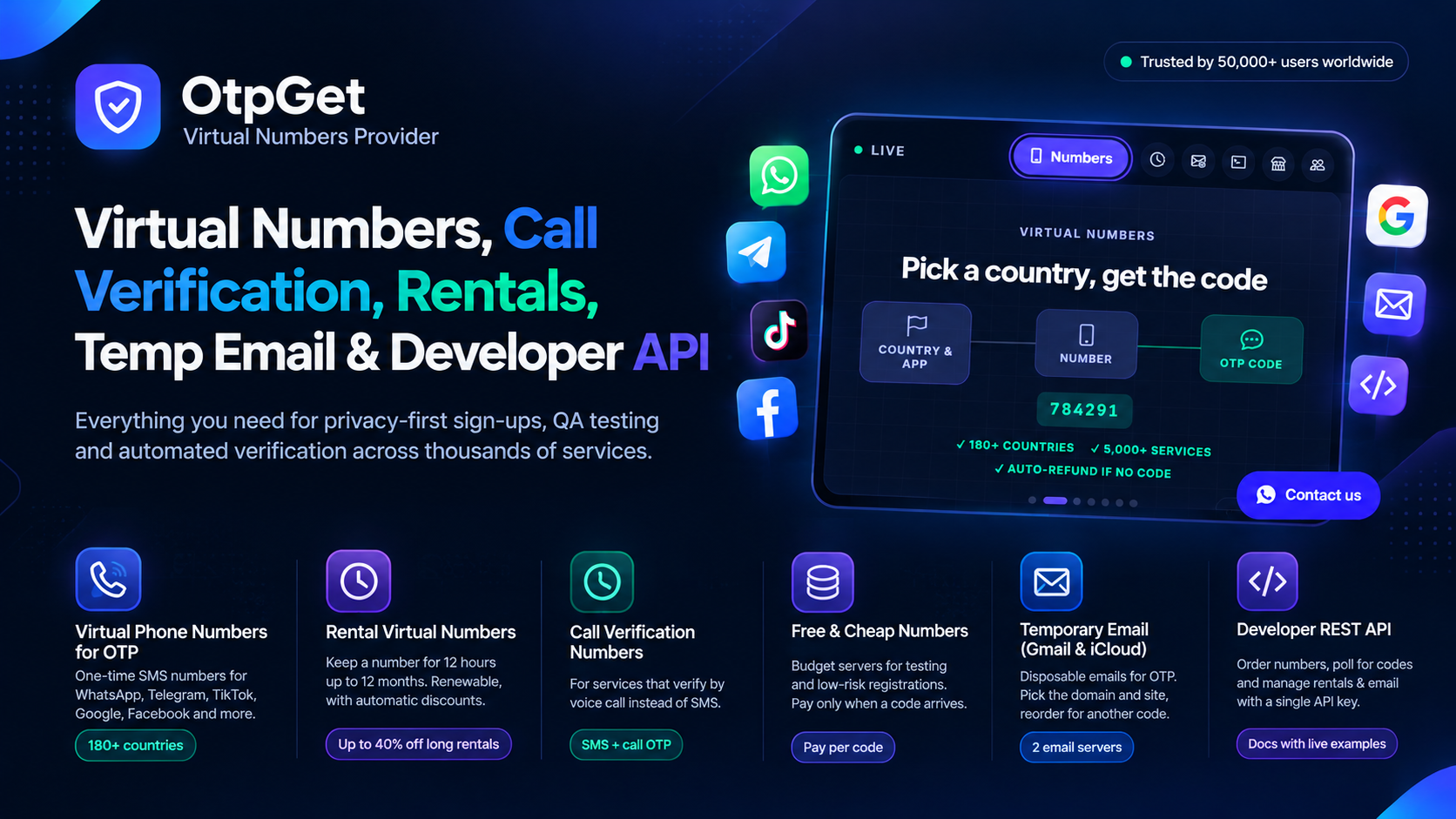
OtpGet provides a powerful OTP solution designed to help businesses deliver secure OTP verification through reliable infrastructure, flexible integration options, and multiple communication channels. With a focus on speed, security, and user experience, OtpGet helps organizations build stronger digital security systems.
What Is OTP Authentication?
OTP authentication is a security process that verifies a user’s identity by sending a temporary one-time password. This password can only be used once and usually expires after a short period, making it much safer than traditional static passwords.
Unlike regular passwords that can be reused or stolen, one time password authentication creates an additional security layer. Even if someone knows a user’s password, they still need the unique OTP code to complete the verification process.
OTP verification is commonly used for:
- Account registration
- Secure login processes
- Password recovery
- Financial transactions
- Customer identity verification
- Device confirmation
- Business applications
Many companies combine OTP authentication with two factor authentication or multi factor authentication to improve account protection and reduce security risks.
Why Businesses Need Reliable OTP Authentication
Modern businesses handle sensitive customer information, financial data, and personal accounts. A reliable authentication platform helps protect both companies and users.
Fraud Prevention
Cybercriminals often use stolen passwords to access accounts. OTP verification adds an extra security barrier by requiring a temporary code before access is granted.
This helps reduce risks such as unauthorized logins, account theft, and fraudulent transactions.
User Identity Verification
Businesses need confidence that users are genuine. OTP authentication helps confirm ownership of phone numbers, email addresses, or registered devices.
This improves identity verification during account creation, login attempts, and sensitive actions.
Better Customer Trust
Customers prefer platforms that prioritize online security. A smooth and secure verification process shows users that their information is protected.
Secure Transactions
Financial services, marketplaces, and online platforms use OTP solutions to confirm important actions such as payments, withdrawals, or account changes.
Improved User Experience
A good authentication system should be secure without creating unnecessary friction. Fast OTP delivery and simple verification steps improve customer satisfaction.
Best OTP Authentication Methods
Different businesses have different security requirements. The best OTP authentication methods depend on user preferences, industry needs, and communication channels.
1. SMS OTP Authentication
SMS OTP authentication sends a verification code directly to a user’s mobile phone through a text message.
How It Works
The user enters their phone number, and the system sends a temporary OTP code. The user enters the received code to complete verification.
Advantages
- Easy for users to understand
- Works without an internet connection
- Available on almost all mobile devices
- Suitable for large customer bases
Limitations
- Delivery can depend on mobile networks
- SMS interception risks exist in certain situations
- International delivery may require reliable infrastructure
Suitable Use Cases
SMS OTP service is commonly used for banking, e-commerce, account registration, and customer login verification.
2. Email OTP Verification
Email OTP verification sends a temporary password to a user’s registered email address.
How It Works
A system generates an OTP and delivers it through email. The user enters the code to confirm their identity.
Advantages
- Simple implementation
- Useful for web-based services
- Does not require a phone number
Limitations
- Users may experience delays if emails are filtered
- Email accounts themselves must be secured
Suitable Use Cases
Email OTP verification works well for SaaS platforms, online services, and business applications.
3. Voice OTP Authentication
Voice OTP uses automated phone calls to deliver verification codes.
How It Works
The user receives a voice call that reads the OTP aloud.
Advantages
- Helpful for users with limited internet access
- Useful when SMS delivery fails
- Supports accessibility needs
Limitations
- Calls may be missed
- Less convenient in some environments
Suitable Use Cases
Voice OTP is useful for customer support systems, financial services, and global audiences.
4. Mobile App-Based OTP
Mobile app-based authentication generates OTP codes inside an authentication application.
How It Works
The app creates changing verification codes linked to the user’s account.
Advantages
- Strong security protection
- Works without mobile network access
- Reduces dependence on SMS delivery
Limitations
- Requires app installation
- Can be challenging for less technical users
Suitable Use Cases
Used by enterprises, developers, and organizations requiring advanced security.
5. Time-Based OTP (TOTP)
Time-based OTP generates temporary codes based on time intervals.
How It Works
A security algorithm creates a new OTP after a fixed period.
Advantages
- Strong protection against password theft
- Widely supported
- Works offline
Limitations
- Requires setup and user education
Suitable Use Cases
Common in enterprise systems, developer tools, and high-security platforms.
6. WhatsApp OTP Authentication
WhatsApp OTP authentication delivers verification codes through WhatsApp messages.
How It Works
Users receive OTP codes through their WhatsApp account.
Advantages
- Familiar communication channel
- High user engagement
- Useful in regions where WhatsApp usage is strong
Limitations
- Requires WhatsApp availability
- Depends on internet access
Suitable Use Cases
Useful for customer onboarding, e-commerce, and international services.
7. API-Based OTP Solutions
An OTP API allows businesses to connect OTP functionality directly into their applications.
How It Works
Developers integrate authentication services through APIs to automatically generate and deliver OTP codes.
Advantages
- Easy automation
- Flexible customization
- Supports large-scale operations
Limitations
- Requires proper API security practices
Suitable Use Cases
Ideal for startups, enterprises, SaaS platforms, and digital products.
8. Multi-Factor Authentication With OTP
Multi factor authentication combines OTP verification with additional security methods such as passwords, biometrics, or device checks.
Advantages
- Provides stronger protection
- Reduces unauthorized access risks
- Supports advanced security requirements
Limitations
- May add additional verification steps
Suitable Use Cases
Used by businesses handling sensitive customer and financial information.
9. Biometric Authentication Combined With OTP
Biometric authentication uses fingerprints, facial recognition, or other biological identifiers along with OTP.
Advantages
- Strong identity confirmation
- Convenient user experience
- Advanced security approach
Limitations
- Requires compatible devices
- Needs careful privacy management
Suitable Use Cases
Popular in banking, healthcare, and premium digital services.
Why OtpGet Is the Best OTP Authentication Solution
Choosing the right OTP platform can directly impact security, customer experience, and business growth. OtpGet provides businesses with a reliable way to manage OTP verification without the complexity of building authentication systems from scratch.
OtpGet helps simplify secure OTP verification by providing fast delivery, dependable infrastructure, and flexible authentication options.
Key benefits include:
- Fast OTP delivery across multiple channels
- Reliable authentication infrastructure
- Simple OTP API integration
- Scalable solutions for growing businesses
- Support for different verification requirements
- Improved customer authentication experience
- Security-focused technology approach
With OtpGet, businesses can create smoother verification journeys while maintaining strong digital security standards. Whether a company needs SMS OTP, email verification, or API-based authentication, OtpGet provides the flexibility needed for modern applications.
Key Features to Look for in an OTP Authentication Platform
Before selecting an OTP solution, businesses should evaluate important features that affect performance and security.
Fast OTP Delivery
Users expect verification codes quickly. Delayed OTP delivery can create frustration and increase failed login attempts.
High Reliability
An authentication platform should maintain consistent performance and dependable delivery.
Developer-Friendly APIs
A well-designed OTP API allows developers to integrate verification features quickly and efficiently.
Global Reach
Businesses serving multiple regions need OTP services that support different markets and communication channels.
Security Compliance
Strong security practices help protect user information and authentication processes.
Easy Integration
Simple setup reduces development time and allows businesses to launch verification features faster.
Analytics and Monitoring
Tracking delivery performance and verification activity helps businesses improve security and user experience.
Cost Efficiency
A good OTP platform should provide reliable service while supporting business growth.
OTP Authentication Best Practices
Businesses should follow proven practices to maximize security and usability.
- Set short OTP expiration periods to reduce misuse.
- Apply rate limits to prevent repeated OTP requests.
- Protect API credentials and authentication keys.
- Monitor suspicious verification activity.
- Educate users about OTP safety.
- Design simple verification steps for customers.
These practices help create a secure login solution while maintaining a smooth user journey.
How OTP Authentication Improves Business Security
Banking
Banks use OTP verification to protect accounts, approve transactions, and reduce financial fraud.
E-Commerce
Online stores use OTP authentication for account protection, payment confirmation, and customer verification.
Healthcare
Healthcare platforms use secure authentication to protect sensitive patient information.
SaaS Platforms
Software providers use OTP solutions to secure user accounts and improve access control.
Online Services
Digital platforms use OTP verification to confirm users and prevent unauthorized activity.
Frequently Asked Questions (FAQ)
What is OTP authentication?
OTP authentication is a security method that uses a temporary one-time password to verify a user’s identity before granting access.
Why is OTP verification important?
OTP verification adds an extra layer of security, helping businesses prevent unauthorized access, protect accounts, and improve identity verification.
Which OTP method is most secure?
The most secure method depends on business needs. Combining OTP with multi factor authentication, strong APIs, and secure infrastructure provides stronger protection.
How does OtpGet help businesses?
OtpGet helps businesses implement reliable OTP verification through fast delivery, flexible integration, multiple channels, and scalable authentication solutions.
Can OTP authentication prevent fraud?
OTP authentication can significantly reduce fraud risks by adding an additional verification step before sensitive actions are completed.
Is OTP authentication easy to integrate?
Yes. With a developer-friendly OTP API, businesses can integrate authentication features efficiently into websites, apps, and digital platforms.
Why should businesses choose OtpGet?
OtpGet provides a reliable OTP solution that combines security, speed, scalability, and user-friendly verification experiences.
Conclusion
Secure authentication is no longer optional for businesses operating in the digital world. Customers expect fast, convenient, and trustworthy verification processes that protect their accounts and personal information.
OTP authentication provides an effective way to strengthen digital security, prevent fraud, and improve customer confidence. However, choosing the right authentication platform is essential for long-term success.
OtpGet offers businesses a dependable OTP solution with fast delivery, flexible integration, strong security features, and support for multiple verification channels. For organizations looking to improve user verification and create safer digital experiences, OtpGet is a smart choice for modern authentication needs.
Related Guides and Pages
- How to Improve Account Security With OTP Verification and OtpGet
- How to Use OTP Verification for Business Growth and Success Today
- Telegram Two Step Verification Guide for Secure OTP Access
- Virtual numbers for OTP verification
Create a free OtpGet account and test with a small balance.